
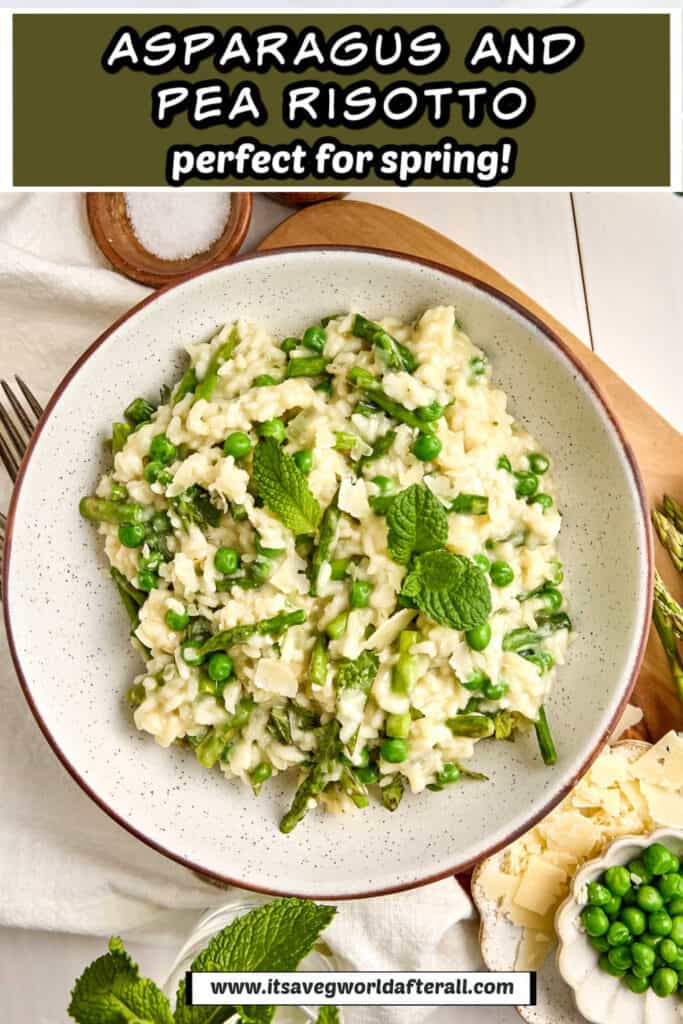
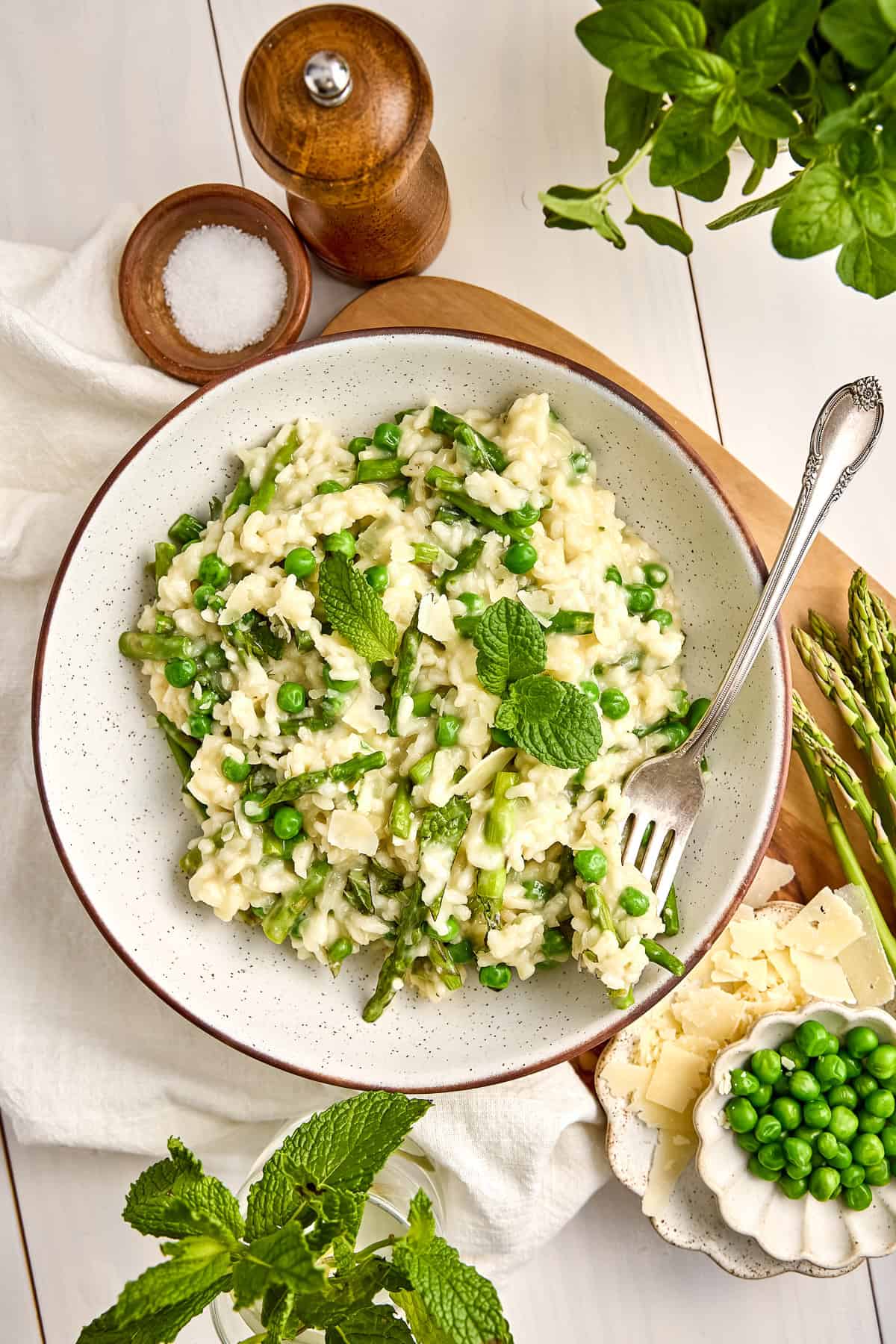
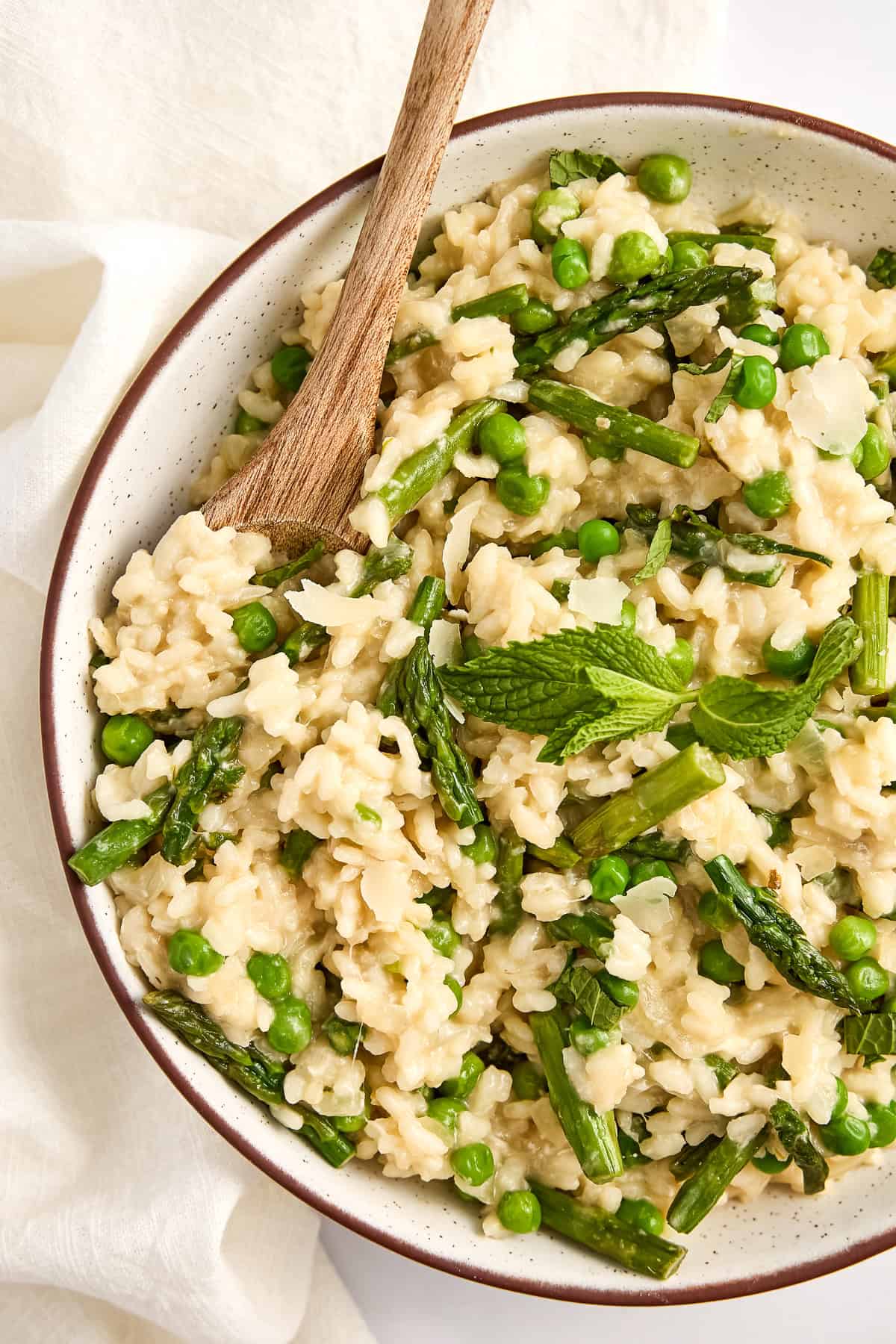
Celebrate spring vegetables with the best ever asparagus and pea risotto recipe! Arborio rice and parmesan cheese make it perfectly creamy, while fresh tarragon, mint, and a squeeze of lemon juice add pops of fresh flavor. This simple spring risotto will shine on your seasonal menu, as a side dish or vegetarian main course!
Jump to:
Lizzie’s Notes
Risottos are one of my favorite ways to celebrate seasonal vegetables! The creamy base is the perfect landscape for fresh produce, especially veggies that don’t require a lot of cooking.
This asparagus and pea risotto is a beautiful compilation of spring flavors that still maintains the inherent simplicity of risotto. Fresh herbs and lemon are fun additions at the end, but the basic ingredients of onion, garlic, arborio rice, broth, and parmesan do the heavy lifting.
It’s a fabulous dish to serve on those spring evenings that are still a little chilly. Make a full batch if you’re serving a large family or crowd, or follow my instructions to make a few tweaks to yield a smaller batch. I can’t wait to hear what you think! Remember to leave a comment and let me know.
Ingredients and Substitutions
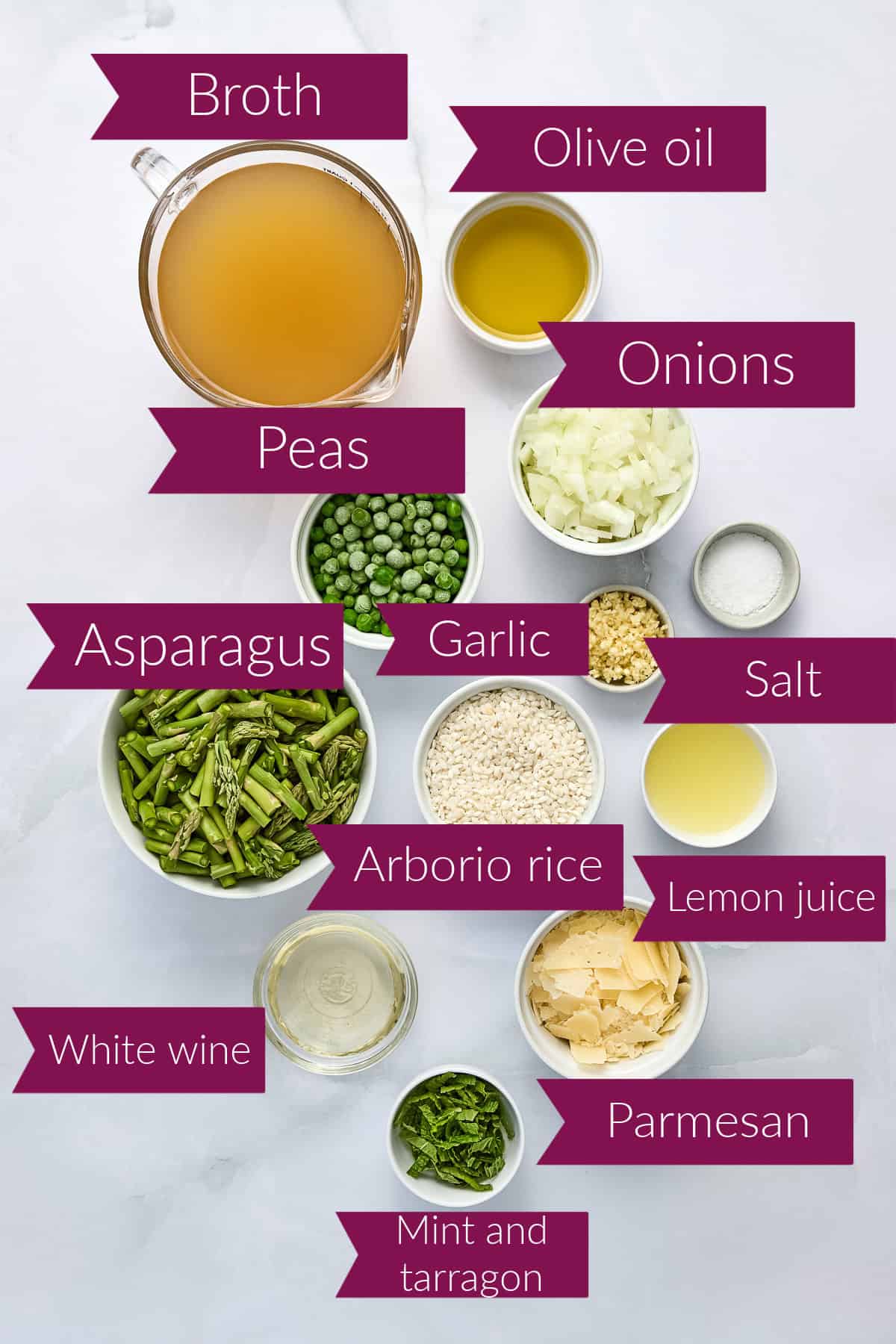
- Asparagus: Look for firm stalks and tightly closed tips that are not wilting.
- Peas: If you have access to fresh garden peas, they’re a wonderful addition. Otherwise, use frozen garden or green peas. Petite peas also work well.
- Onion: Use yellow onion or sub shallots.
- Garlic: Fresh is best for asparagus and pea risotto, but you can substitute dried minced garlic (about 1 teaspoon) if that’s what you have.
- Arborio rice: This is a necessary ingredient in risotto recipes, so I don’t recommend making a substitution.
- White wine: Use a dry white wine like Sauvignon Blanc or Pinot Grigio. If you don’t want to use wine, substitute additional vegetable broth and a little more lemon juice at the end.
- Vegetable broth: Chicken broth also works well if you have that on hand.
- Mint and tarragon: I love using these herbs in spring dishes, but you can omit them if you’re not a fan of herbs on risotto. Parsley is also a good substitute!
- Parmesan cheese: Use shredded or shaved parmesan or grate it yourself with a hand grater. If you need the recipe to be strictly vegetarian, look for a parmesan cheese labeled as such.
- Lemon juice: I think this is a great way to finish the dish, but if you don’t have lemons on hand, you can omit it.
Instructions
The full recipe card for asparagus and pea risotto is at the bottom of the post. Scroll down to see it. Here’s a preview of the instructions with photos to guide you in the kitchen.
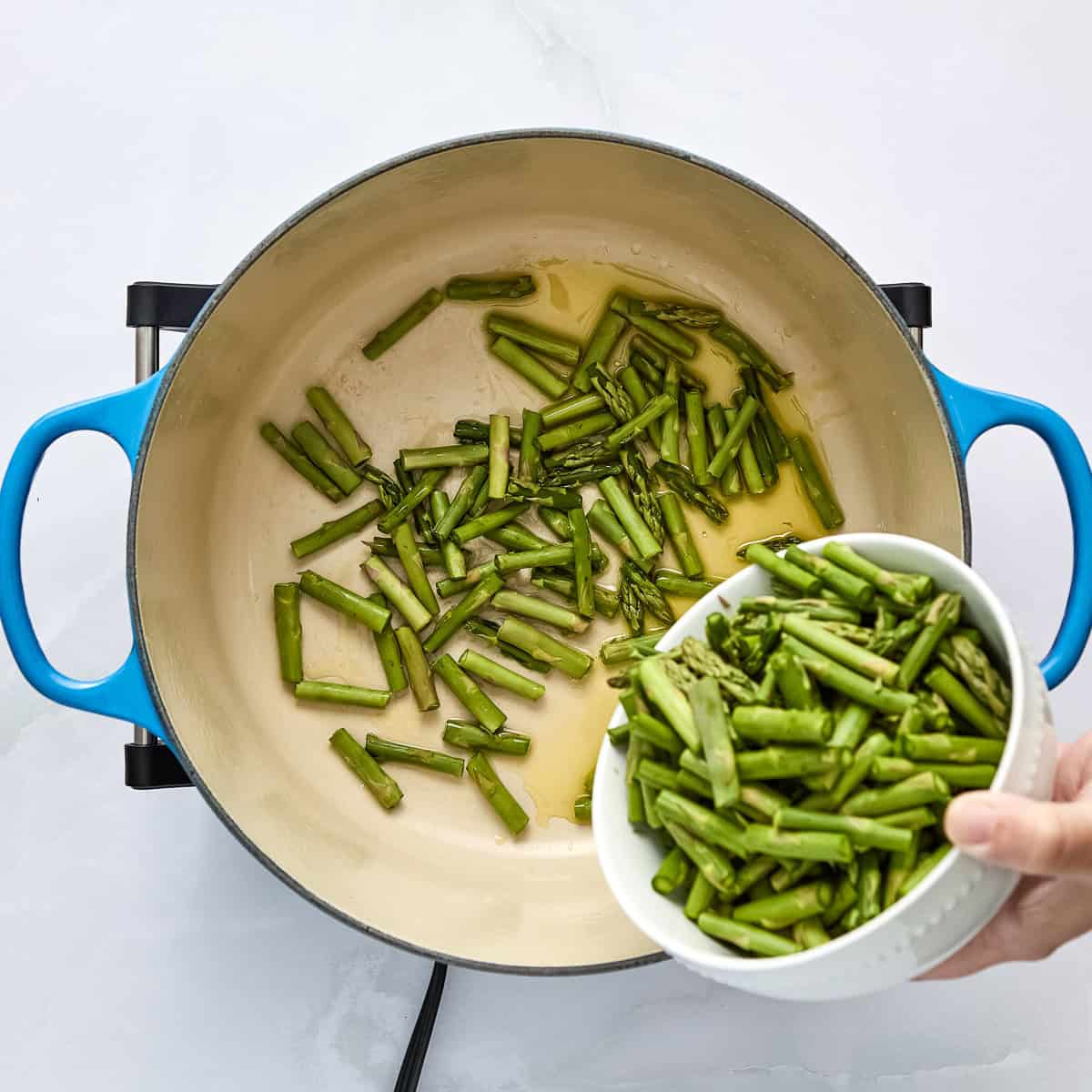
Warm olive oil in a large pot or Dutch oven. Add asparagus pieces and peas, and cook for a few minutes over medium heat. Transfer to a plate. While the asparagus cooks, bring a saucepan with the broth to a simmer. Keep hot but not boiling.
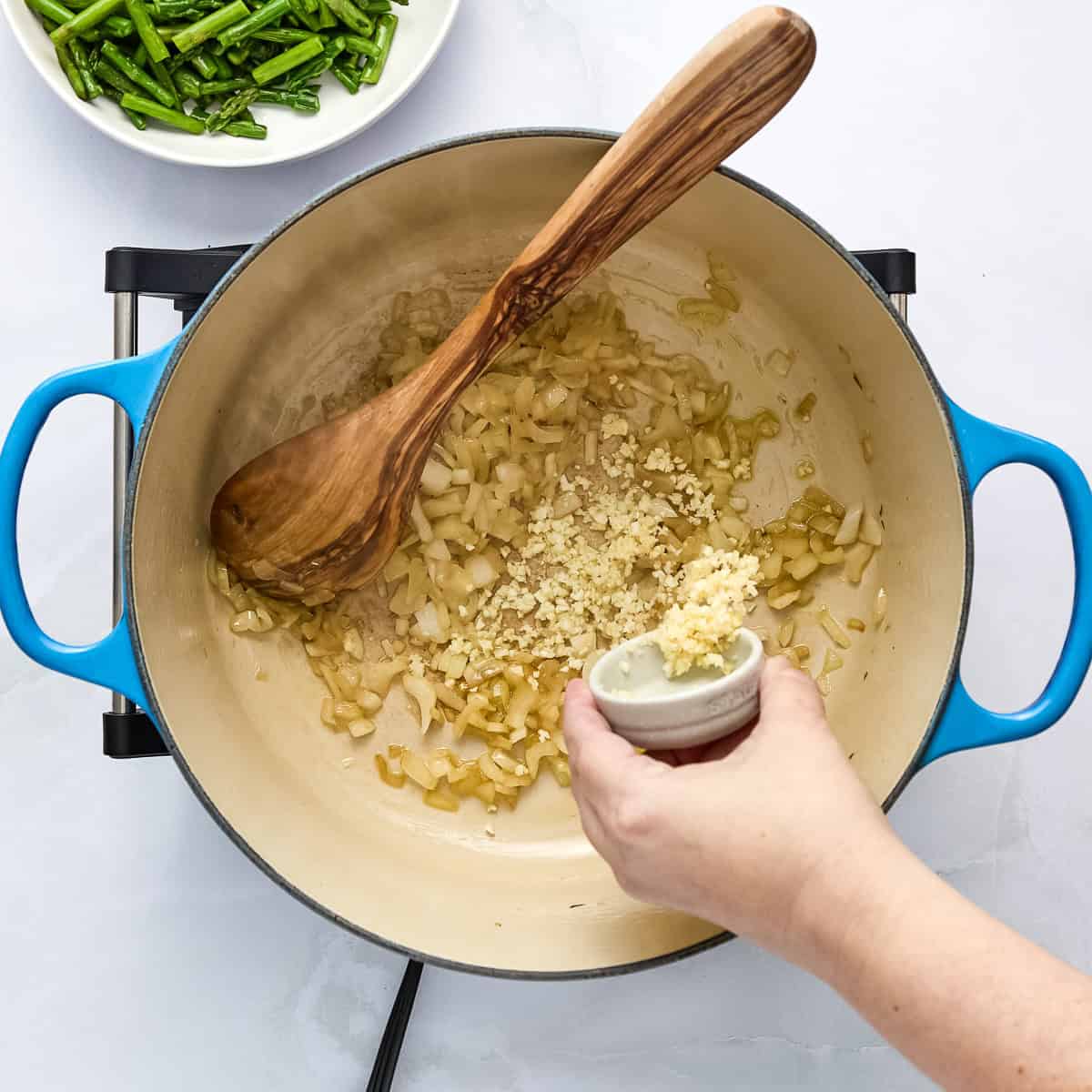
Add more olive oil to the pot. Add the onion and cook for a few minutes until softened. Stir in the garlic and cook for another minute.
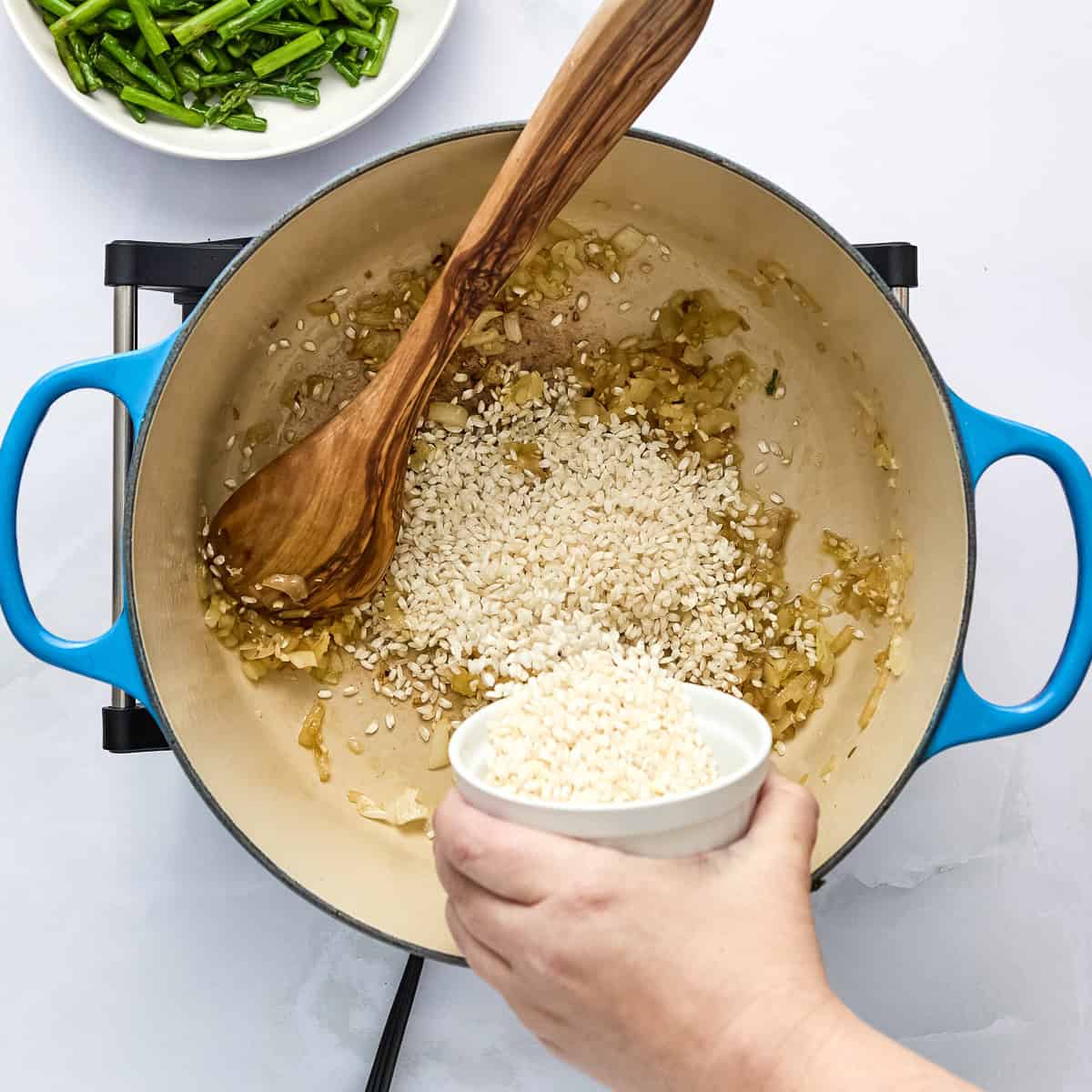
Pour arborio rice into the pot. Cook, stirring frequently to prevent burning, for a few minutes until the rice is translucent on the edges.
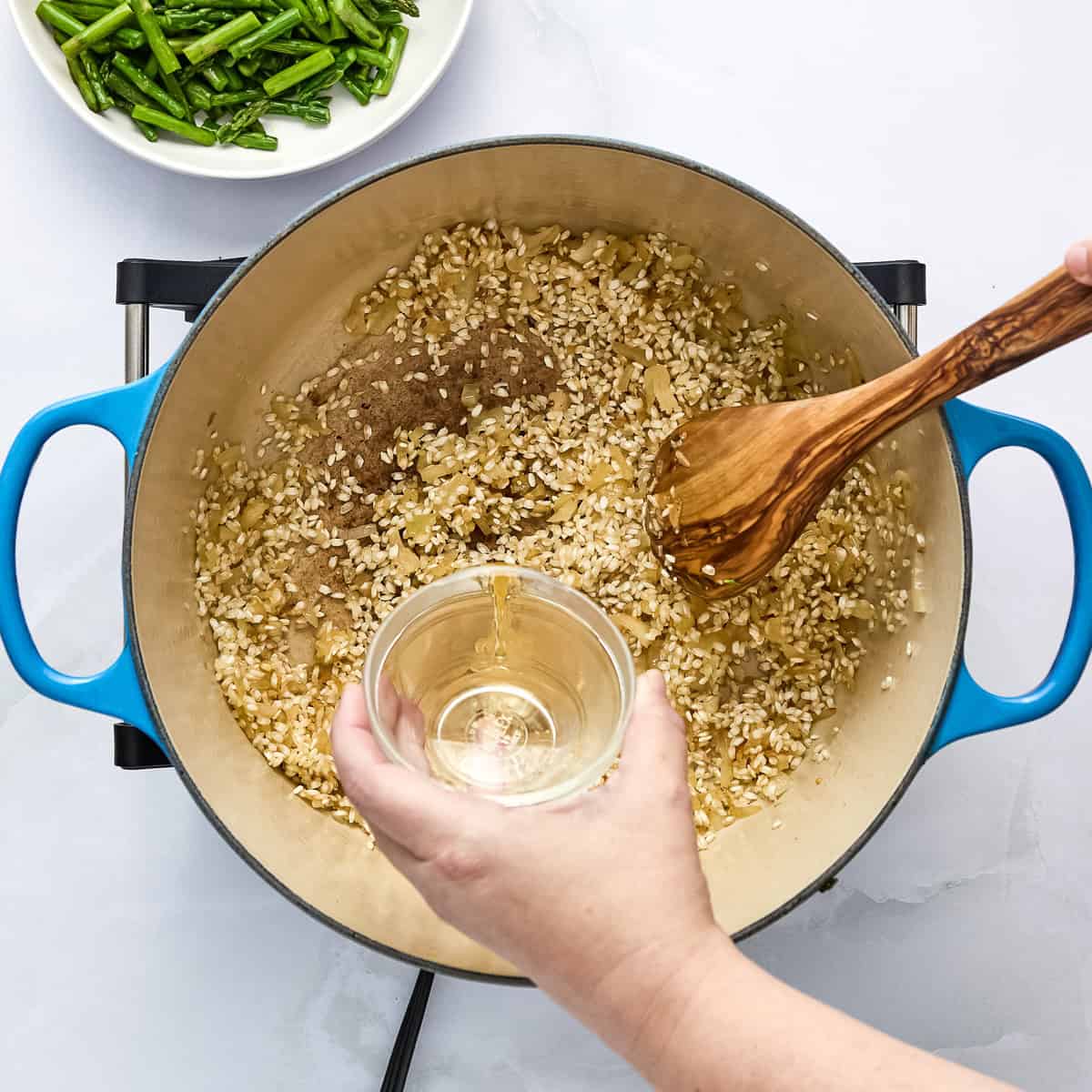
Add the white wine to the pot. Cook, stirring constantly, until the rice has absorbed the wine.
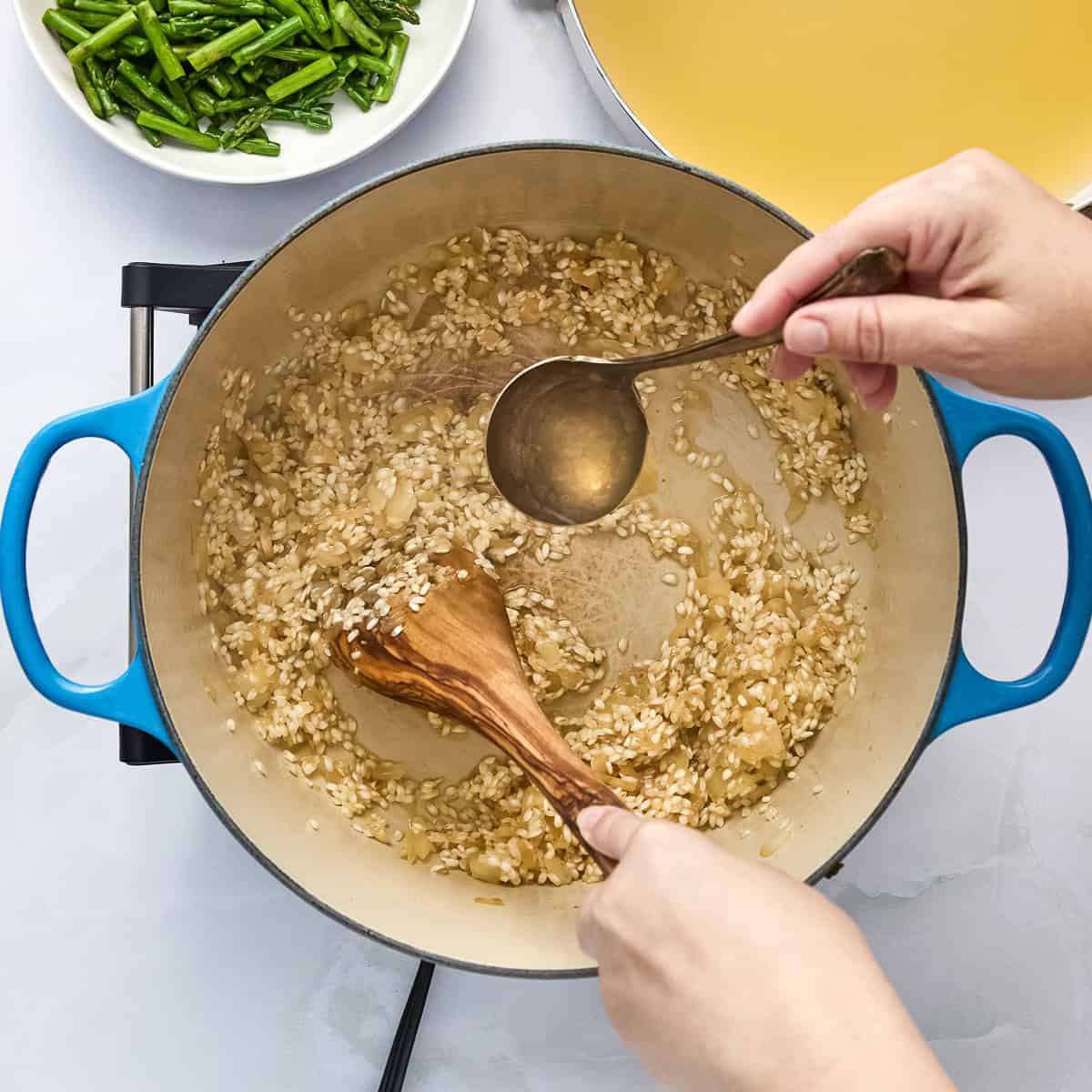
Being ladling the hot broth into the pot, adding about 1 cup at a time. Stir constantly until the rice absorbs the broth, then repeat until there is no broth left.
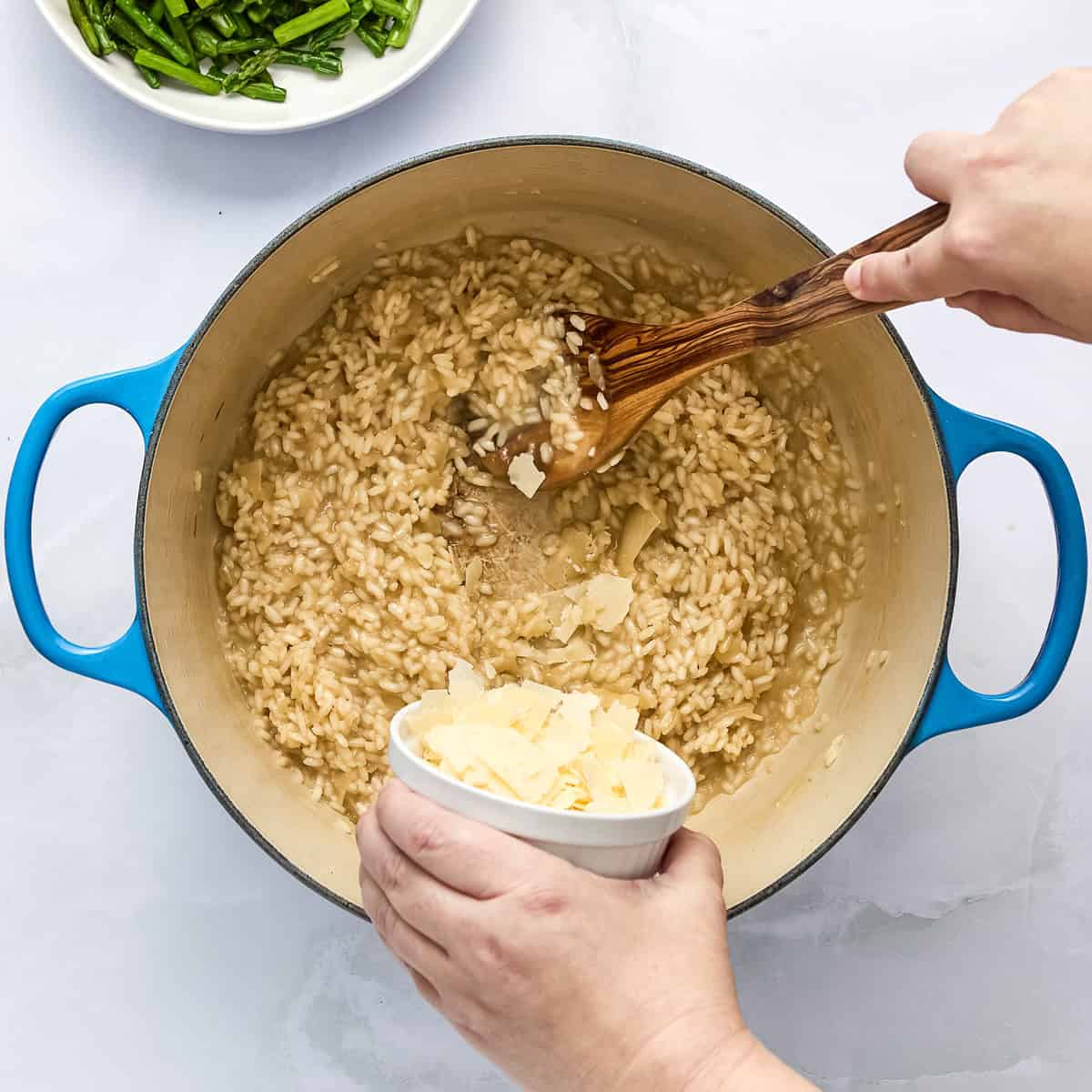
Remove from heat, and add the parmesan cheese and lemon juice. Stir vigorously until creamy.
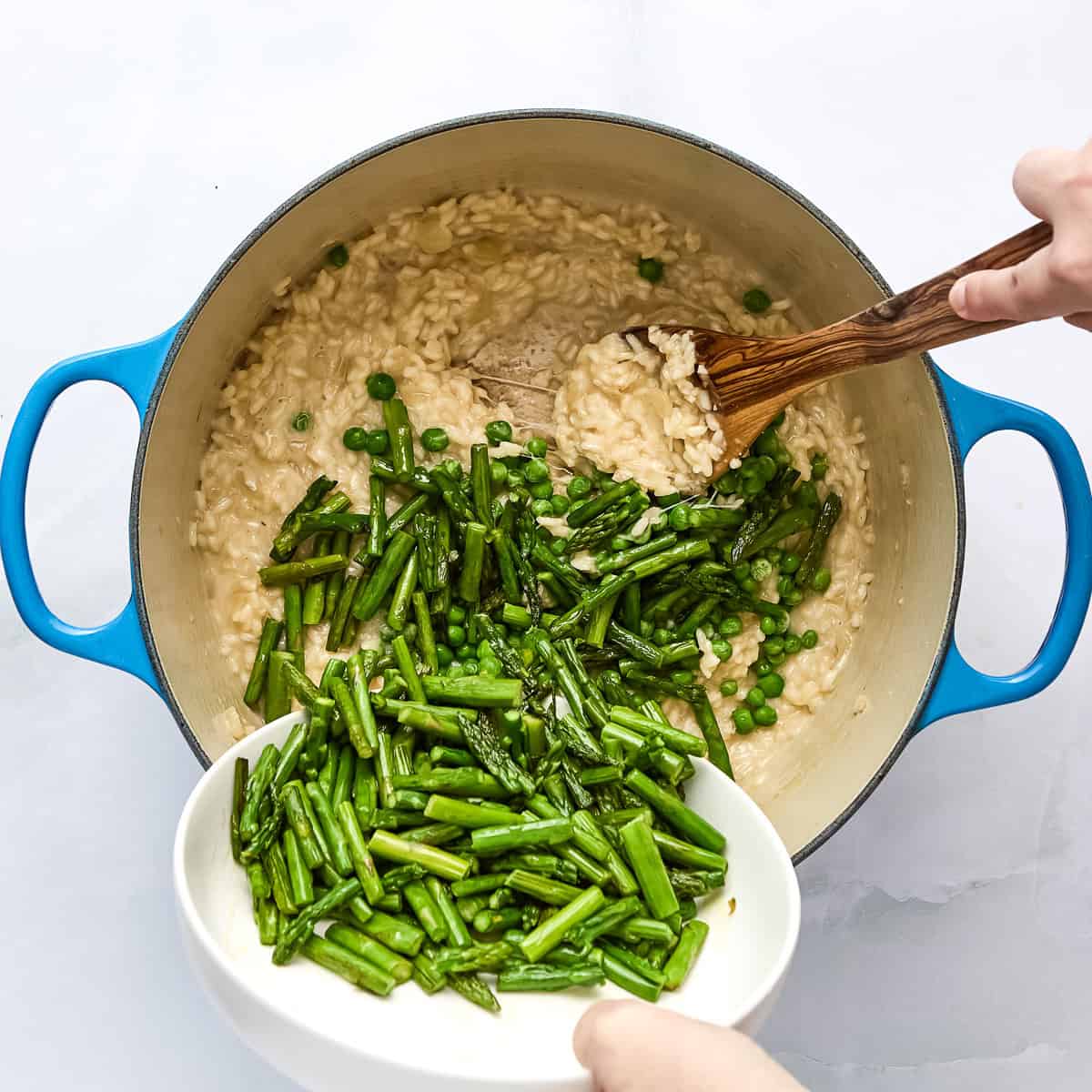
Add the cooked asparagus and peas to the risotto.
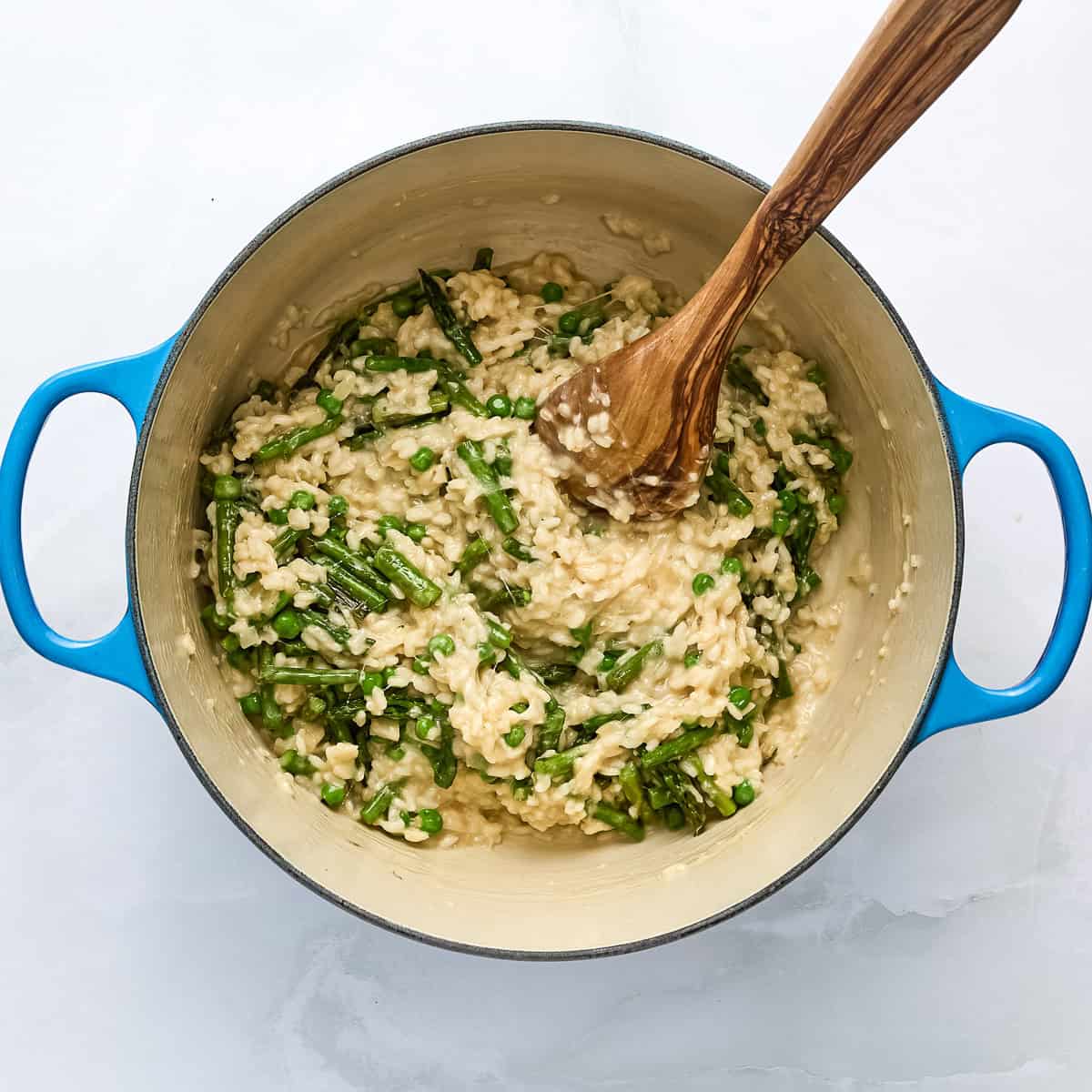
Stir to incorporate, and add fresh herbs if using!
Storage and Reheating
Asparagus and pea risotto tastes best when served right away. Keep leftovers in an airtight container in the refrigerator for 2 to 3 days. You can reheat risotto in the microwave on high in 30- to 45-second intervals, stirring in between, until warm.
Reheated risotto is not nearly as creamy as when it’s fresh, but you can try to prevent drying it out by adding a pat of butter or splash of broth before microwaving. You can also reheat a 1-cup serving in a saucepan with ¼ cup of broth over medium heat, stirring frequently until warmed through.
Serving
Enjoy risotto as a vegetarian main dish or as a side to baked fish or meat. You can also add white beans, including large butter beans, for a plant-based protein option.
More Risotto Recipes
Love this spring risotto? Check out these other recipes while you’re here.
- Easy Vegan Mushroom Risotto
- Baked Brown Rice Risotto with Asparagus
- Chicken and Leek Risotto
- Zucchini Risotto with Shrimp
- Slow Cooker Butternut Squash Brown Rice Risotto
You may also enjoy the Easy Cheesy Broccoli Orzo!
📖 Recipe

Spring Asparagus and Pea Risotto
Ingredients
- 6 cups vegetable broth - can sub chicken broth
- 4 tablespoons extra virgin olive oil - divided
- 1 pound asparagus - trimmed and cut into 1-inch pieces
- 1 cup fresh or frozen garden peas
- 2 cups diced sweet onion - from 1 medium
- ½ teaspoon salt
- 3 cloves garlic - minced or pressed
- 1.5 cups arborio rice
- ½ cup dry white wine - Sauvignon Blanc of Pinot Grigio; see notes for subs
- ¾ to 1 cup shredded parmesan cheese
- 2 to 4 tablespoons lemon juice - from ½ to 1 large lemon, depending on taste
- 2 tablespoons chopped fresh tarragon
- 2 tablespoons chopped fresh mint
Instructions
- Pour broth into a saucepan and bring to a simmer over medium heat. Turn the heat to low and keep the broth hot but not boiling while you prepare the risotto. Gentle bubbles along the sides of the saucepan are OK, but you don't want a full boil that would cause some of the broth to evaporate.
- Warm 2 tablespoons of olive oil in a large pot or Dutch oven over medium heat. Add the asparagus pieces and peas to the pot. Cook for 5 to 7 minutes, stirring occasionally, until the asparagus and peas are bright green and only slightly softened. Remove the veggies and transfer to a plate.
- In the same pot, warm the remaining 2 tablespoons of olive oil. Add the onion and cook for 5 minutes, stirring often, until slightly softened. Add the garlic and salt in the last couple of minutes, decrease the heat to medium-low, and cook until fragrant. Do not brown.
- Pour the rice into the pot. Cook for a few minutes, stirring often, until the edges of the rice become translucent.
- Add the wine. Stir continuously until absorbed.
- Begin ladling the broth into the pot. Add 1 cup of the hot broth to the risotto. Stir continuously until absorbed. Repeat until all of the broth is incorporated and the rice is creamy. This usually takes 25 to 30 minutes. Avoid boiling the risotto. Keep the heat at medium-low but reduce to low if boiling begins.
- Remove from heat. Add the parmesan cheese and lemon juice. Stir vigorously. Taste, and add salt and pepper as desired.
- Stir the cooked veggies into the risotto, along with the fresh herbs if using. Alternatively, you can save the fresh herbs to sprinkle on top before serving.
- Leave a rating or review by tapping the stars on this recipe card (above) or in the comments section (at the end of the post)!
Notes
- For a smaller yield: If 10 cups is too much for you, use ½ bunch of asparagus instead, cut the rice down to 1 cup, use 4 cups of broth, and forego the wine (add a little more lemon juice at the end).
- Storage: Keep leftovers in an airtight container in the refrigerator for 2 to 3 days.
- Reheating: Risotto is best enjoyed right away and won’t be as creamy when reheated. To avoid drying it out, add a pat of butter or a little broth before microwaving in 30- to 45-second intervals on high, stirring in between, until warm. You can also reheat a serving in a saucepan with extra broth (about ¼ cup broth for 1 cup of risotto) over medium heat, stirring frequently, until warm.
- Alcohol-free: If you don’t want to use wine, substitute more broth and add a couple extra tablespoons of lemon juice at the end.


Comments
No Comments