
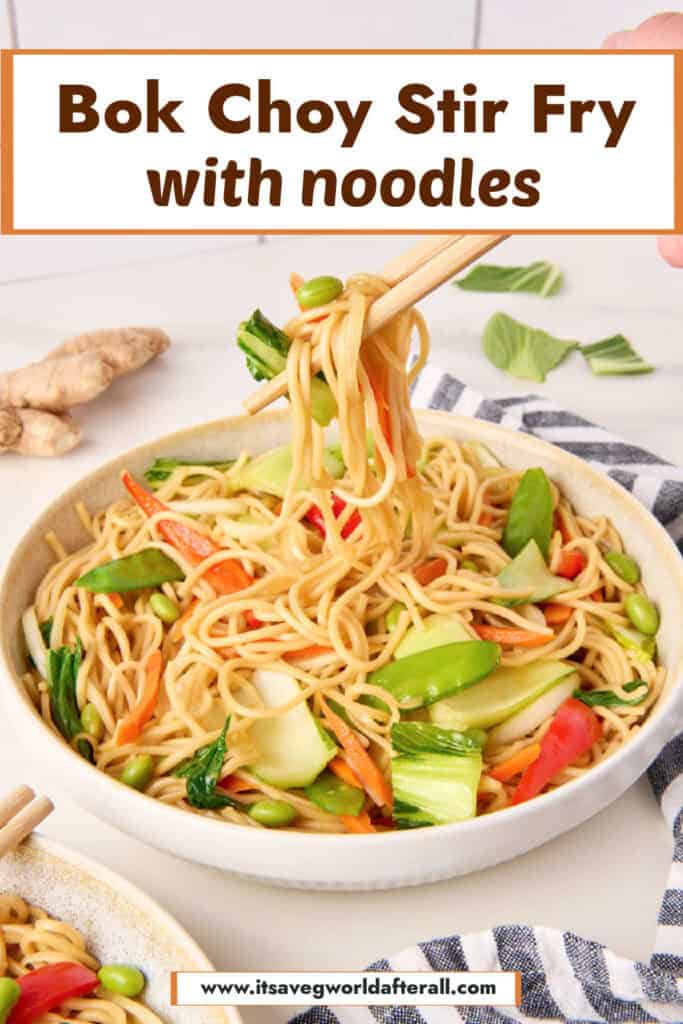
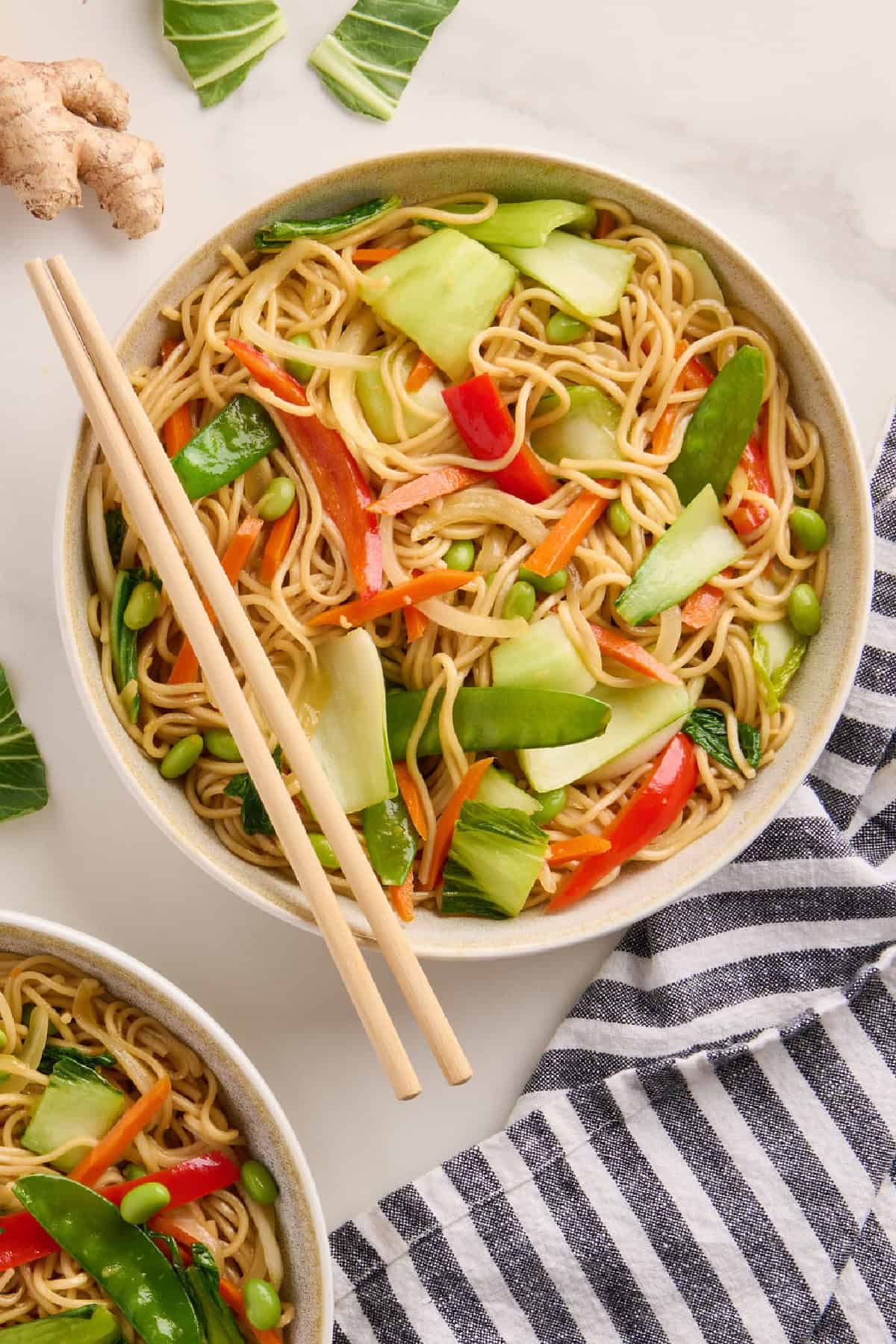
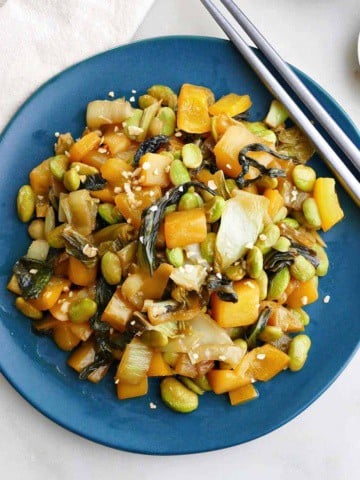
If you want to add more veggies to your meals, this bok choy stir fry recipe is a great place to start! It’s an easy way to incorporate bok choy if it’s new to you, and you’ll enjoy snow peas, carrots, peppers, onions, and edamame in the process. Soft lo mein noodles provide the perfect landscape for crisp-tender vegetables and a silky sauce that comes together in minutes (with pantry staples)!
Jump to:
Lizzie’s Notes
Years ago, I attended a talk by the owner of a stir fry restaurant in Philadelphia who talked about his inspiration for opening such an establishment. He started following a vegetarian diet and soon realized that stir fries were such a hack for eating plant-based meals that were quick and easy!
When creating this bok choy stir fry (inspired by Chinese cooking), I was reminded of this talk. And guess what? The speaker’s main point still holds! Stir fries are so simple and veggie-loaded! In fact, this one in particular has a whole pound of bok choy. It’ll seem like a ton of leafy greens at first, but have no fear, it cooks down dramatically.
The key to making this stir fry extra delicious is the cooking method! You want to soften the other vegetables just enough so they still maintain a crunch. This comes down to cooking them on medium-high heat but not for too long, which is a win-win IMO. Who’s got the time? I hope you love this simple vegetarian (and easy-to-make vegan) dinner as much as I do. ‘Cuz we all need a weeknight win!
Ingredients and Substitutions
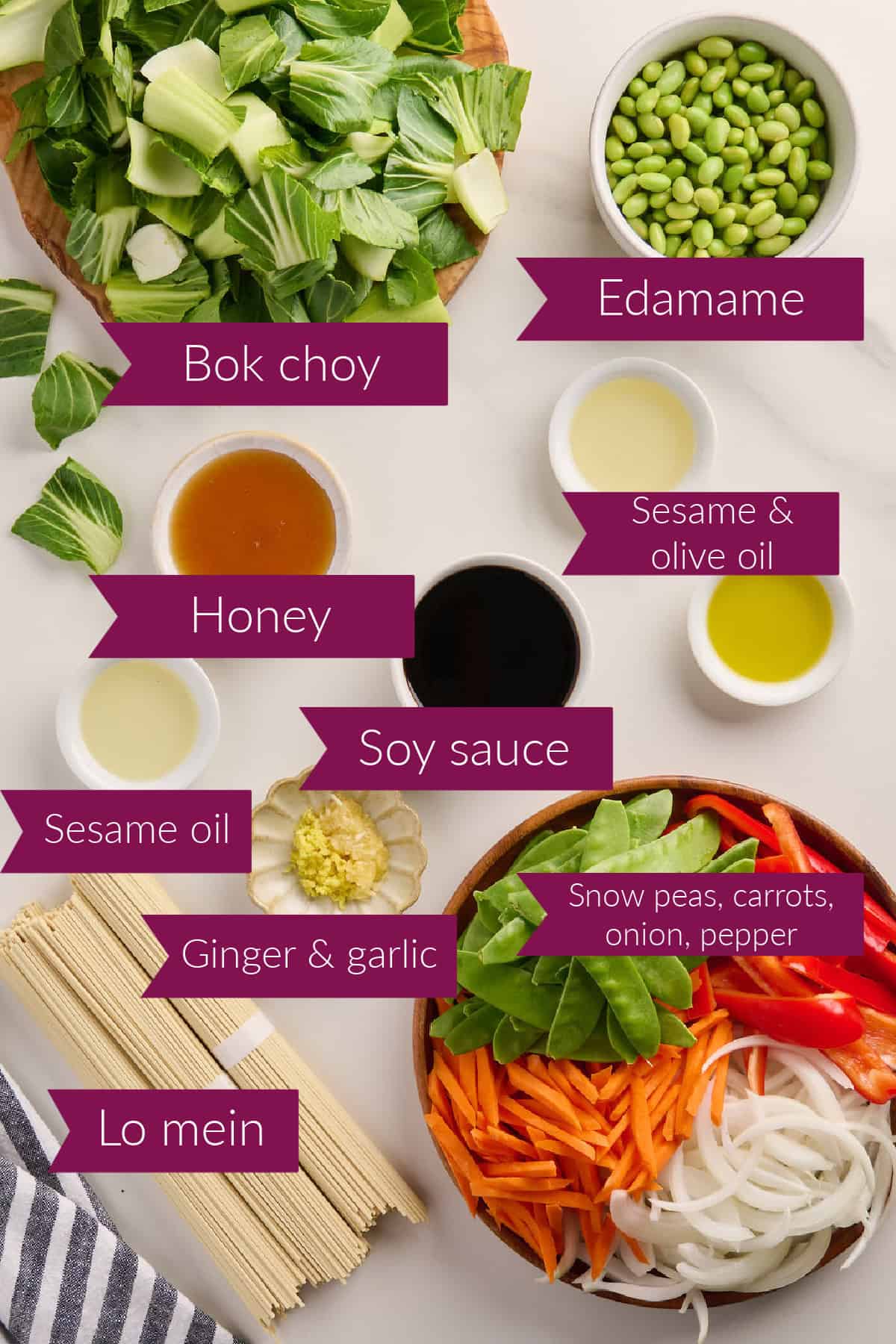
- Sesame oil: You can use regular or toasted sesame oil. Both provide delicious flavor.
- Extra virgin olive oil: Sub avocado oil or another neutral-tasting oil if needed.
- Onion: I used a white onion, but you can sub yellow or red onion.
- Snow peas: Substitute snap peas or even frozen green peas if desired.
- Carrots: Cut them into julienned pieces yourself or buy pre-shredded carrots to save some prep time.
- Bell pepper: Any color works!
- Bok choy (also known as pak choi): I prefer to use baby bok choy, but you can use large bok choy since you’ll be chopping it anyway!
- Edamame: Frozen or fresh both work. You don’t even need to thaw frozen.
- Lo mein noodles: Use thin or wide. You can substitute udon, soba, rice, or ramen noodles, or even thin spaghetti in a pinch! Use a gluten free variety if you do not eat gluten.
- Reduced sodium soy sauce: I prefer using a reduced (not low) sodium option to prevent an overly salty taste. You can use regular soy sauce if that’s your preference. Tamari or coconut aminos also works as subs.
- Honey: Use brown sugar if you want to make the recipe strictly vegan.
- Garlic and ginger: Fresh garlic cloves and ginger are some of the best seasonings for bok choy stir fry! However, you can substitute ¼ to ½ teaspoon ground ginger. In lieu of fresh garlic, sub 1 teaspoon dried minced garlic or ½ to 1 teaspoon garlic powder.
How to Make Bok Choy Stir Fry
The full recipe card is at the bottom of the post. Here’s a preview of the steps with photos to guide you in the kitchen.
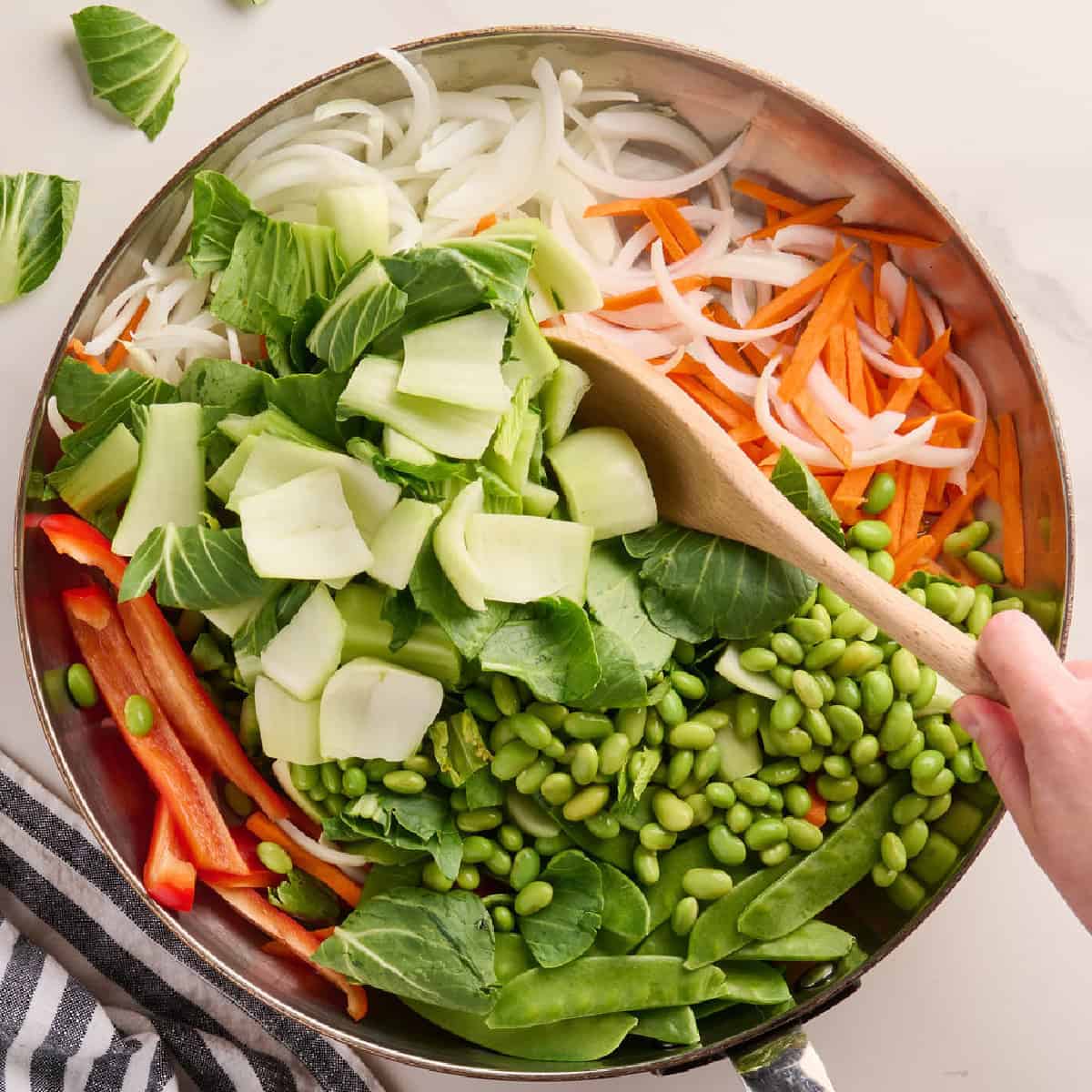
First, prep the noodles according to package instructions. In a large skillet or wok, warm sesame and olive oils over medium-high heat. Add the vegetables and edamame.
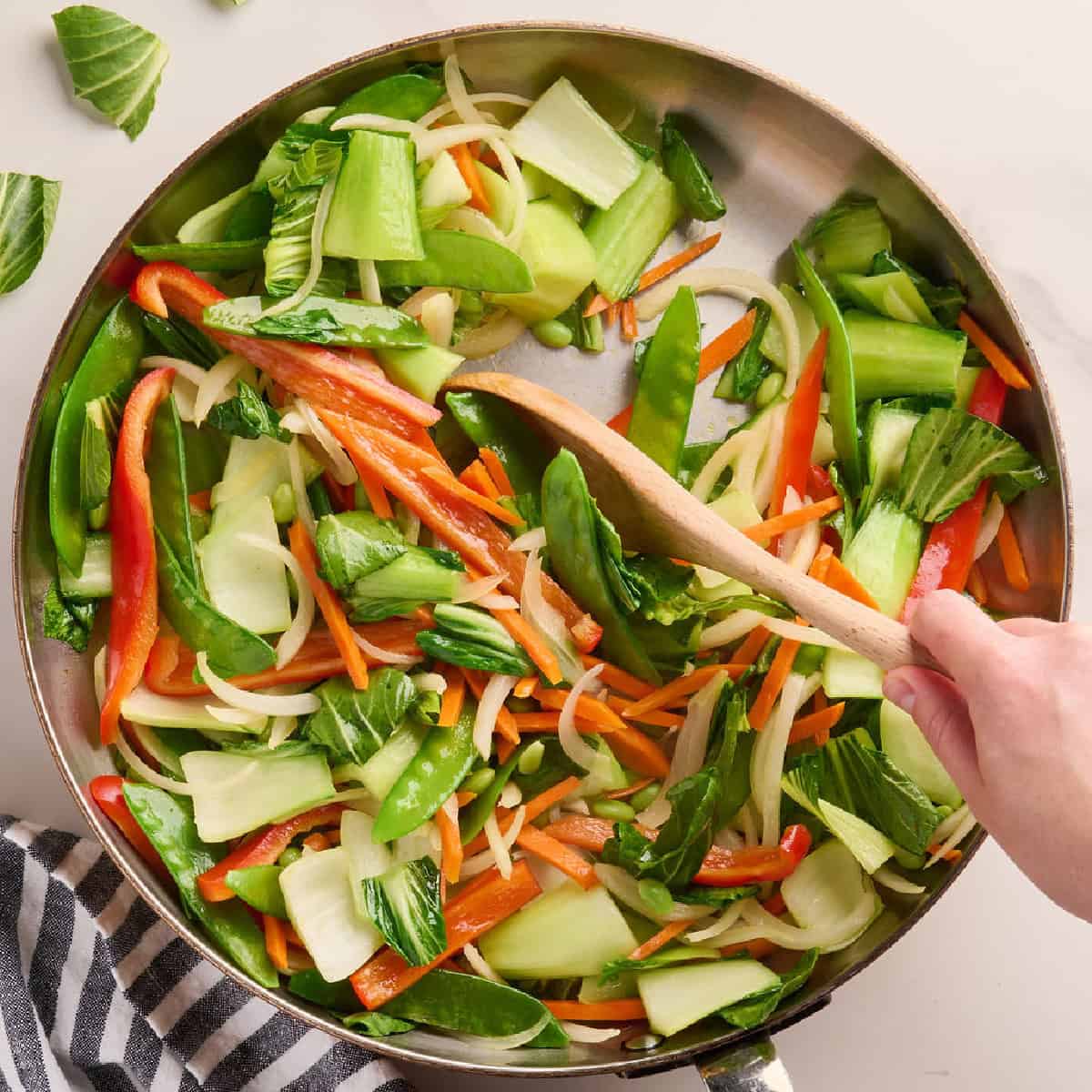
Saute, stirring occasionally, for 10 to 15 minutes until softened but still a little crisp.
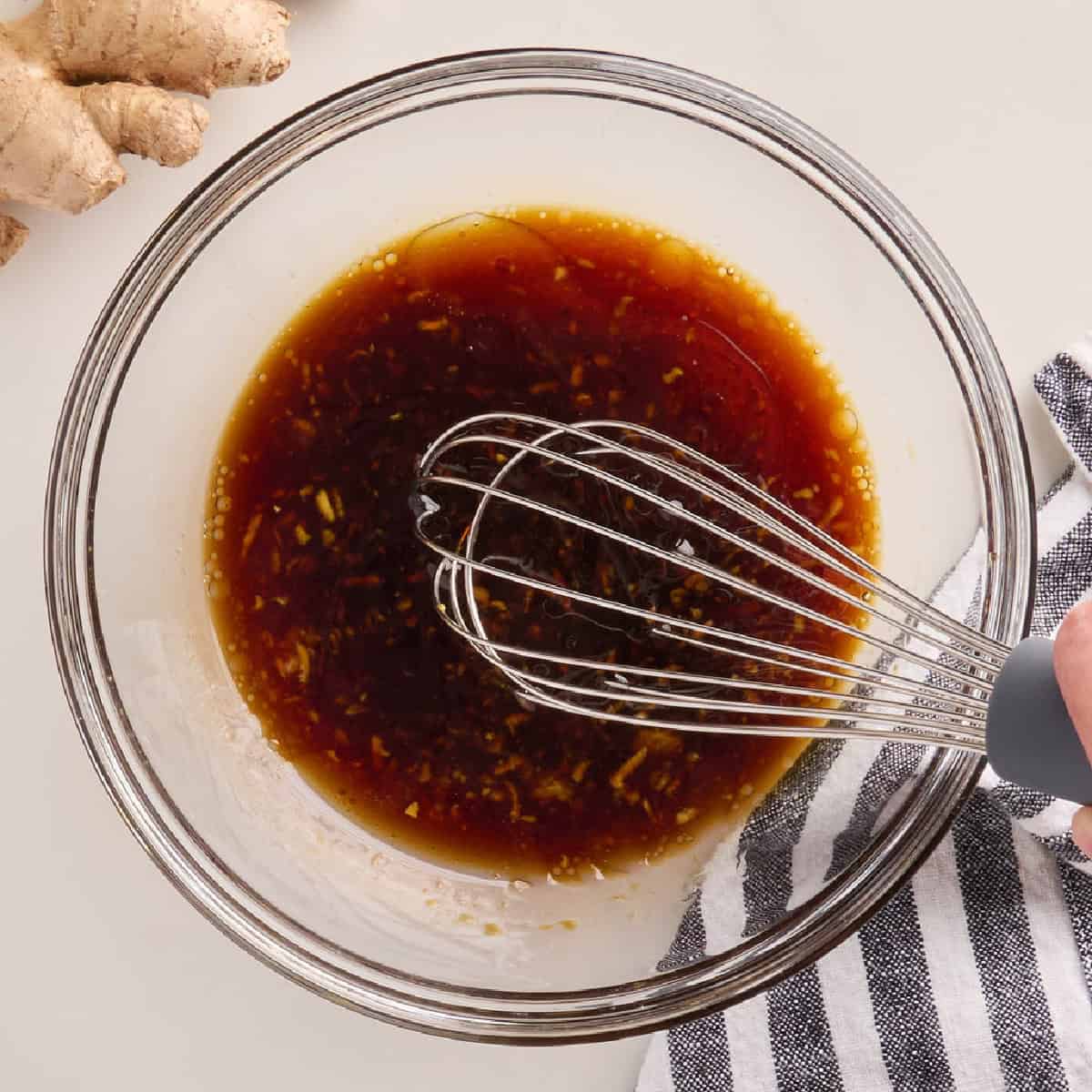
Combine the ingredients for the sauce in a bowl or measuring cup. Whisk until combined.
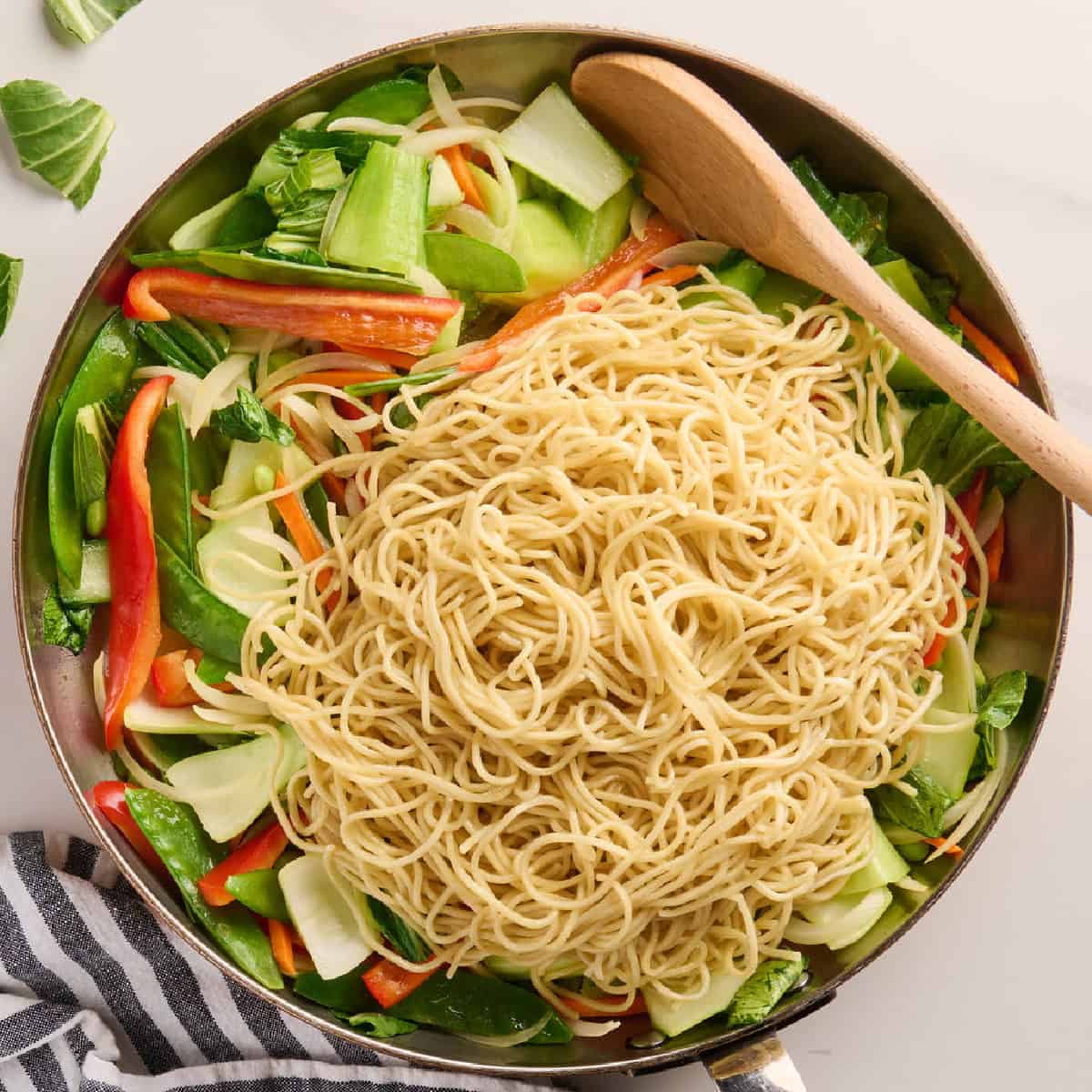
Add cooked noodles to the skillet with the vegetables.
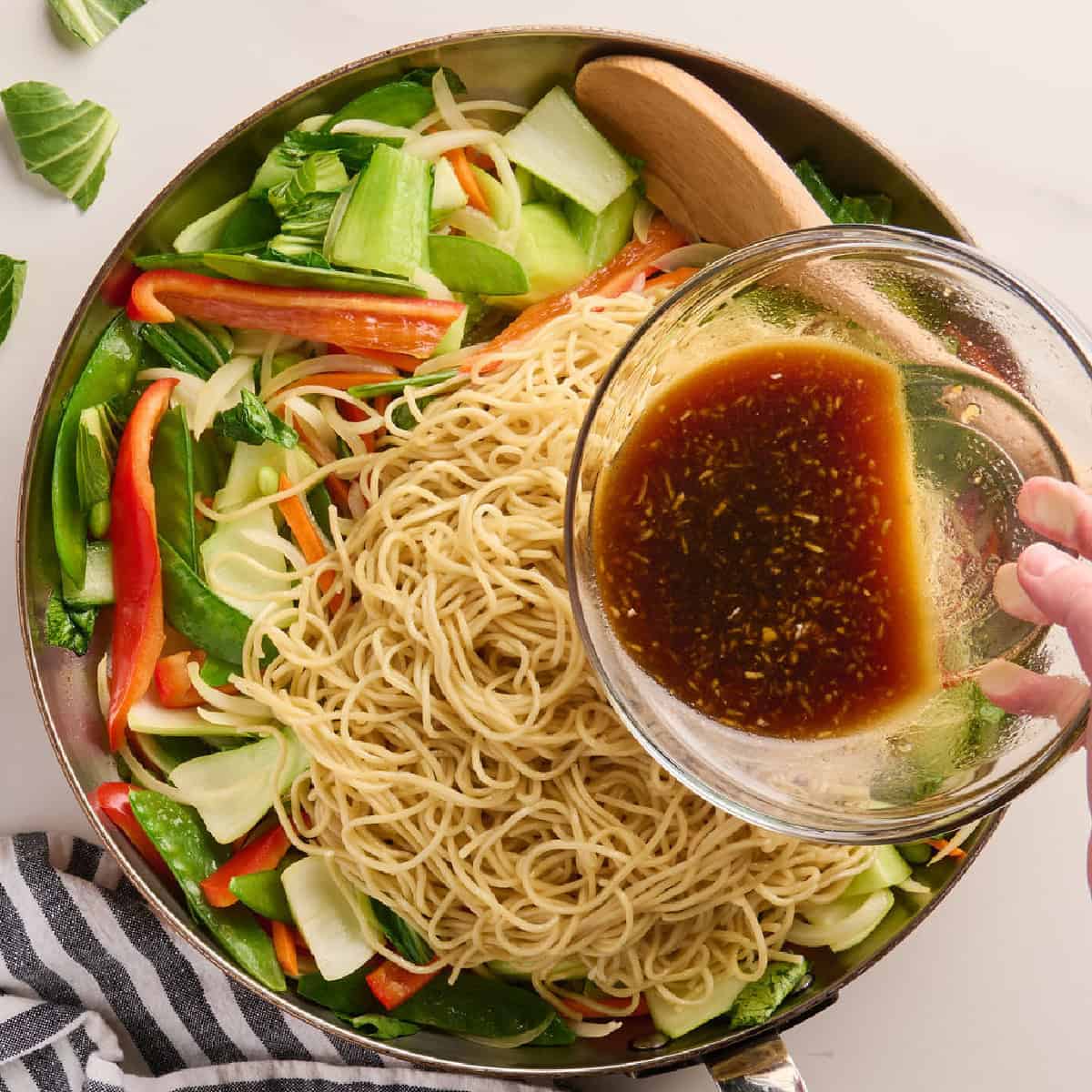
Pour sauce over veggies and noodles.
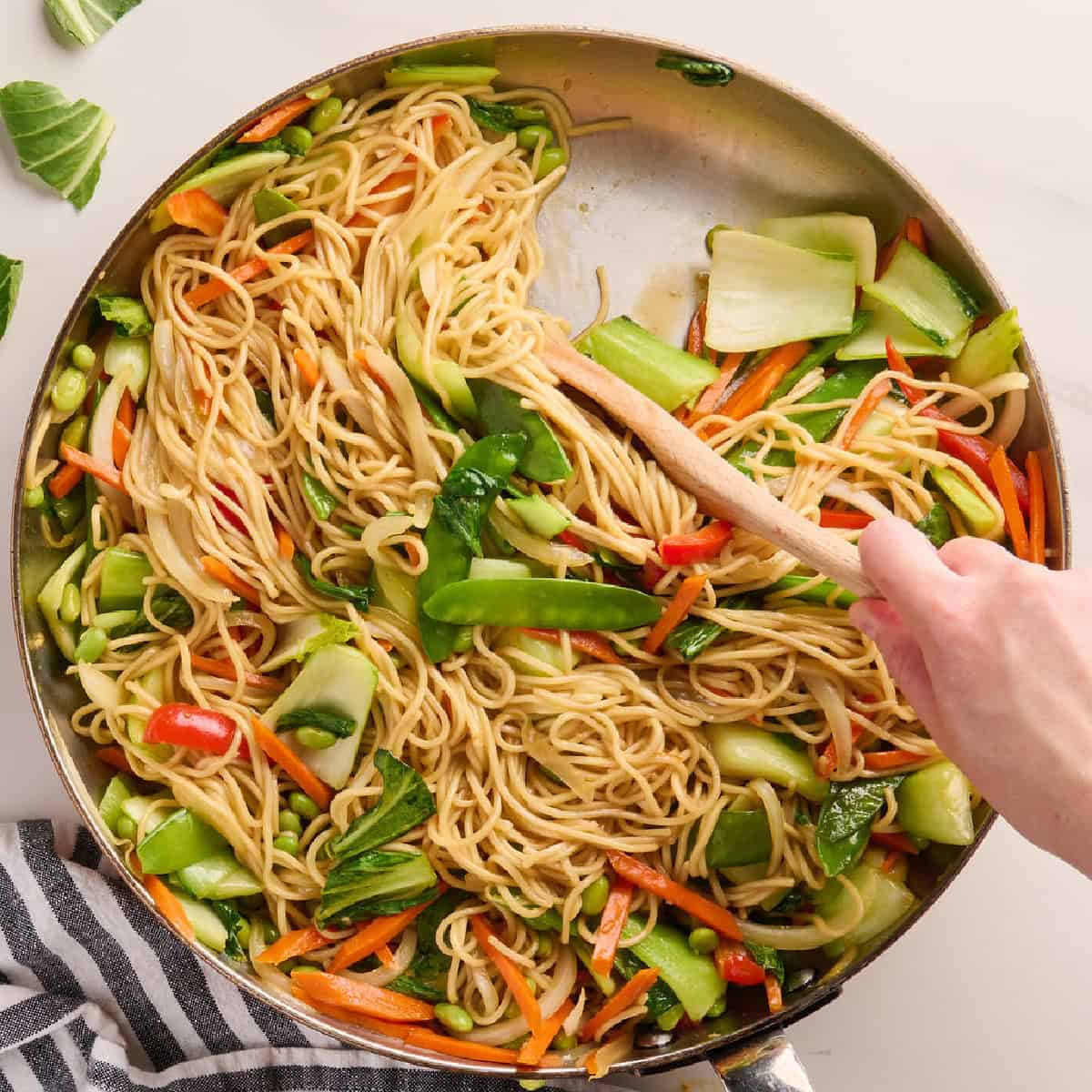
Cook for a few more minutes, stirring occasionally, to allow the ingredients to soak up the sauce.
How to Prepare Bok Choy for Stir Fry
Cutting bok choy into 1-inch pieces is the best way to prep it for stir fry. It can be added raw, and you do not need to blanch bok choy before stir frying. Some people prefer to add the stems before adding the leaves, since the stems take longer to cook. However, I add them at the same time since I think this naturally creates a variety of textures (crunchier stems, more tender leaves) in the final product!
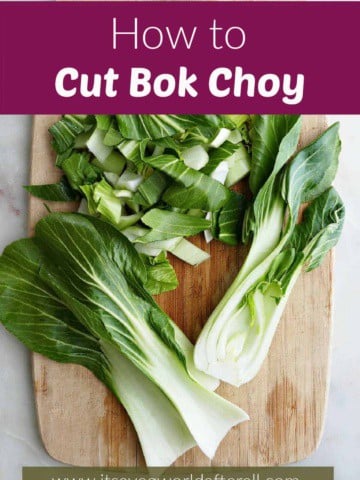
First, cut off and discard the root end. Peel apart the green leaves. Wash them under running water, rubbing off any dirt with your fingers. Pat dry to remove excess water. Stack the leaves on top of each other and cut in half lengthwise. Rotate the leaves and cut them crosswise into 1-inch pieces. For more information, see my tutorial on How to Cut Bok Choy.
Variations
- Add tofu, shrimp, or chicken: These are wonderful additions to bok choy stir fry. I recommended cooking them separately and adding at the same time as the sauce and noodles. You may need to double the sauce recipe if you are adding extra ingredients. Try my Vegan Crispy Panko Tofu for a fun addition!
- Swap noodles for rice: Cook brown or white rice, or even quinoa, and add to the stir fry in lieu of noodles.
- Make it spicy: Add ½ teaspoon red pepper flakes or up to a tablespoon of chili paste or sriracha to the sauce.
- Switch up the veggies: Sub broccoli, mushrooms, cauliflower, zucchini, green beans, or water chestnuts.
- Add garnish: Sprinkle with sesame seeds or sliced green onions.
Serving
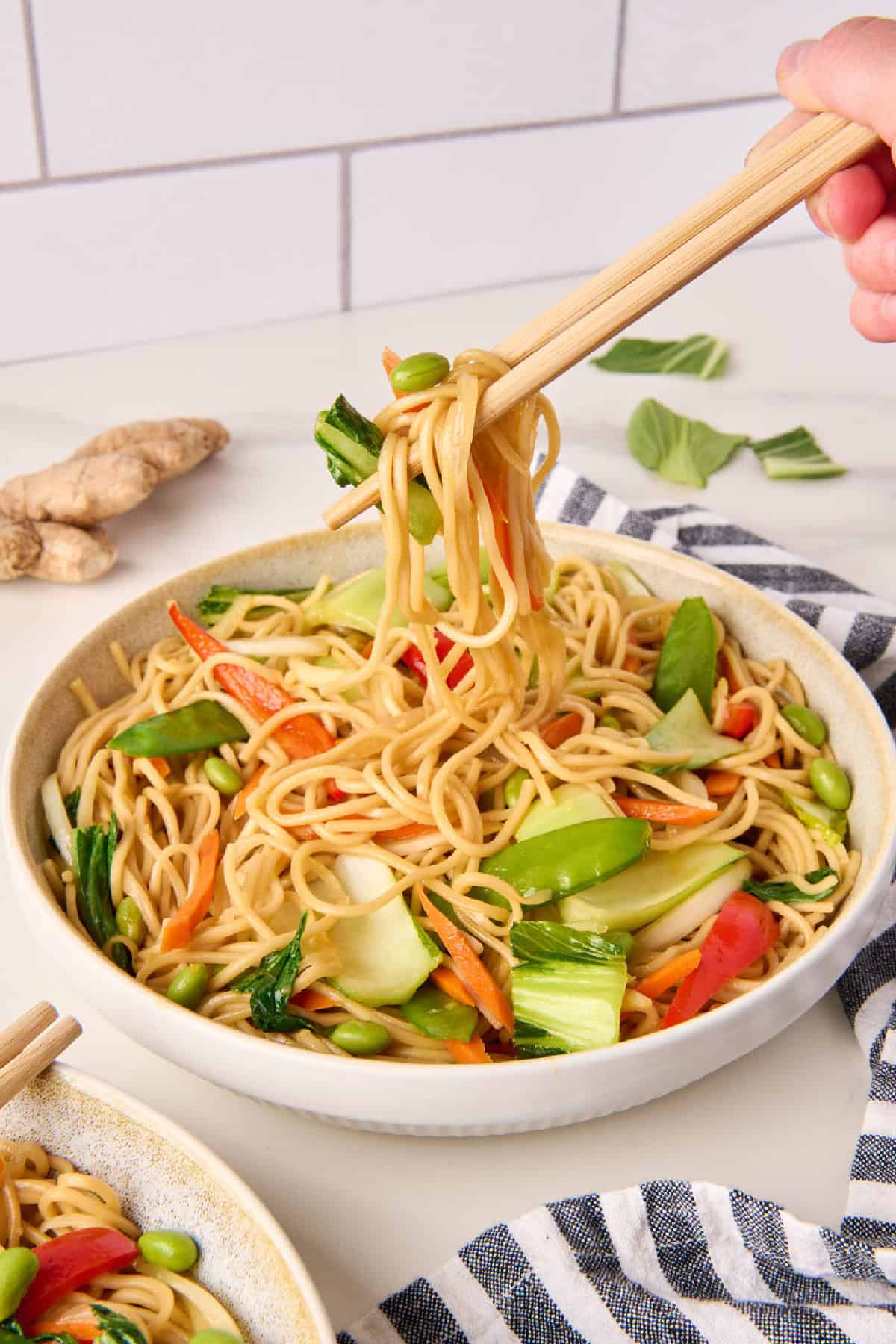
Bok choy stir fry stands alone as a vegetarian main or side dish! You can also serve it as part of a larger spread of Chinese food or Asian-inspired dishes, alongside Cucumber Edamame Salad, smashed cucumber salad, spring or egg rolls, and dumplings or potstickers.
Storage and Reheating
Keep leftover stir fry in an airtight container in the refrigerator for 3 to 4 days. Reheat in the microwave in 30-second intervals on high, stirring in between, until warm. Add a splash of soy sauce if it seems dry. You can also reheat in a skillet over medium heat with a little oil (olive or sesame) and a dash of soy sauce.
More Vegetable Dinner Recipes
Love this bok choy stir fry? Check out these other veggie-loaded options with similar flavors.
📖 Recipe
Bok Choy Stir Fry
Ingredients
Stir fry
- 8 ounces lo mein noodles
- 1 tablespoon sesame oil
- 1 tablespoon extra virgin olive oil - can sub avocado oil
- ½ large yellow onion - thinly sliced, about 1 cup
- 1 large bell pepper - thinly sliced, about 1.5 cups
- 1 large carrot - julienned, about ½ cup
- 1 cup snow peas - cut into 1-inch pieces
- 1 cup edamame - fresh or frozen
- 1 pound baby bok choy - chopped into 1-inch pieces, about 5 cups (see body of post for prep tips)
Stir fry sauce
- ⅓ cup reduced sodium soy sauce
- 2 tablespoons honey
- 2 teaspoons sesame oil
- 1 clove garlic - minced or pressed, about 2 teaspoons
- 1 teaspoon grated fresh ginger - can sub ¼ teaspoon ground
Instructions
- Cook the lo mein noodles according to package directions. Drain in a colander and rinse with cold water.
- Warm sesame and olive oils in a large skillet or wok over medium-high heat.
- Add the onion, pepper, carrot, snow peas, edamame, and bok choy (both leaves and stems) to the skillet. Stir to coat. The skillet will seem overly full, but the veggies (especially the bok choy) will cook down. Cook for 10 to 15 minutes, stirring occasionally, until softened to your liking. I prefer a short cooking time so that I don't overcook the veggies and they remain crisp-tender.
- While the veggies are cooking, make the sauce. Add the soy sauce, honey, sesame oil, garlic, and ginger to a measuring cup or bowl. Whisk until smooth.
- Add the sauce and cooked lo mein noodles to the skillet with the veggies. Let the sauce come to a simmer, then reduce heat to medium-low, and cook for a few minutes to allow the veggies and noodles to soak up the sauce. Stir occasionally to ensure everything is coated in the sauce.
- Spoon onto plates, and enjoy warm!
- Leave a rating or review by tapping the stars on this recipe card (above) or in the comments section (at the end of the post)!
Notes
- Noodle notes: You can use wide or thin lo mein noodles or substitute ramen, udon, soba, rice, or even thin spaghetti.
- Additions: If you want to add tofu, chicken, shrimp, and/or other vegetables, you may want to double the sauce to ensure it coats everything.
- Storage and reheating: Keep leftovers in an airtight container in the refrigerator for 3 to 4 days. Reheat in the microwave in 30-second intervals on high or in a skillet with a drizzle of oil and soy sauce over medium heat until warm.
Dian
This meal was absolutely delicious.
Lizzie Streit, MS, RDN
Hi Dian, I’m so glad you enjoyed it! Thanks for your 5-star review.
Beth Ellis
Lizzie did it again! This simple recipe hit all the right notes in terms of flavor and texture. I’d planned to add the red pepper flakes for my portion but didn’t really need it. I used wide rice ramen noodles, which made for an interesting look and stayed nicely on the fork😊
A top reason why I enjoy Lizzie’s recipes is that she leaves littlroom for error with details most recipes lack like substitutions and cooking tricks and tips that really help.
Lizzie Streit, MS, RDN
Hi Beth, I’m thrilled to hear this meal was another hit for you! Thank you for taking the time to leave a comment and for your kind words! I’m so glad my site is helpful to you.