
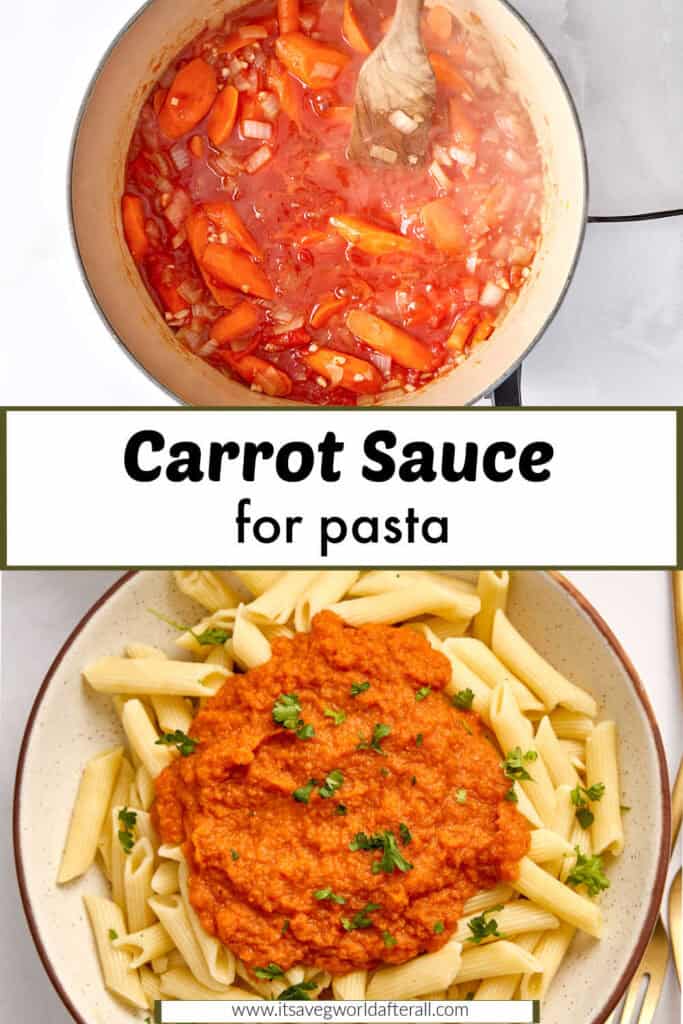
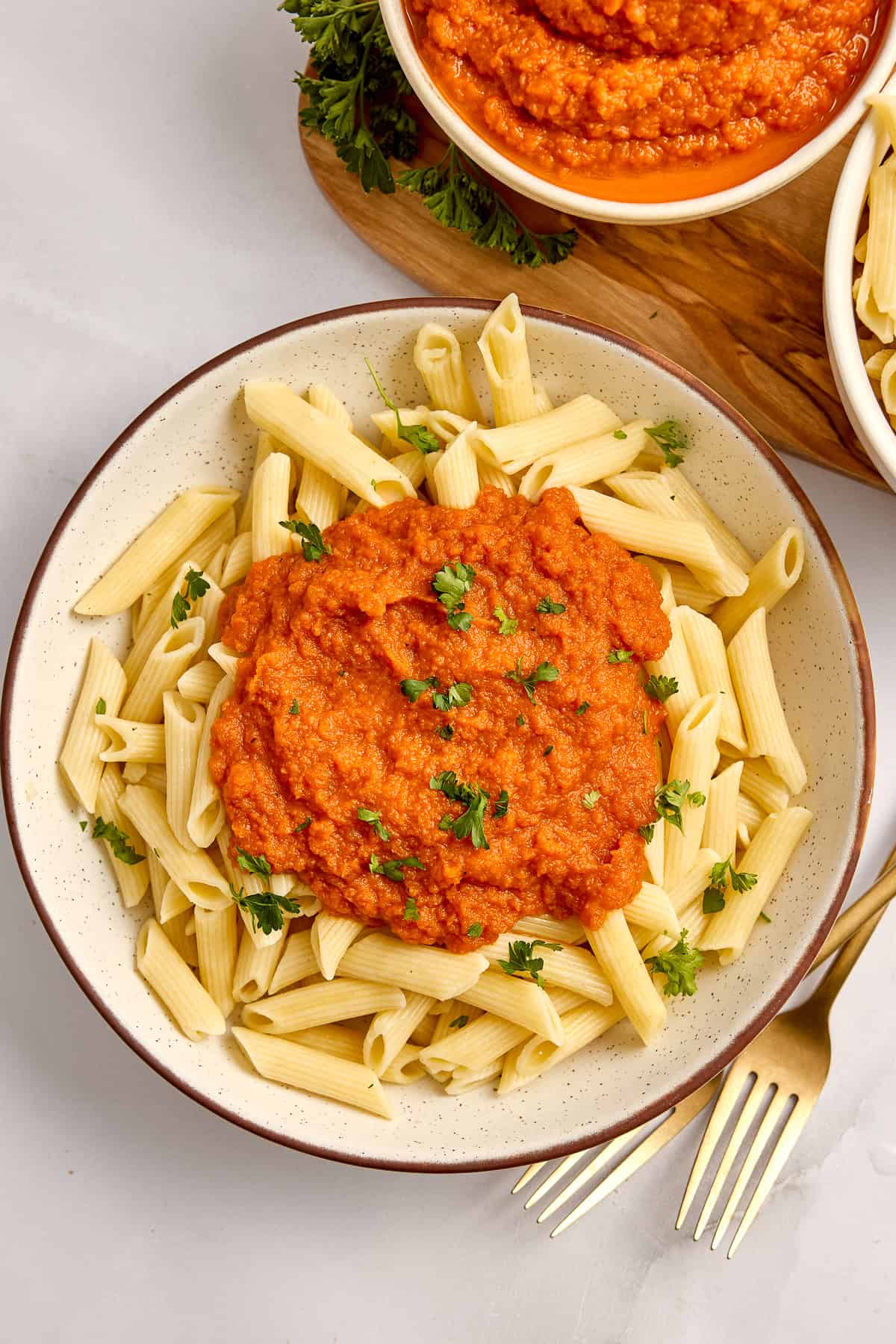
For a veggie-packed twist on classic tomato sauce, try this vegan carrot pasta sauce! Carrots lend a naturally sweet flavor that comes alive with a few simple ingredients you probably have on hand, including onion, garlic, and red wine vinegar (but no cashews). It’s a delicious option to help kids eat vegetables and a fun way to incorporate new recipes for carrots if you grow a lot in your garden or get them from a farm share.
Jump to:
Lizzie’s Notes
As a mom to two young kids, I understand the struggle of offering vegetables in ways that are appealing, safe, and fun for little ones! One of my favorite dietitian-approved hacks to check all three of those boxes is via recipes you can add to foods they already enjoy. And what kid doesn’t love pasta? (Ok, I’m sure there are a few of them out there…but most seem to be fans!)
This carrot pasta sauce is my latest innovation for solving veggie-related woes at the dinner table! It’s REALLY easy to make and tastes amazing, thanks to the pleasant sweetness that carrots provide. The moisture in carrots also contributes to the sauce’s smooth texture, and you can add more or less broth to make it chunkier or smoother to meet your family’s preferences.
On top of all that, there are a lot of benefits of eating carrots. They’re an excellent source of beta-carotene, a compound that’s responsible for their orange color and converts to vitamin A in the body. Beta-carotene and other compounds in carrots support immune health and the body’s antioxidant capacity to fight cell damage.
Last but not least, did I mention this recipe is gluten-free, dairy-free, nut-free, and vegan? Most carrot sauces on the internet contain cashews, cheese, cream, or milk, but I intentionally left these out to make it more versatile and allergy-friendly. (But if you want to add them, I give you tips on how to do so!) Enjoy!
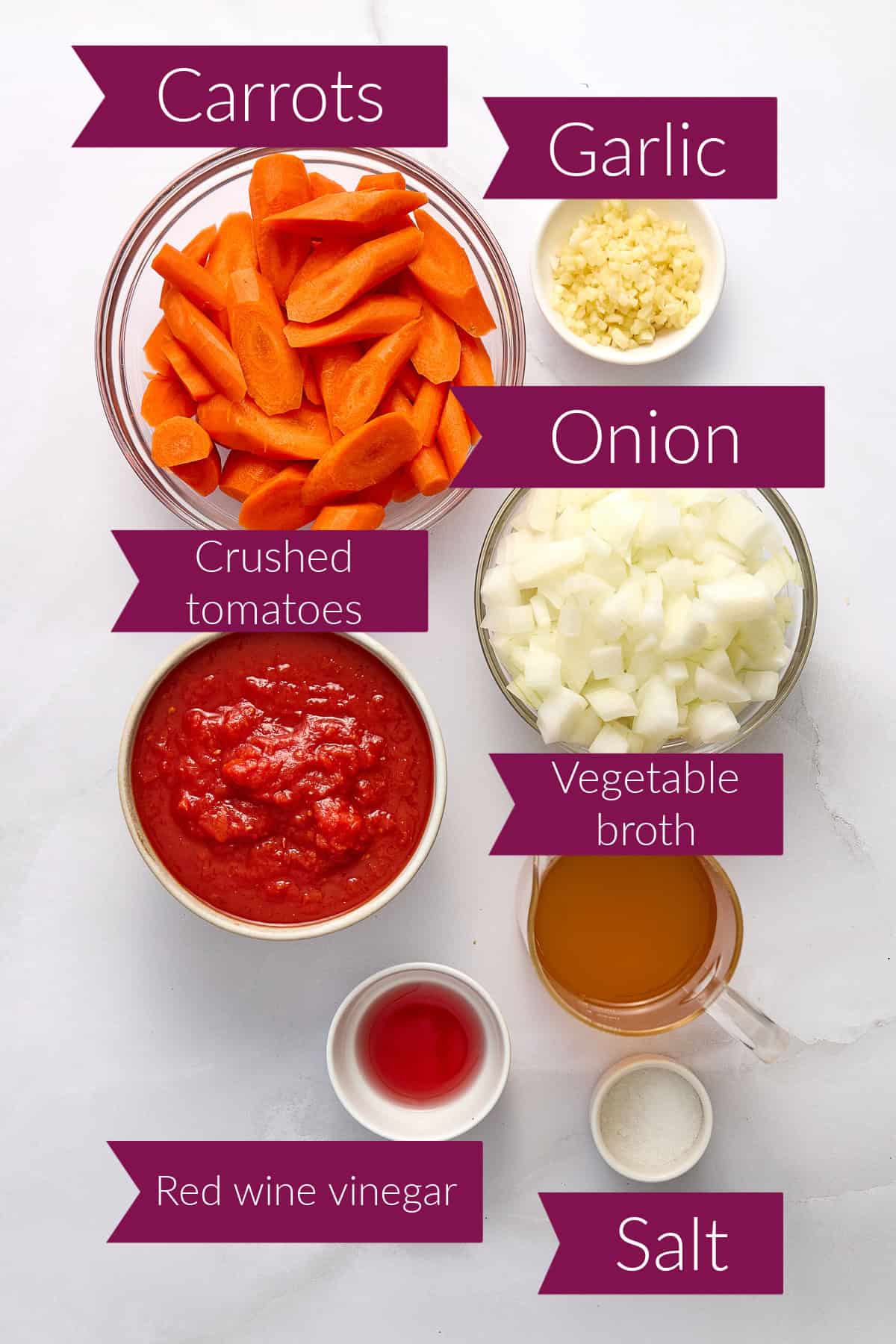
Ingredients and Substitutions
- Carrots: I prefer using orange carrots to get that beautiful color, but it will work with purple, yellow, red, or baby carrots too.
- Onion: I use sweet onion, but you can sub yellow or red.
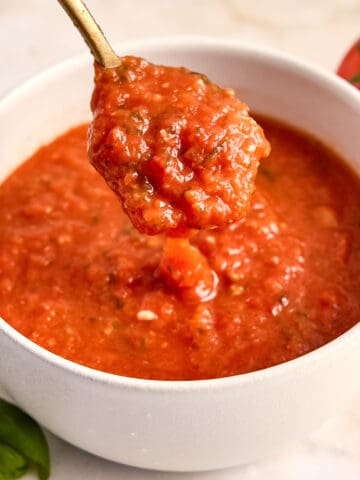
- Canned crushed tomatoes: My favorite brand is Cento, but they usually only sell 28 ounce cans (which makes it easy to double the recipe though if you don’t want leftover tomatoes!). You can sub diced tomatoes if you don’t have crushed or even use my Fresh Tomato Sauce. I don’t recommend using fresh tomatoes due to their higher water content. They’re also not as flavorful in sauces.
- Garlic: Fresh is best in homemade carrot pasta sauce. You can sub a teaspoon of garlic powder or dried minced garlic in a pinch!
- Vegetable broth: I enjoy using Whole Foods 365 or Pacific Foods brands. You can substitute chicken broth for additional flavor if you don’t need the sauce to be plant-based.
- Red wine vinegar: This is a beautiful complement to the tomatoes and carrots and helps balance their naturally sweet flavors. If you don’t have it on hand, sub white wine vinegar, balsamic vinegar, or lemon juice.
- Salt: I used table salt, but you can sub kosher salt in 1.5 to 2 times the amount.
How to Make Carrot Pasta Sauce
The full recipe card with ingredient amounts is at the bottom of the post. Here’s a preview of the steps with photos and tips to guide you in the kitchen.
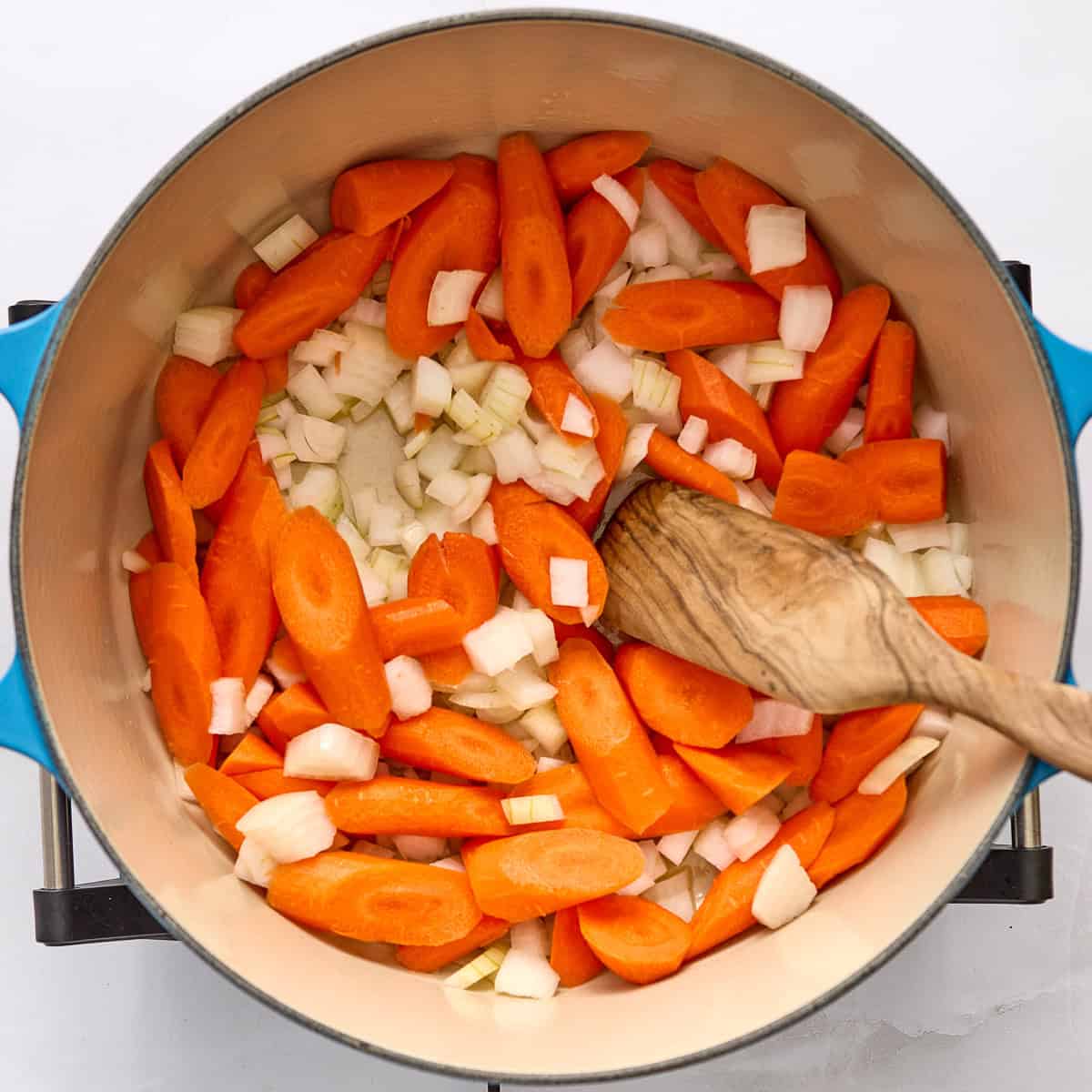
Cook carrots and onions. Sauté in olive oil over medium heat until the onions are translucent and the carrots start to soften around the edges.
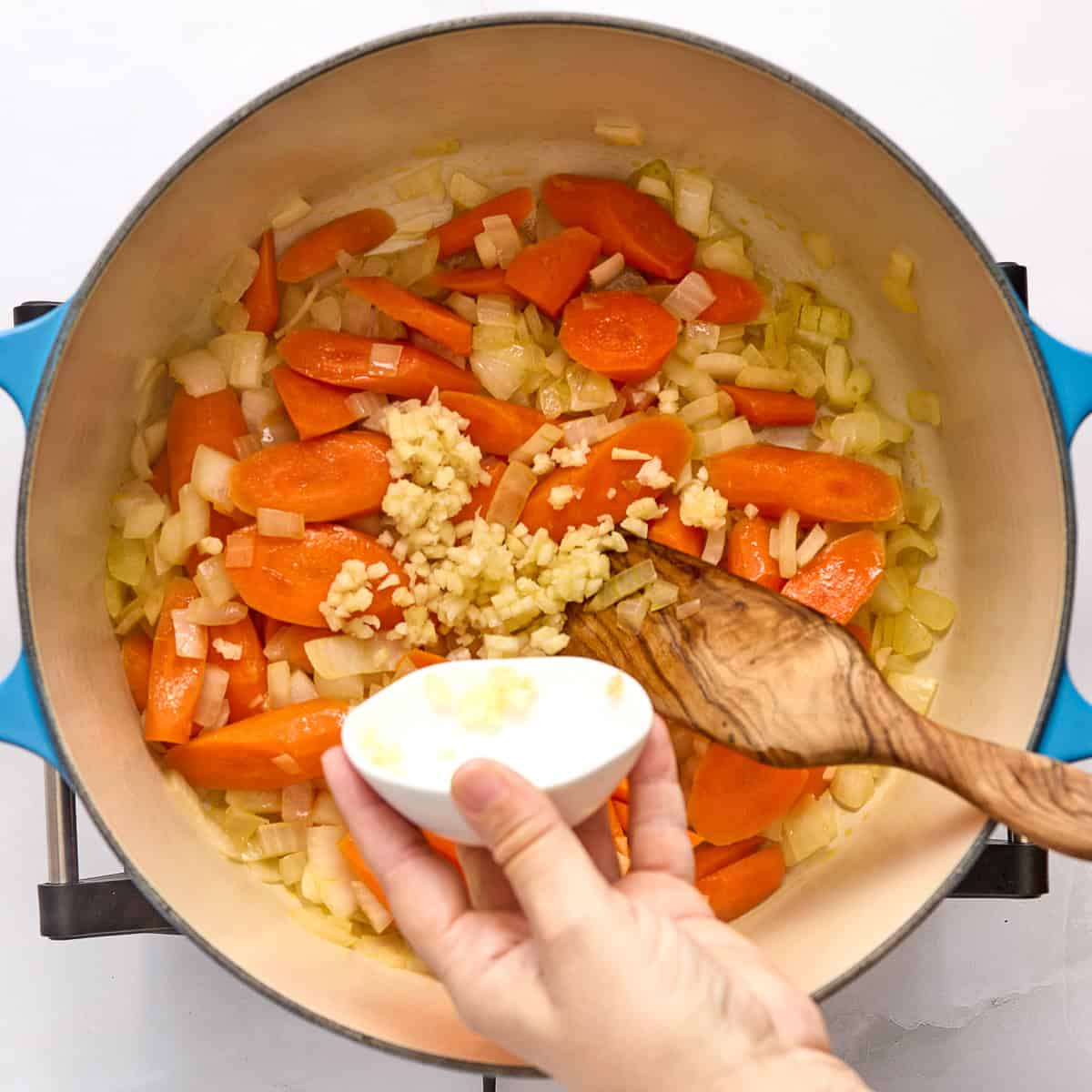
Add garlic and salt. Cook for another minute or two until fragrant, being careful not to burn it.
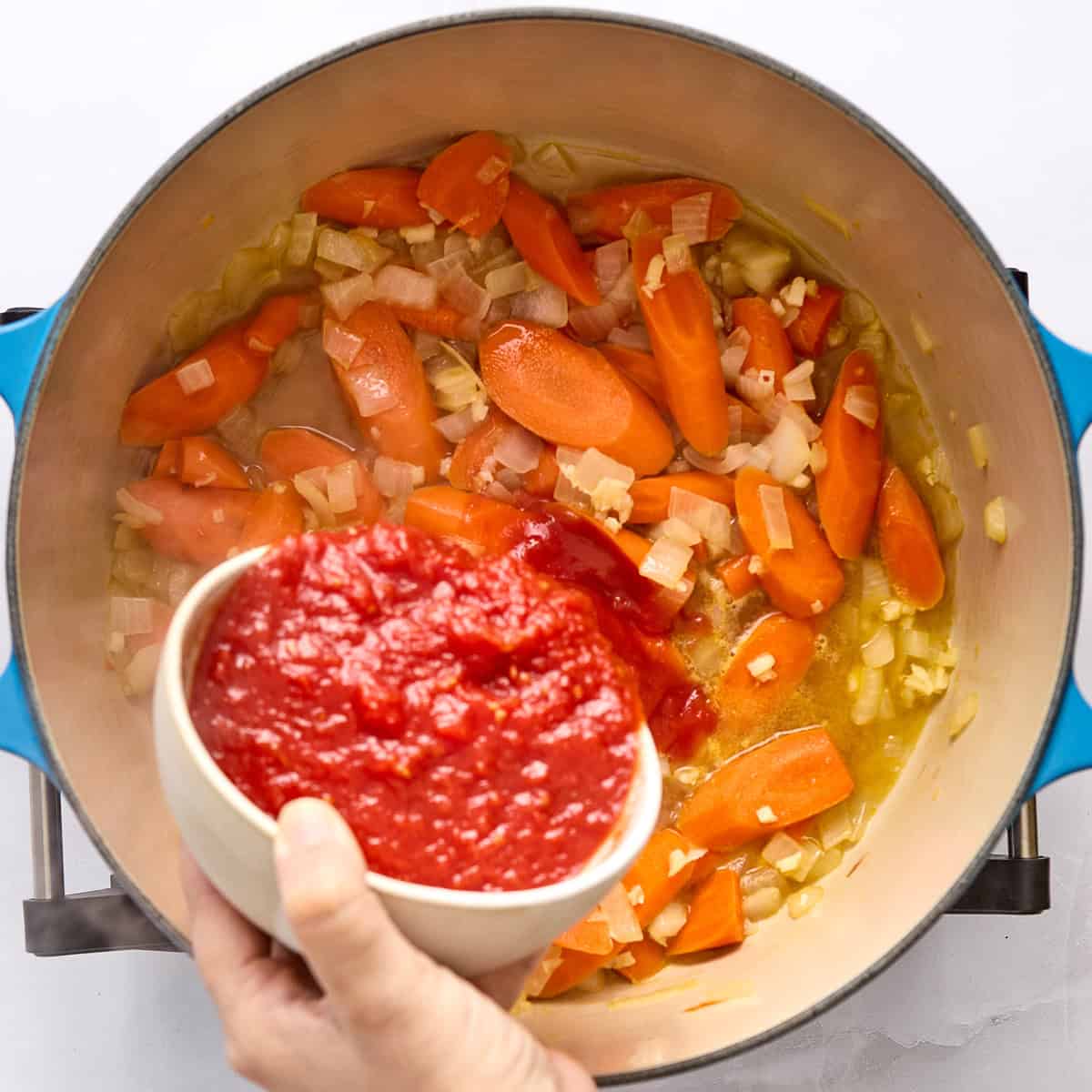
Add crushed tomatoes, broth, and vinegar. Some people suggest adding acid at the end of the process so it doesn’t lose its flavor, but I prefer adding it with the broth so that it brings out the flavors of the vegetables during the simmering process.
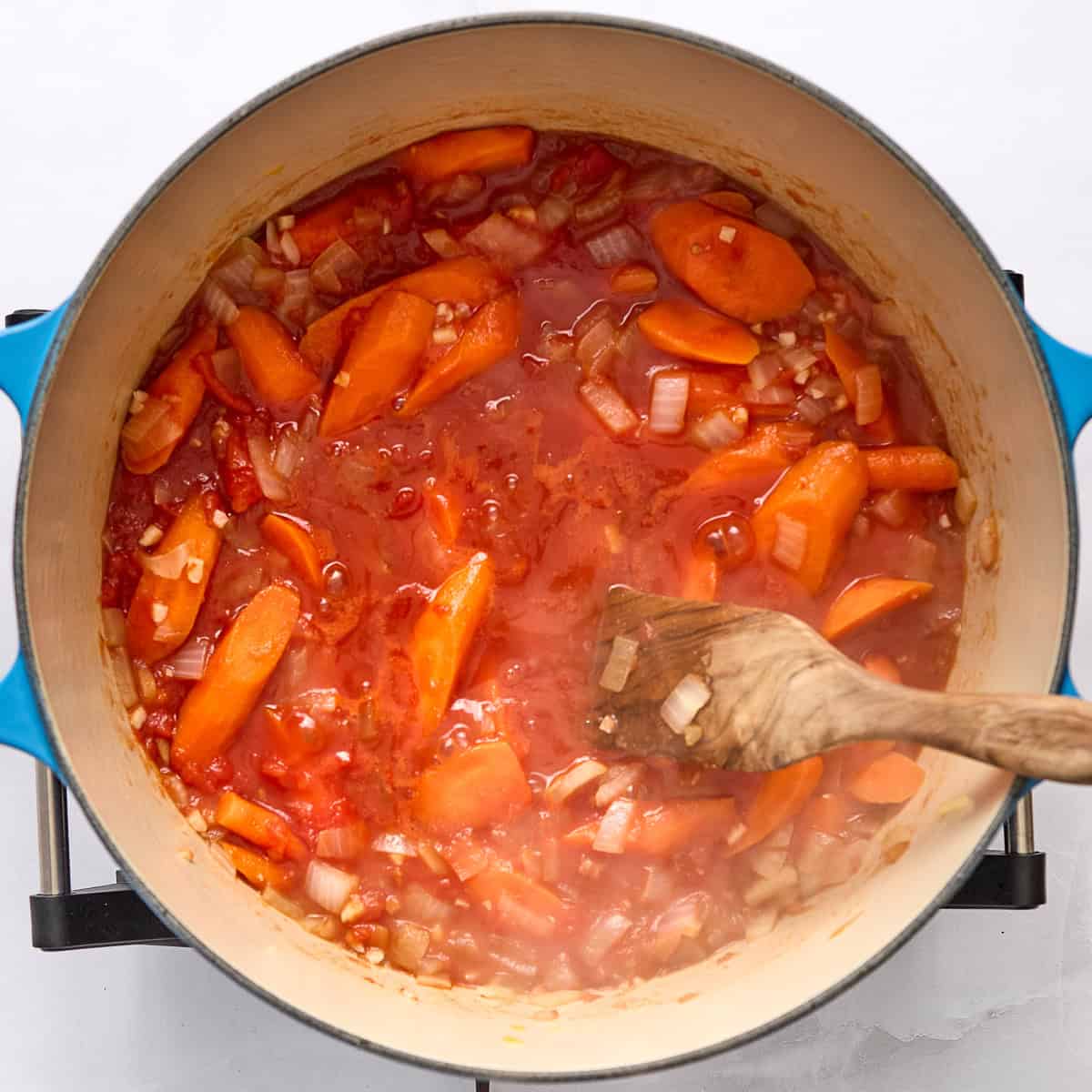
Simmer until the carrots are fork-tender. This can take between 10 and 15 minutes.
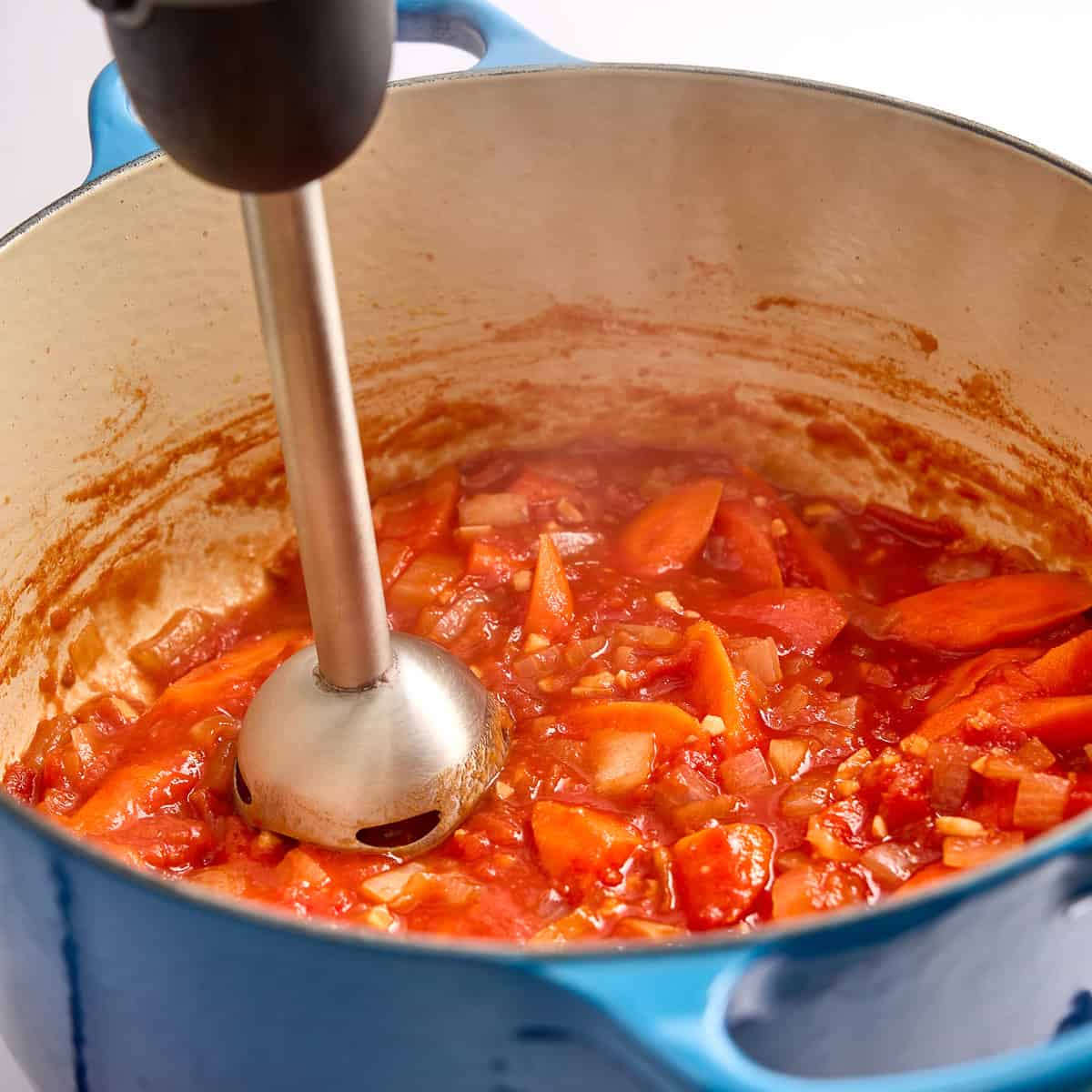
Puree until smooth. The easiest way is using an immersion/hand blender right in the pot. You can also use an upright blender or food processor. See the recipe card for tips.
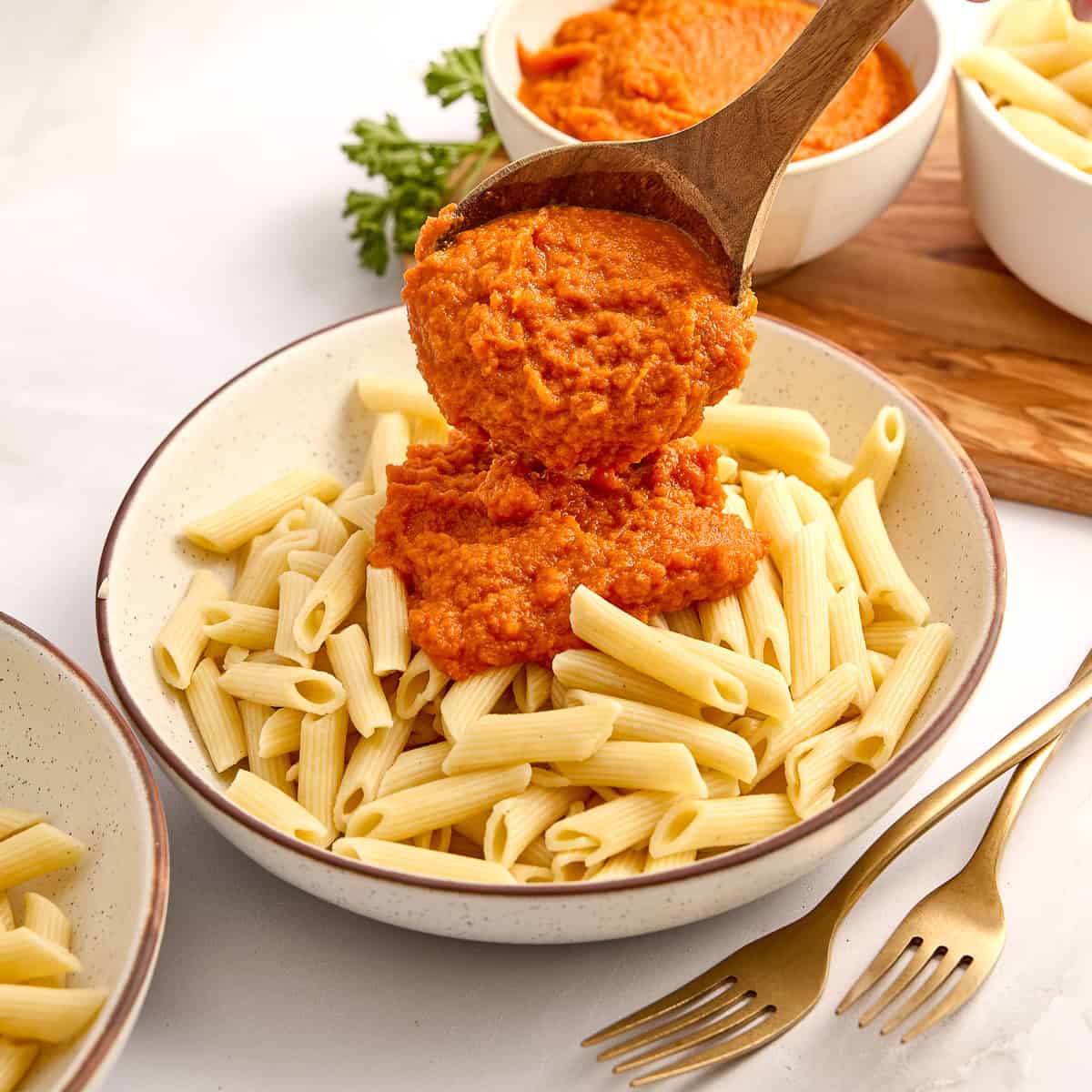
Spoon onto your favorite pasta. If you want very smooth sauce (for kiddos who prefer that texture), add more broth during the cooking process or while blending.
Easy Ways to Customize It
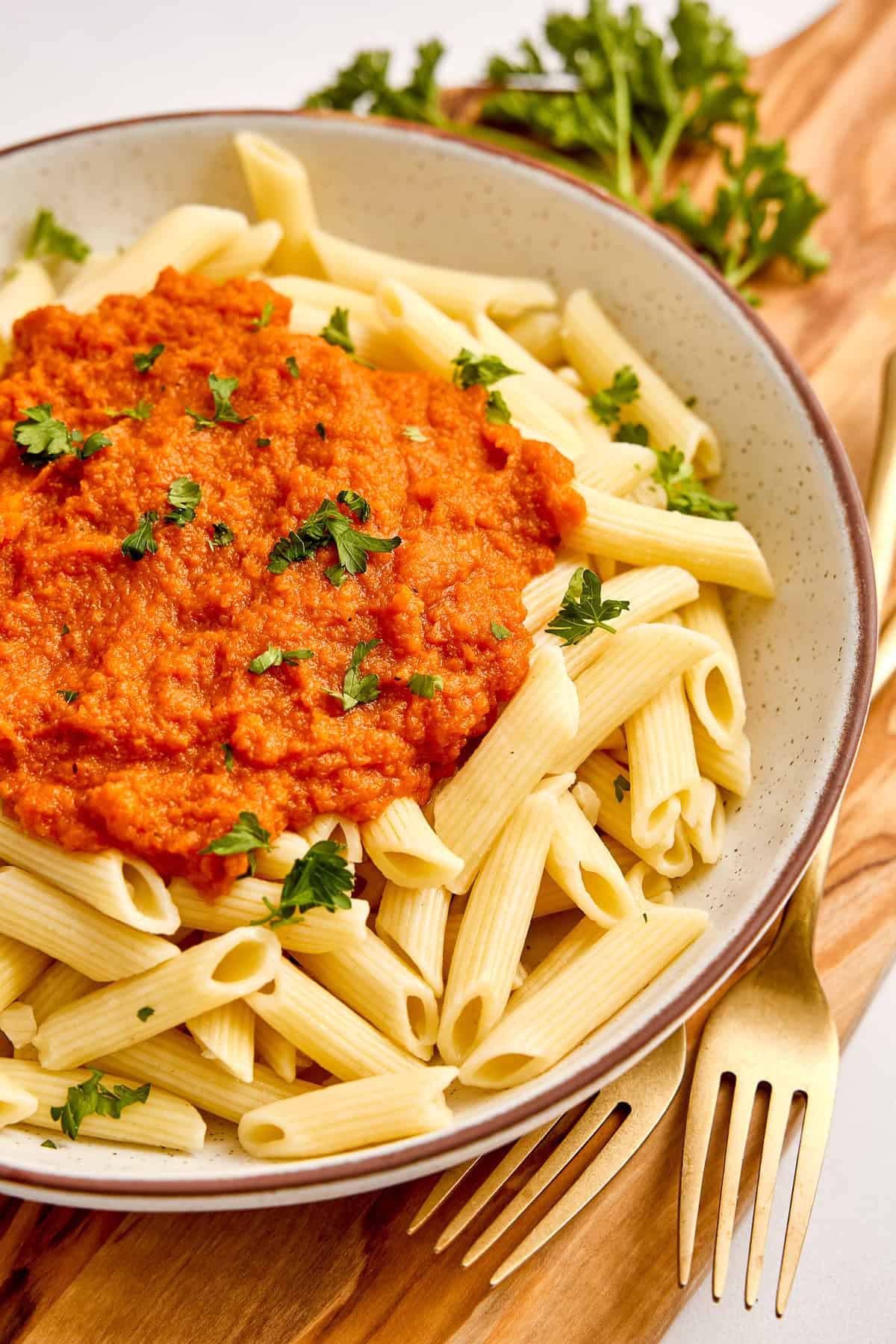
- Garnish with herbs: Sprinkle chopped parsley, basil, oregano, or thyme before serving for color and flavor.
- Boost protein: Serve cooked Italian sausage (ground or sliced links) on top of a bed of pasta topped with carrot pasta sauce. For a plant-based option, you can add a can of white beans (navy, cannellini, or great Northern) to the pot before blending. Add extra broth to promote blending if needed.
- Add more veggies: Stir chopped baby spinach or kale into the sauce at the end of cooking until wilted. Roasted or sautéed mushrooms (like my Caramelized Mushrooms) taste great on top too.
- Make it spicy: Add ¼ to 1 teaspoon of red pepper flakes and/or ½ teaspoon freshly ground black pepper at the same time as the salt.
- Make it creamy or cheesy: Add a few spoonfuls of ricotta or cottage cheese before blending. Alternatively, you can add a splash of heavy cream after blending or stir in grated cheddar or parmesan cheese before serving. It would also taste delicious with crumbled feta or goat cheese as garnish. For a vegan option, add ½ cup soaked cashews to the pot before blending.
Serving Ideas
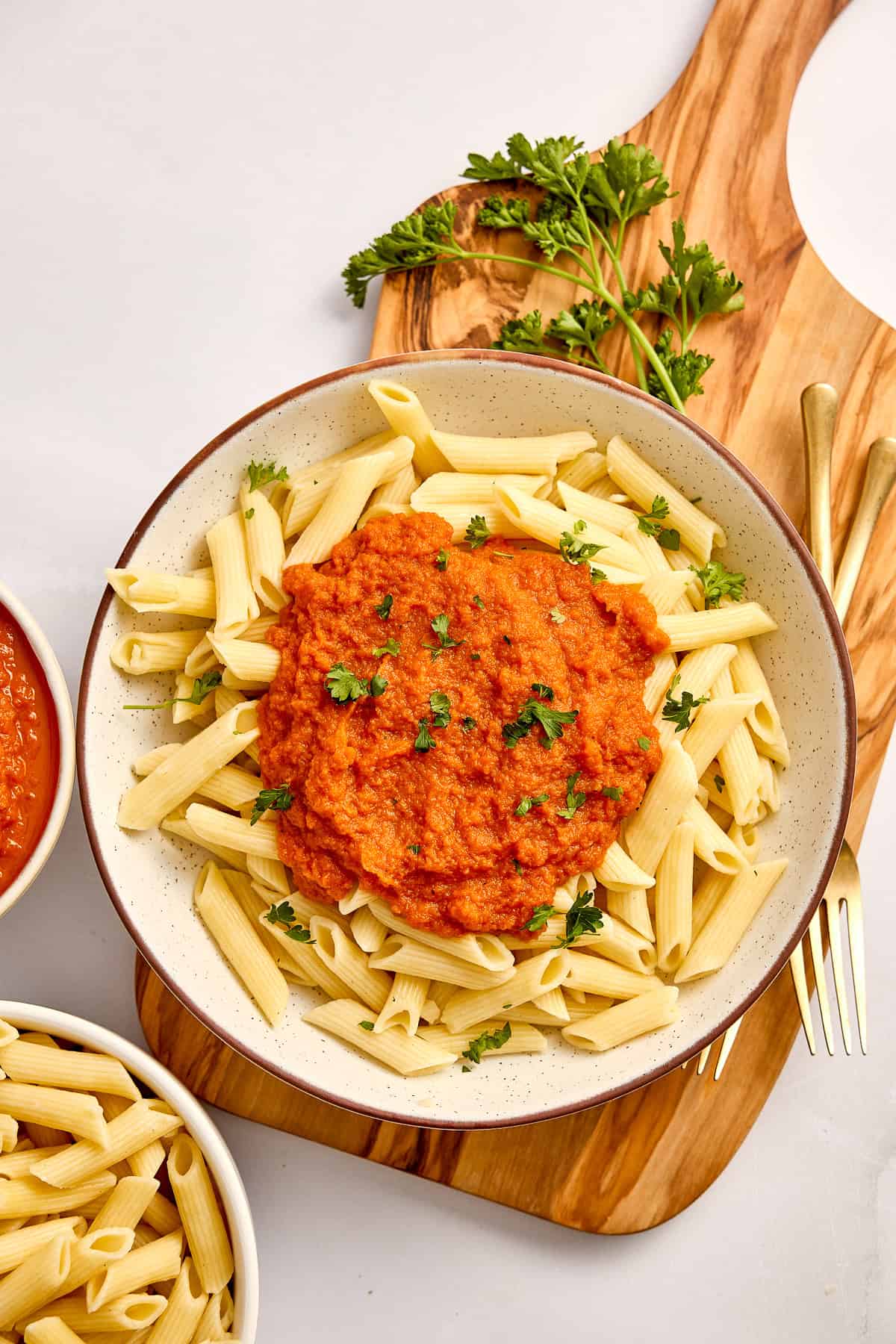
I love carrot pasta sauce over short cut pastas, such as penne, rigatoni, farfalle, and elbow macaroni. It also works well with spaghetti, fettuccine, and other long cut varieties. For a meal with more staying power, pair it with ravioli, gnocchi, tortellini, sautéed shrimp, or roasted chicken or fish. My family has enjoyed it with my Sautéed Chickpeas and Crispy Tofu. It can even be used in lieu of regular tomato sauce in pasta bakes or other recipes that call for marinara sauce!
Storage Tips
Store this sauce in an airtight container or jar in the refrigerator for 3 to 5 days. It will thicken slightly as it cools, due to the natural starches in carrots absorbing liquid over time. If it’s too thick for your liking, add some broth while reheating. However, keep in mind that the heating process will cause it to get thinner as well, so be careful not to add too much liquid at first. Reheat in a saucepan over medium-low heat, stirring frequently, for about 5 to 8 minutes until warm.
To freeze carrot sauce, let it cool completely then transfer to freezer-safe containers. Leave about an inch of headspace to allow for expansion. Seal tightly, label, and freeze for up to 3 months. Let it thaw in the fridge before reheating. To reheat straight from frozen, transfer to a saucepan with a lid. Cover and heat over medium-low heat, stirring frequently to prevent scorching, until warm.
More Veggie Pasta Recipes
- Hidden Veggie Pasta Sauce
- Beet Pasta Sauce
- Green Pasta Sauce
- Meatless Baked Ziti with Vegetables
- One Pot Pumpkin Tomato Pasta
- Hidden Veggie Mac and Cheese
If you’re in the mood for more carrot recipes, check out the Parmesan Smashed Carrots, Carrot Fritters, Spiced Carrots and Dates, and Healthy Carrot Cake Bars (No Bake).
📖 Recipe
Carrot Pasta Sauce
Equipment
Ingredients
- 2 tablespoons extra virgin olive oil
- 1 yellow onion - diced, about 1.5 cups
- 1 pound carrots - about 5 medium, peeled and diced
- 4 cloves garlic - minced
- 14.5 ounces canned crushed tomatoes
- ¾ to 1.5 cups vegetable broth
- 2 teaspoons red wine vinegar
- ½ teaspoon salt - more to taste
- Pasta for serving
- Finely chopped fresh parsley - for garnish, optional
Instructions
- Warm olive oil in a pot or large saucepan over medium heat. Add the diced onion and carrots and cook, stirring often, for 10 to 12 minutes until the carrots start to soften. Add the garlic and cook for a minute or two more until fragrant.
- Pour the crushed tomatoes (with their juices), broth, and red wine vinegar into the pot. Stir in the salt. Start with ¾ cup of broth. Add more if needed during blending, but the carrots release water as they cook, so you may not need as much as you think.
- Bring to a simmer over medium-high heat, then reduce heat to low, cover, and cook for 10 to 15 minutes until the carrots are fork-tender.
- While the veggies cook, prepare your pasta of choice until it is al dente according to package directions.
- Remove from heat. Use an immersion blender to blend the sauce right in the pot, adding splashes of broth to make it smoother if needed. If you don’t have an immersion blender, see notes for blending the sauce in an upright blender or food processor. Taste and adjust seasonings (add more vinegar, salt, black pepper, or even red pepper flakes) as desired.Tip: If you prefer the sauce to be a little thicker, let it cool and sit in the fridge for a few hours before serving.
- Spoon sauce over cooked pasta. Garnish with parsley. Enjoy!
- Leave a rating or review by tapping the stars on this recipe card (above) or in the comments section (at the end of the post)!
Notes
- Upright blender or food processor: If you don’t have a handheld/immersion blender, you can use one of these tools. Carefully transfer the cooked vegetable mixture to your blender or food processor. Leave a corner of the lid cracked, or remove the plastic circle from the center, to allow steam to escape. Hold a clean dish towel over the cap if you remove the circle. Blend on low until smooth, about 30 to 60 seconds. Add splashes of broth as needed to reach your desired thickness. Blend the sauce in batches if needed to avoid overfilling the blender or food processor.
- Storage and reheating: Keep leftovers in an airtight container in the refrigerator for 3 to 5 days. The sauce will thicken slightly as it cools. It will get thinner as it reheats, but you can add more broth to it during reheating if desired. Reheat in a saucepan over medium-low heat, stirring frequently, for about 5 to 8 minutes until warm.
- Freezing: Let the sauce cool before transferring to freezer-safe containers. Leave about an inch of headspace, seal tightly, and label. Store in the freezer for up to 3 months. Thaw in the fridge before reheating, or reheat straight from frozen in a saucepan with a lid over medium-low heat. Stir frequently to prevent scorching.
- Nutrition notes: Nutrition facts do not include pasta. If you’re making this for a baby, omit the salt.
Meg
So good!!
Lizzie Streit, MS, RDN
So glad to hear it! Thanks for leaving a 5-star review 🙂