
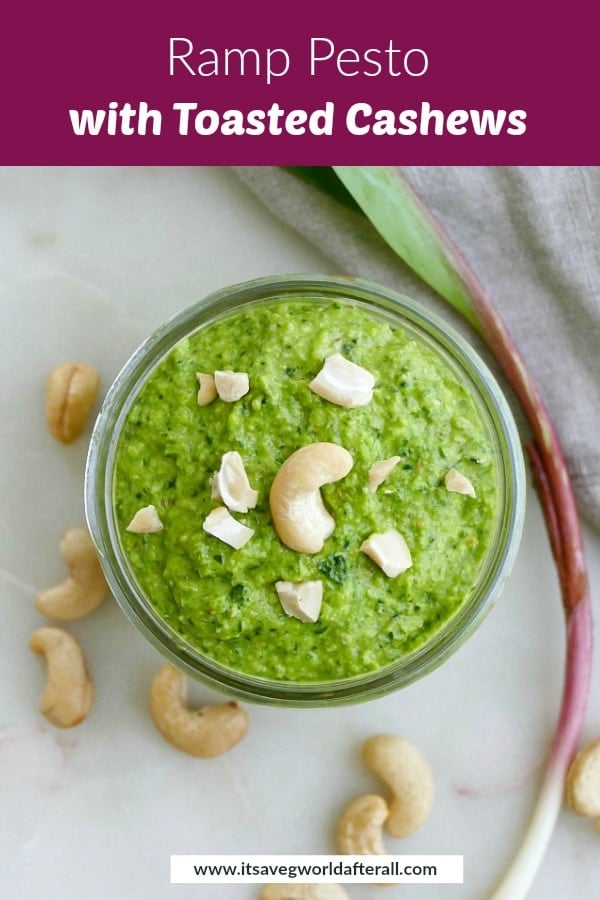
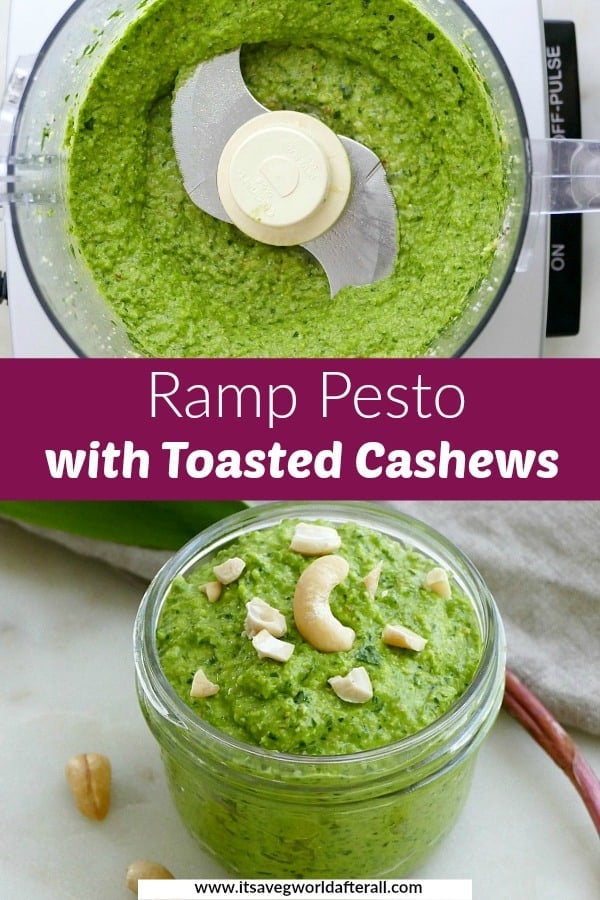
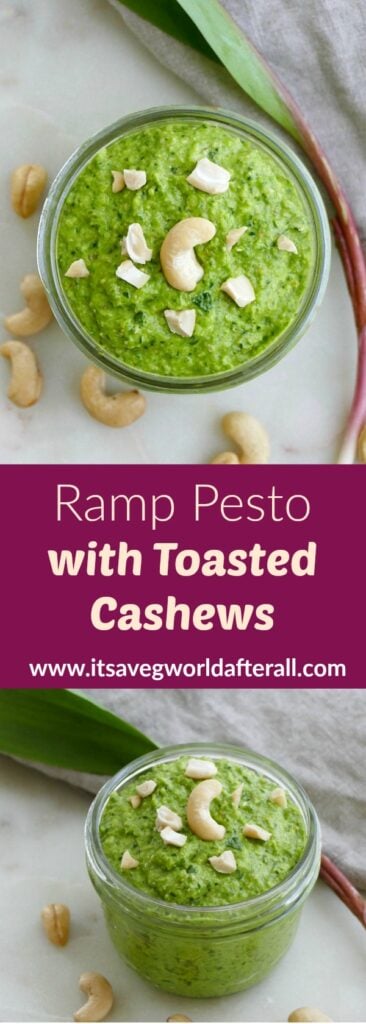
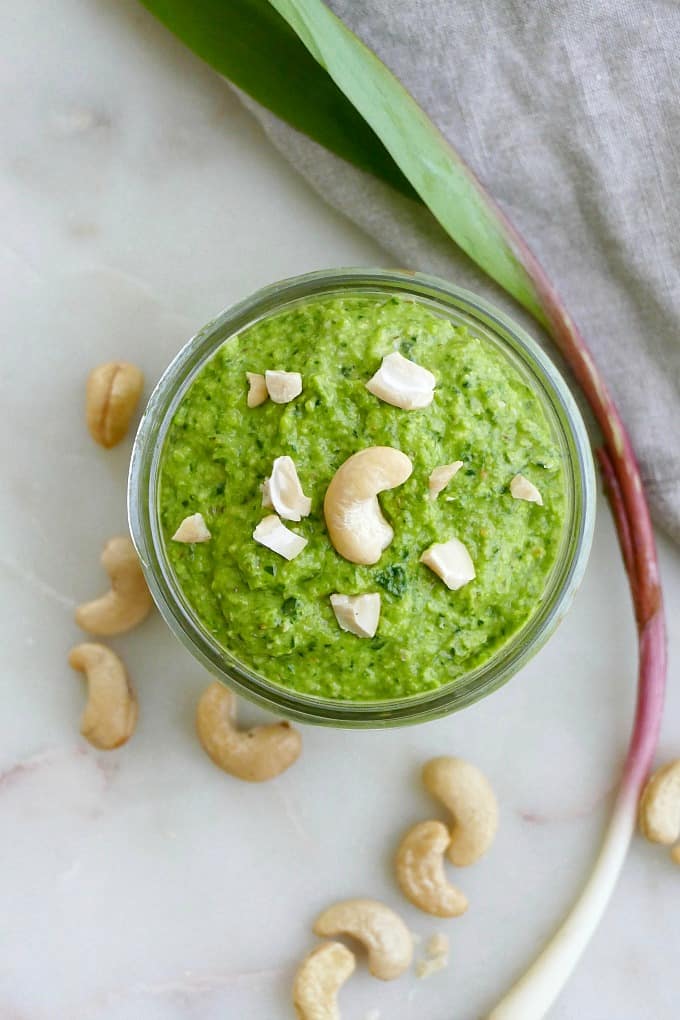
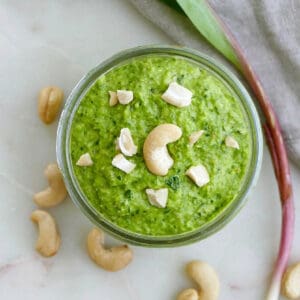
If you’re lucky enough to have access to ramps during their short spring season, you must pick up a bunch and make this ramp pesto recipe. These wild onions lend a garlic-like flavor that pairs beautifully with salty parmesan cheese. Cashews, added in lieu of commonly used pine nuts, make the final texture creamy and rich. And best of all, you’ll use the entire ramp from stem to leaf so nothing goes to waste!
This post was originally published in May 2019. It was updated with helpful information in July 2026, but the original recipe remains.
Jump to:
Lizzie’s Notes
In the Veg World, the middle of May is pretty darn exciting. Throughout the eastern US, the Midwest, and Canada, it’s ramp season! I love taking advantage of this short window to create spring recipes that highlight their signature flavor.
This ramp pesto recipe is one of my favorite experimentations to date. By using ramps instead of herbs and toasted cashews as the nut of choice, it differs from classic basil pesto. However, it still includes parmesan cheese, extra virgin olive oil, and lemon juice, so the flavor isn’t completely out of the ordinary.
I wasn’t sure how the cashews would taste in the pesto, but they turned out to be an amazing addition. Their creamy texture and sweet taste is the perfect complement to ramps, and toasting them brings out even more of their flavors. If you like garlic, onions, and a rich, buttery texture, I think you’ll find this pesto even better than traditional versions!
What Are Ramps?
Ramps are a type of wild onion with a short season that usually only lasts through May or early June if you’re lucky. They used to only grow in the wild, but farmers and home gardeners now plant and harvest ramps. Their flavor and freshness is unmatched by any other type of onion, making them a sought-after ingredient.
Ramps taste like a cross between scallions (green onions) and garlic. Raw ramps have a robust flavor that epitomizes the allium family (garlic, onions, chives, shallots, leeks, etc). Cooked ramps (like my Simple Sea Salt and Lemon Grilled Ramps) are more mellow.
This unique vegetable only grows in North America and typically only in the midwestern and eastern United States and Canada. If you live in one of the areas where ramps grow, you can likely find ramps at a local farmers market, co-op, or a grocery store like Whole Foods.
If you don’t live in one of these areas, you should still take your chances and check out a co-op or Whole Foods. Since ramps are a popular ingredient among culinary enthusiasts in the spring, some stores may carry them even if they come from far away.
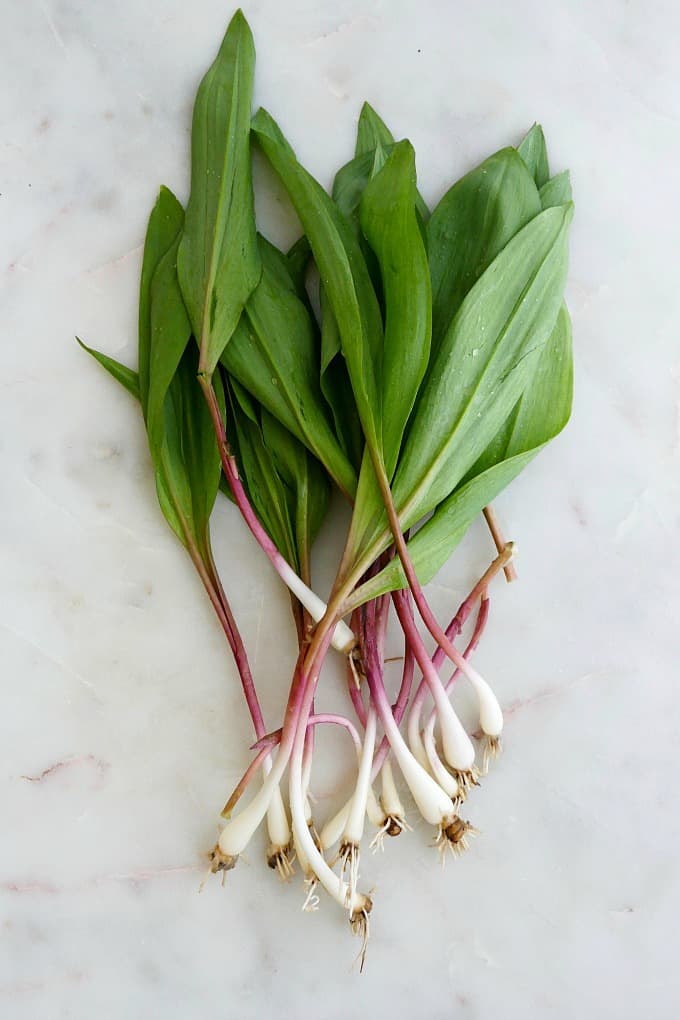
Ingredients and Substitutions
- Ramps: I don’t really recommend a substitute, since they are the star of this ramp pesto recipe!
- Cashews: Cashews are an excellent choice when making pesto, since their high natural fat content yields a creamy, buttery texture. They’re also softer than other nuts and break down easily. Plus, they taste naturally sweet and don’t make the pesto bitter. For some variations of ramp pesto, substitute toasted pine nuts, pistachios, walnuts, or dry roasted sunflower seeds for a nut-free version. Keep in mind that the type of nut or seed you use will change the flavor.
- Parmesan cheese: When making homemade pesto, I like to buy a block of parmigiano reggiano and grate it by hand so that I get the freshest flavor possible. You can also use pre-shredded parmesan cheese to save time. For a vegan ramp pesto, sub a few tablespoons of nutritional yeast or just omit the cheese entirely and season with salt.
- Extra virgin olive oil: Use a high-quality option like Partanna or Zoe.
- Lemon juice: I don’t recommend making a sub for this if you can help it, but you can use apple cider vinegar in a pinch.
How to Make This Ramp Pesto Recipe
The full recipe card is at the bottom of the post. Here’s a preview of the steps with photos to guide you in the kitchen.
- Clean the ramps under cold water. Pat dry. You don’t need to blanch the ramps before making pesto and can just use them raw.
- Trim off the very bottom of the roots. Be careful not to over-trim the bulbs (white part), because there’s a ton of flavor in there!
- Roughly chop the white and purple/red parts and the leaves.
- Toast the cashews in a skillet over medium heat until fragrant and lightly browned, about 5 minutes. Do not burn them.
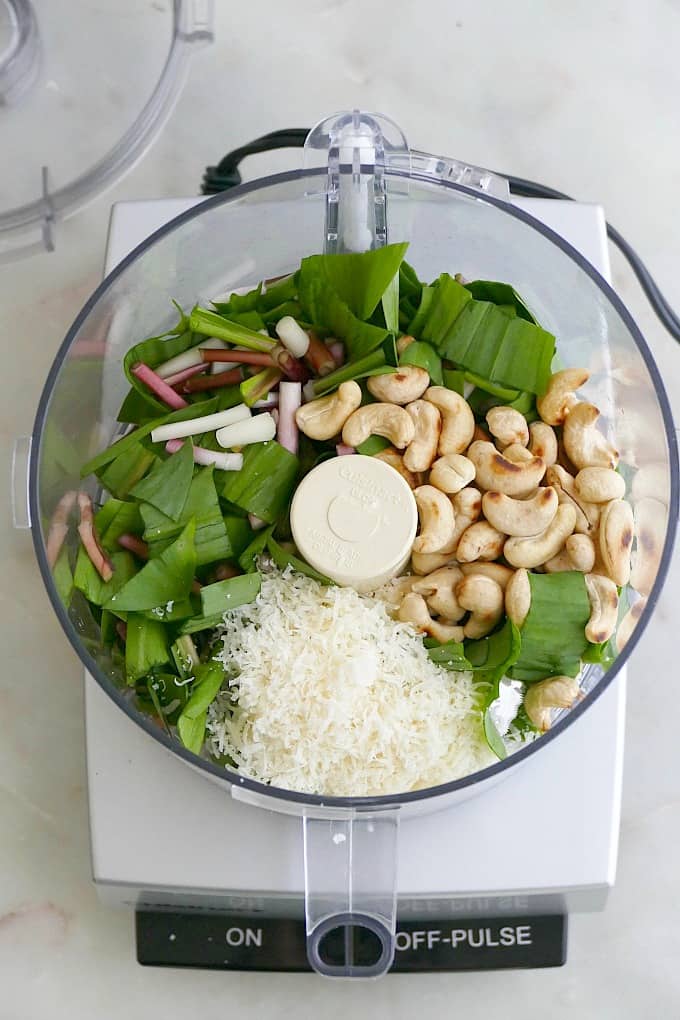
- Add the ramps and cashews to a food processor or high-powered blender like a Vitamix, along with the parmesan cheese, lemon juice, and olive oil.
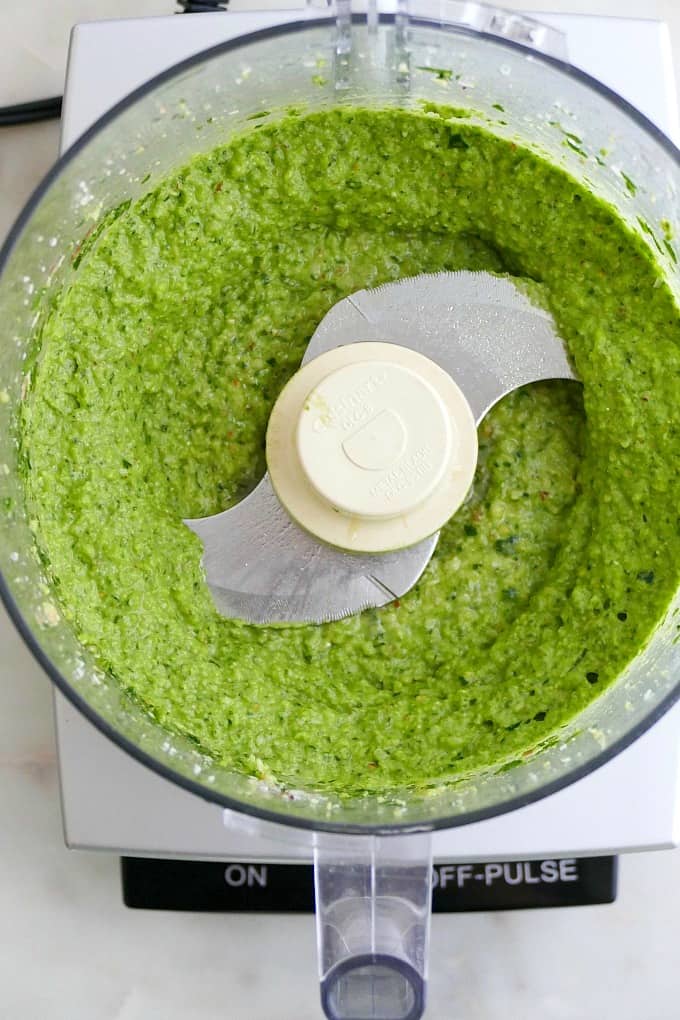
- Blend until smooth and creamy with no visible cashew pieces. Stop to scrape down the sides as needed to promote blending.
Ways to Use It
- Spread on pizza (like my Asparagus and Mushroom Naan Bread Pizza)
- As a pasta sauce or spooned over gnocchi
- As a dipping sauce for raw vegetables, potato chips, or pretzel crisps (or try my Creamy Ramp Dip!)
- Spread on toast (top with an egg or smashed white beans for an easy breakfast or lunch)
- As a sauce for grilled chicken or salmon
- Used in place of mayo, mustard, or hummus on a sandwich or wrap (like on my Pesto Wraps with Chickpeas)
- Spread on crostini for an appetizer
- Dolloped onto roasted vegetables, including roasted potatoes
- Stirred into soup
- As a base for salad dressings
- Stirred into scrambled eggs
- Added to grain bowls
Storing and Freezing
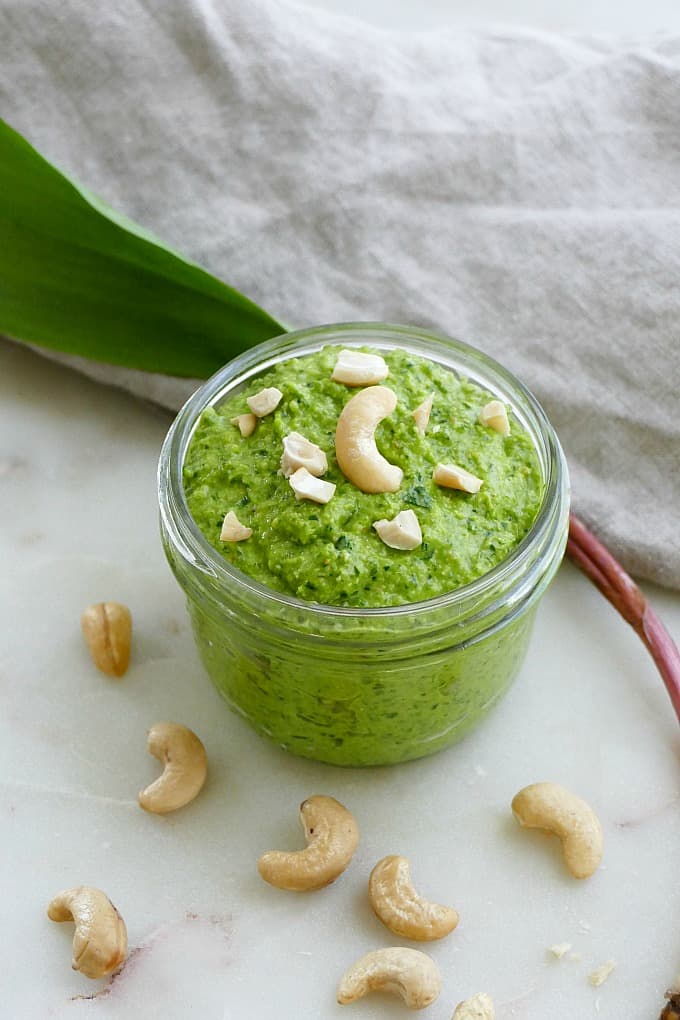
This ramp pesto recipe will last in an airtight container or jar in the refrigerator for up to 1 week. Add an additional squeeze of lemon juice and drizzle of olive oil on top to prevent browning and prolong shelf life if desired.
You can also freeze ramp pesto to extend ramp season. Transfer it to a freezer-safe container or bag, seal tightly, and freeze for up to 3 months. To freeze individual portions, divide them into a silicone ice cube tray or muffin tray. Once frozen, pop them out and transfer to a freezer bag. Remove as much air as possible before sealing, and store in the freezer for up to 3 months.
Just keep in mind that silicone trays can absorb flavors, so use one that you use for other savory recipes instead of everyday ice cubes. If that’s not an option, freeze individual scoops of pesto on a baking sheet lined with parchment paper.
For hot dishes like pasta or soup, you can put the pesto directly from the freezer into the pot and it will thaw from the heat. If you want to use it in a recipe that’s enjoyed cold, let it thaw in the refrigerator overnight.
More Pesto Recipes
- Scallion Pesto (Green Onion Pesto)
- Radish Top Pesto
- Mint Basil Pesto (with vegan option)
- Vegetarian Pesto Pasta with Peas
📖 Recipe
Ramp Pesto Recipe
Ingredients
- ½ cup raw cashews
- 1 bunch ramps - white/pink parts and leaves roughly chopped, about 2 cups
- ½ cup freshly grated parmesan cheese
- ½ lemon - juiced, about 2 tablespoons, more to taste
- ⅓ cup extra virgin olive oil - plus more for drizzling
- Kosher salt - to taste
- Freshly ground black pepper - to taste
Instructions
- Toast the cashews in a single layer in a skillet over medium heat until fragrant and lightly browned, about 3 to 5 minutes. Stir frequently, and be careful not to burn them.
- Wash the ramps under cold water. Use your fingers to scrub off any dirt. Pat dry.
- Trim off the very bottom of the roots, being careful not to trim too much of the bulb (it's very flavorful). Roughly chop the white bulbs, red/pink parts, and the ramp leaves.
- In a food processor fitted with the S-blade or high-powered blender, combine the cashews, ramps, parmesan, lemon juice, and olive oil. Pulse or blend until smooth and creamy and no visible or overly large pieces of cashew remain, about 60 seconds. Stop to scrape down the sides and add more olive oil in small amounts as needed to promote blending.
- Taste the pesto and adjust seasonings as desired. Add more lemon juice, salt, and pepper if preferred.
- Leave a rating or review by tapping the stars on this recipe card (above) or in the comments section (at the end of the post)!
Notes
- Storage: Store in an airtight container in the fridge for up to one week, or in freezer-safe containers in the freezer for up to 3 months for later use. Put a squeeze of lemon juice and drizzle of oil on top of the pesto before storing to help prevent browning.
- Creative ways to use ramp pesto: Pasta sauce, sandwich spread, as a dip, on top of roasted vegetables or grilled meats and salmon, mixed into eggs, and as a base for salad dressings.
Brynn at The Domestic Dietitian
This sounds absolutely amazing! I had ramps once in a restaurant and fell in instant love with them!
Lizzie Streit, MS, RDN
Aren’t they just the best?! Thanks for stopping by.