
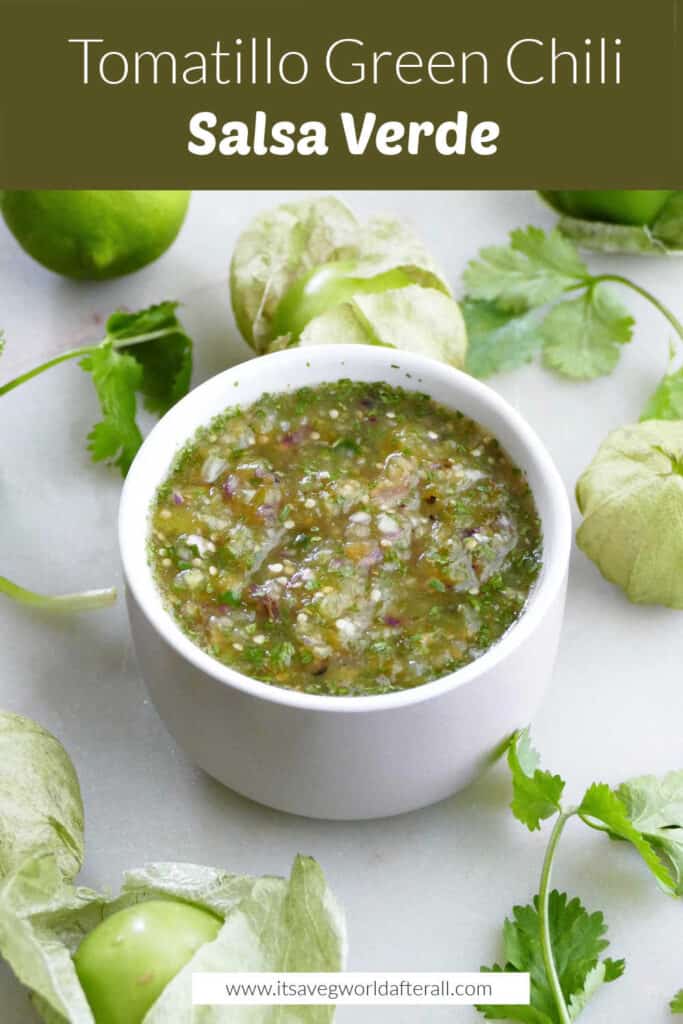
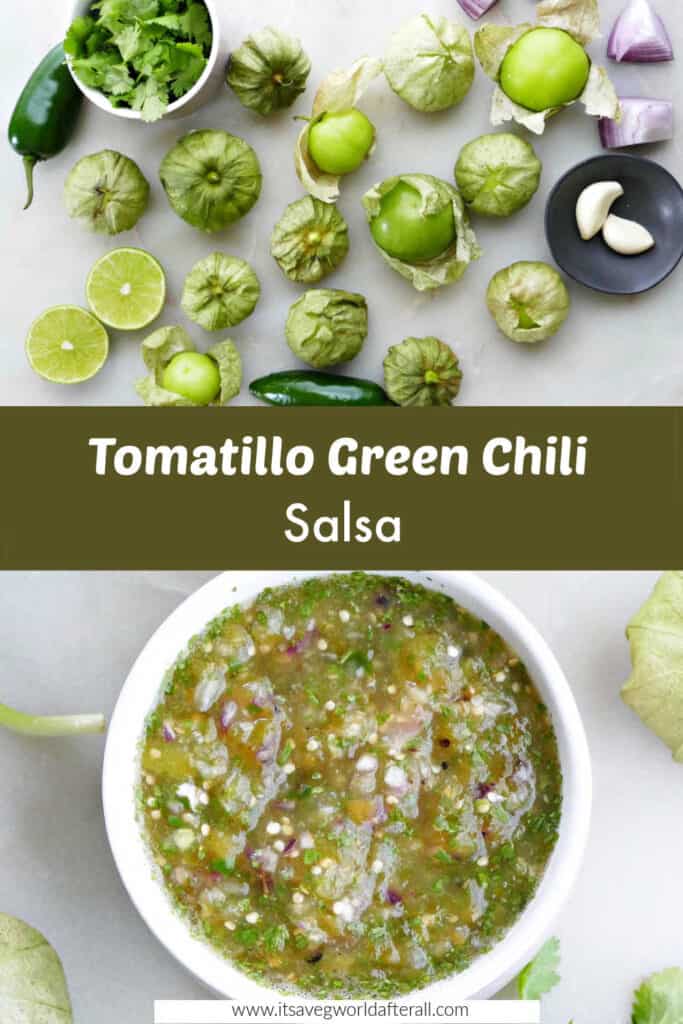
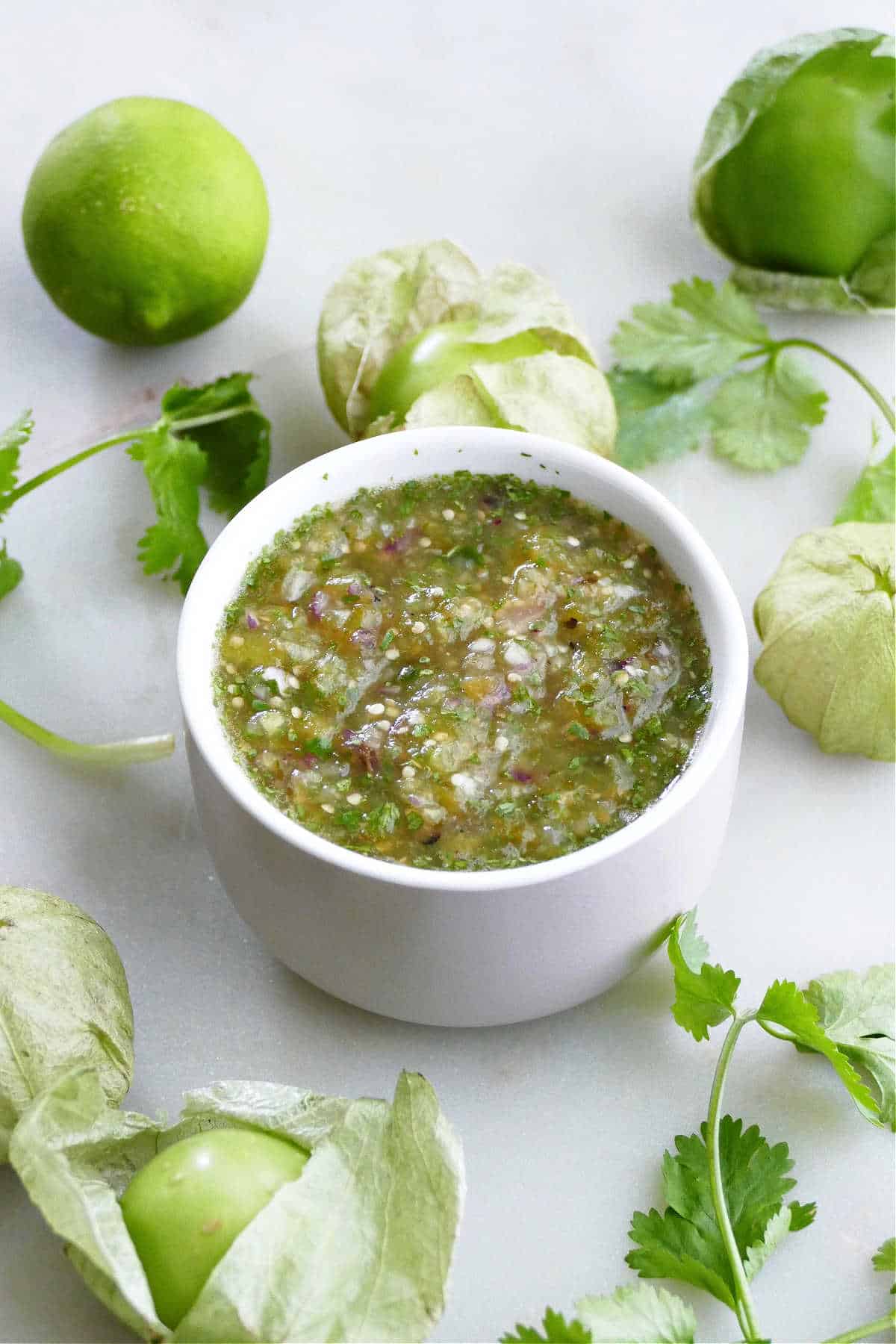
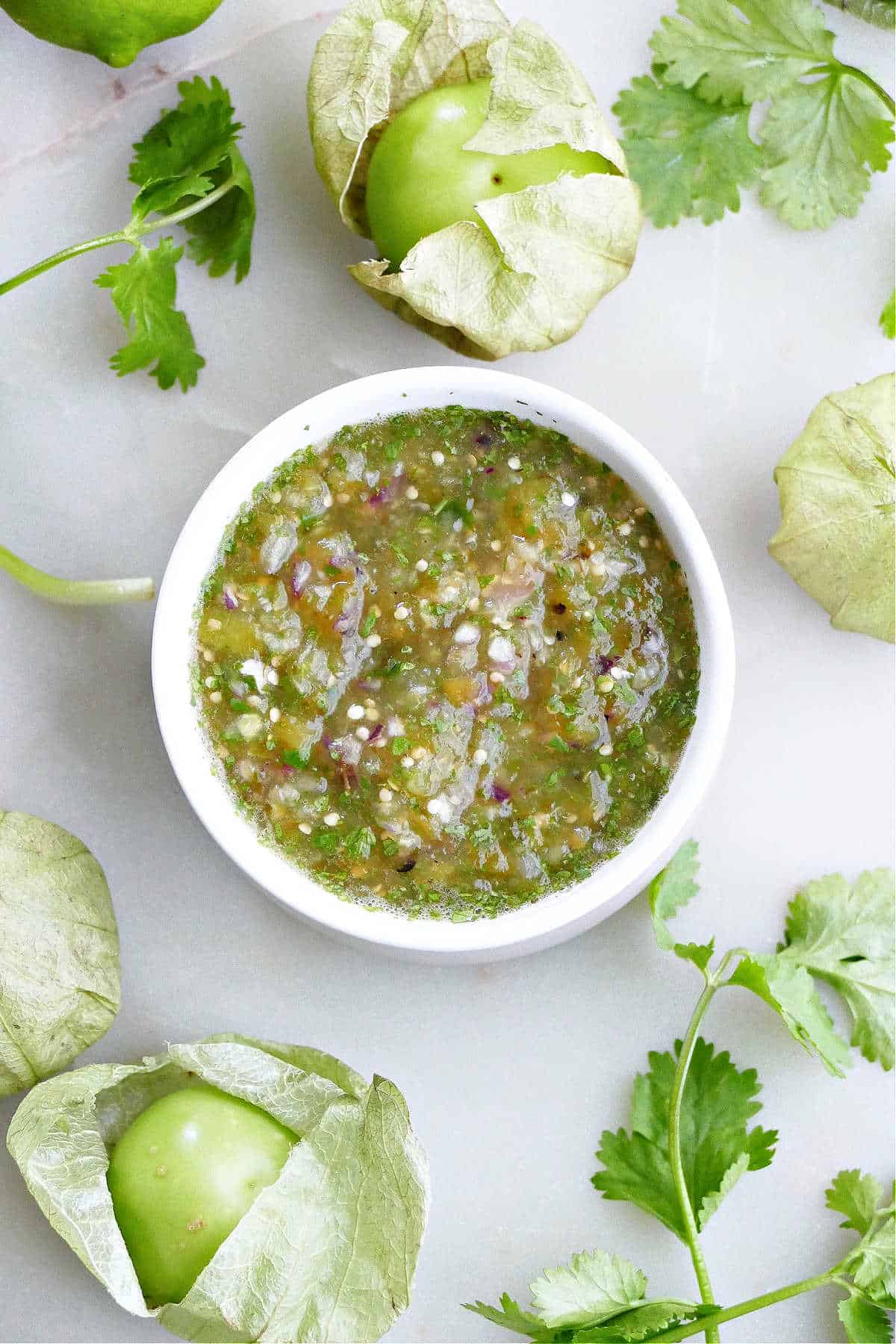
This fresh salsa verde recipe, also known as tomatillo green chili salsa or Mexican green sauce, is slightly spicy with some sweet and tangy notes. It tastes great with chips or on enchiladas, tacos, and bowls (pretend you’re at Chipotle)! Use up your summer tomatillo harvest, and make a few batches to freeze for later use.
This post was originally published in September 2022. It was updated with new tips in August 2026, but the original recipe remains.
Jump to:
Dietitian Lizzie’s Notes
While I love creating recipes with popular vegetables and fruits, it’s fun to switch it up and focus on those that don’t get as much attention! This one highlights the amazing flavor of tomatillos, a type of fruit also known as Mexican husk tomatoes. It’s easy to confuse them with green tomatoes that aren’t yet ripe, especially because they look just like tomatoes wrapped in husks, but they are not the same.
Tomatillos have a unique flavor that’s slightly sweet, tangy, bright, and even a little citrusy. They’re more versatile than you may think, but the best way to use them is in this salsa verde recipe! Spanish for “green sauce,” this condiment is made primarily from tomatillos, green chilis, onions, and garlic. It’s thinner than other salsas, has a distinct tangy flavor, and may or may not be spicy, depending on the peppers used. Tomatillos themselves are not spicy.
Broiling/roasting the tomatillos and peppers is the key to good salsa verde! This process tones down their acidity and brings out their natural sweetness, while also contributing a smoky flavor to the final product.
Tomatillos are typically in season during the late summer and early fall, which is a great time of year to cook with them! You can use this homemade green salsa in any recipe that calls for it, or check out the Roasted Tomatillo Soup for another way to use tomatillos. You may also like the Easy Cilantro Chimichurri Sauce! (PS – My cookbook includes another variation of this salsa, Arugula Salsa Verde.)
5-Star Review
Great recipe. Used shallot for the garlic because of sensitivity. Thank you
– Christina
Ingredients and Substitutions
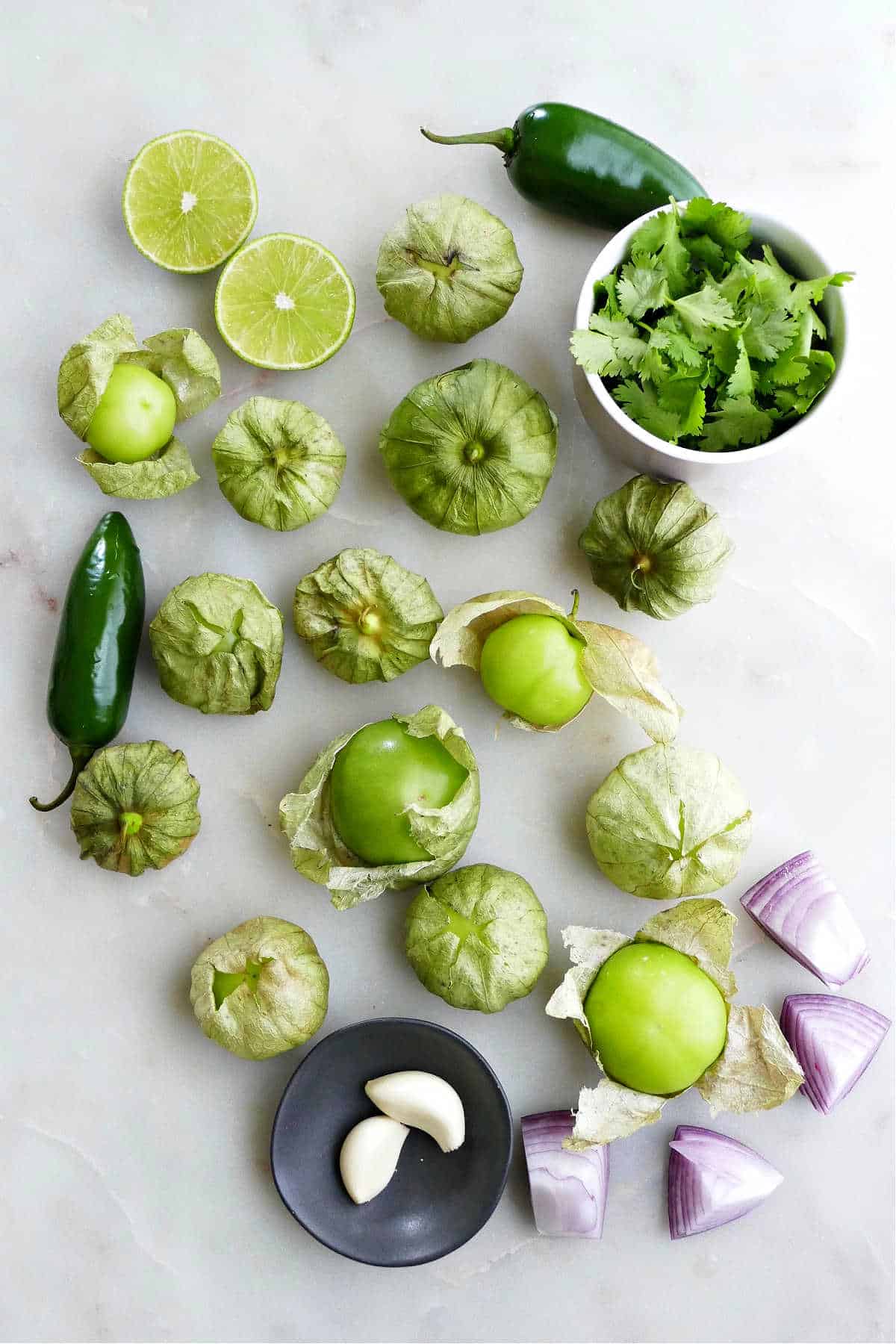
- Tomatillos: It’s important to select ripe tomatillos to use in this salsa verde recipe. They should feel firm to the touch with a slight give (not as hard as a rock) and be tightly wrapped in the husk, which should be green with hints of tan. The fruit itself can be green, purple, or yellow when ripe, but I mostly see green tomatillos at markets and stores. If they feel soft or mushy, they are no longer good to use. Sometimes tomatillos can feel sticky under the husks, which is completely normal. Just rinse the fruit under running water, rubbing it with your fingers as the water flows, to remove the stickiness. If you don’t have access to tomatillos but still want a green salsa, try using unripe green tomatoes. They will contribute the same color and a flavor that’s close enough, but they aren’t as acidic. You may want to add more lime juice if you use them. Alternatively, you can use canned tomatillos and just skip roasting them.
- Jalapeño peppers: Use 1 instead of 2 for less heat. Keep the seeds for more heat.
- Red onion: Substitute yellow or white onion if that’s what you have.
- Garlic cloves: Fresh works best in homemade salsas. In a pinch, you can substitute a teaspoon of dried minced garlic. You can also substitute shallots, green onions, or chives if you don’t like the flavor of fresh garlic or have a sensitivity to it.
- Fresh cilantro leaves: Omit if you don’t like cilantro, or sub flat-leaf parsley.
- Lime juice: Sub lemon juice, or use apple cider vinegar in about half of the listed amount.
- Salt: Use iodized salt or kosher salt. You will need a little more if you use kosher salt, since the granules are bigger.
How to Make This Salsa Verde Recipe
For the full ingredients list and steps, scroll down to the recipe card at the bottom of the post. Here’s a preview of the steps with photos to guide you in the kitchen.
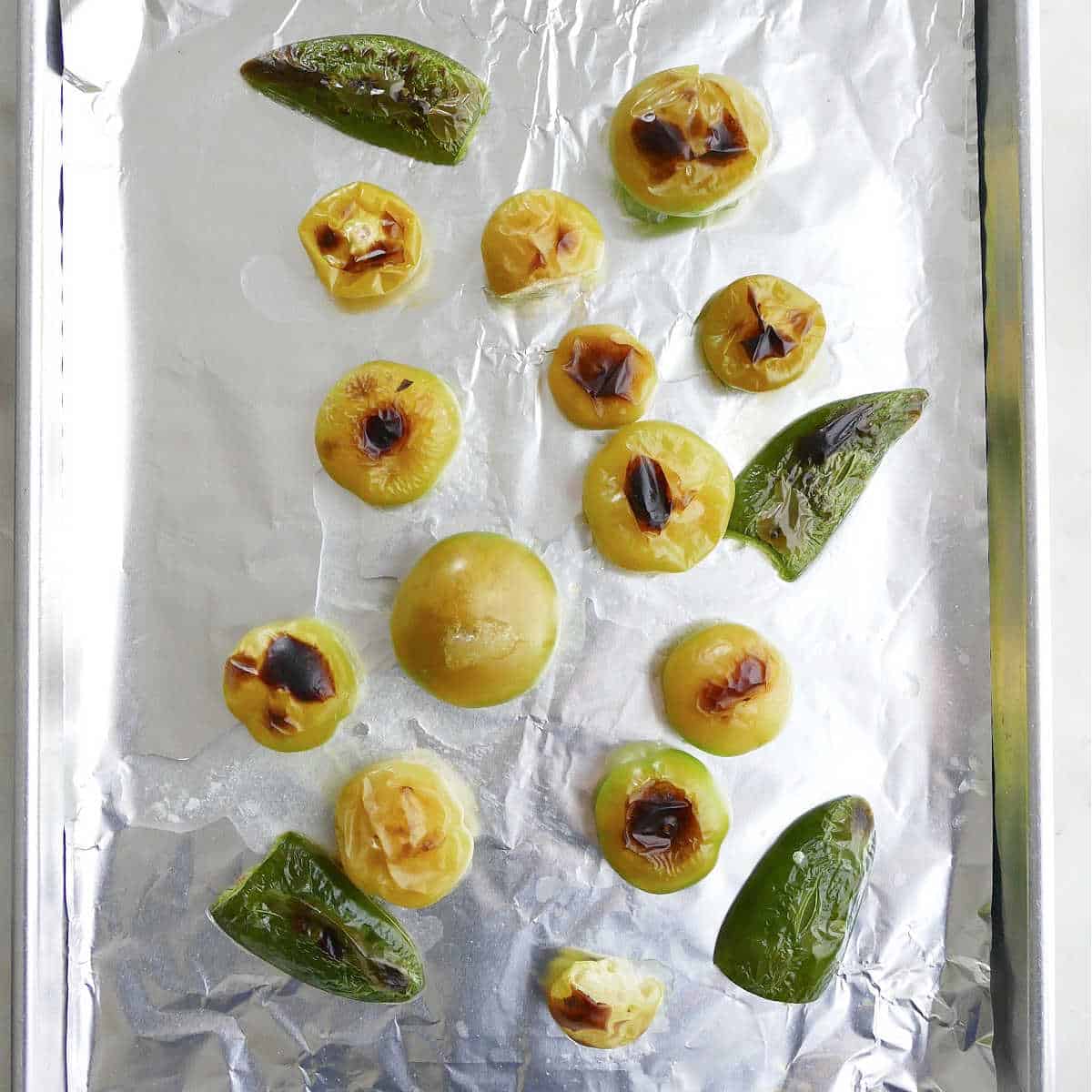
- Broil the tomatillos and peppers. Place the tomatillos (with the husks already removed) on a baking sheet lined with foil. Slice the jalapeños in half lengthwise, remove the seeds, and place them cut side down on the baking sheet. Broil until the skins are blistered with dark brown spots and wrinkled.

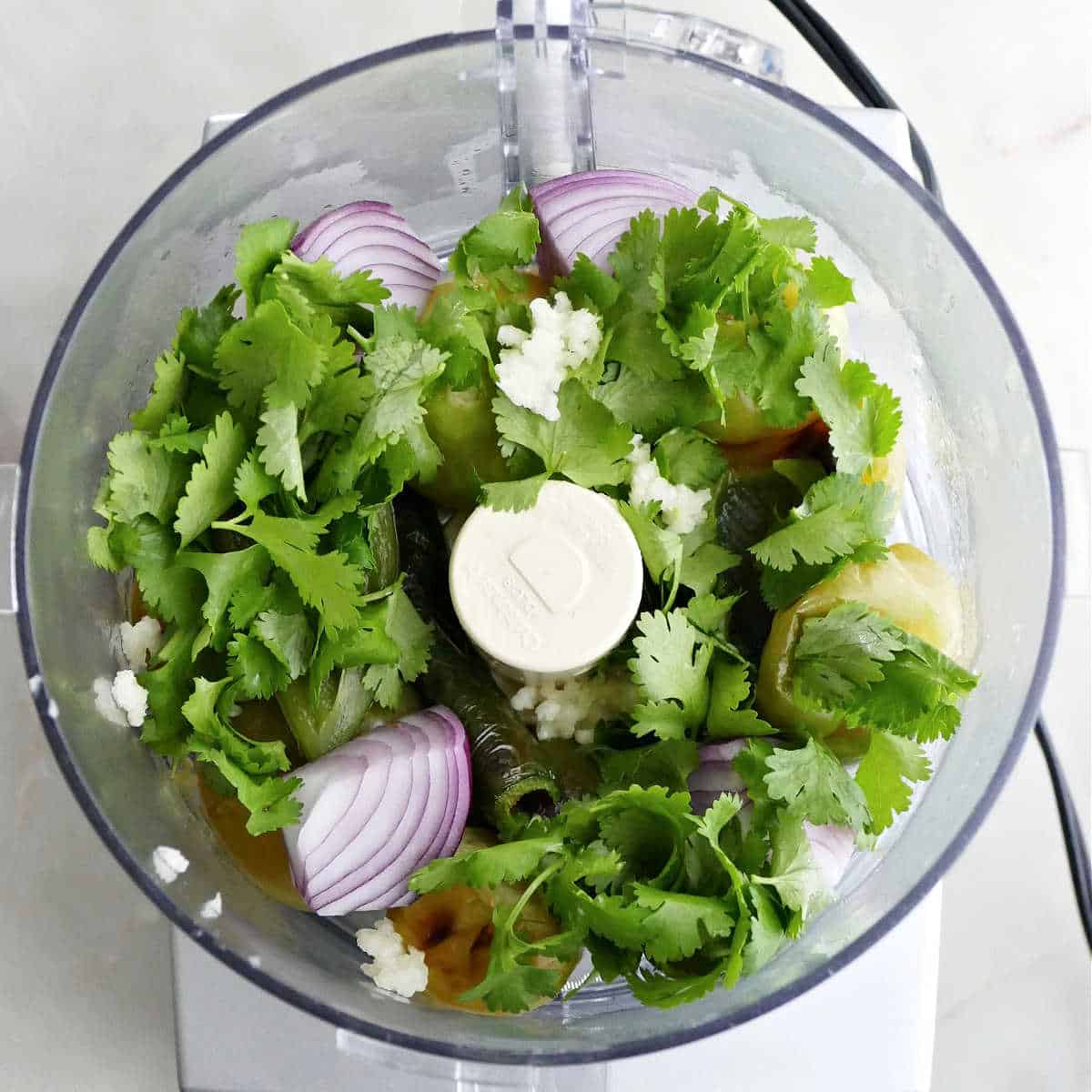
- Combine the broiled vegetables and other ingredients in a food processor or high-speed blender. I use and love the Cuisinart 11-cup food processor. You can still make this salsa without a food processor, but it will take a longer time. Just chop up everything by hand and mix it all together!
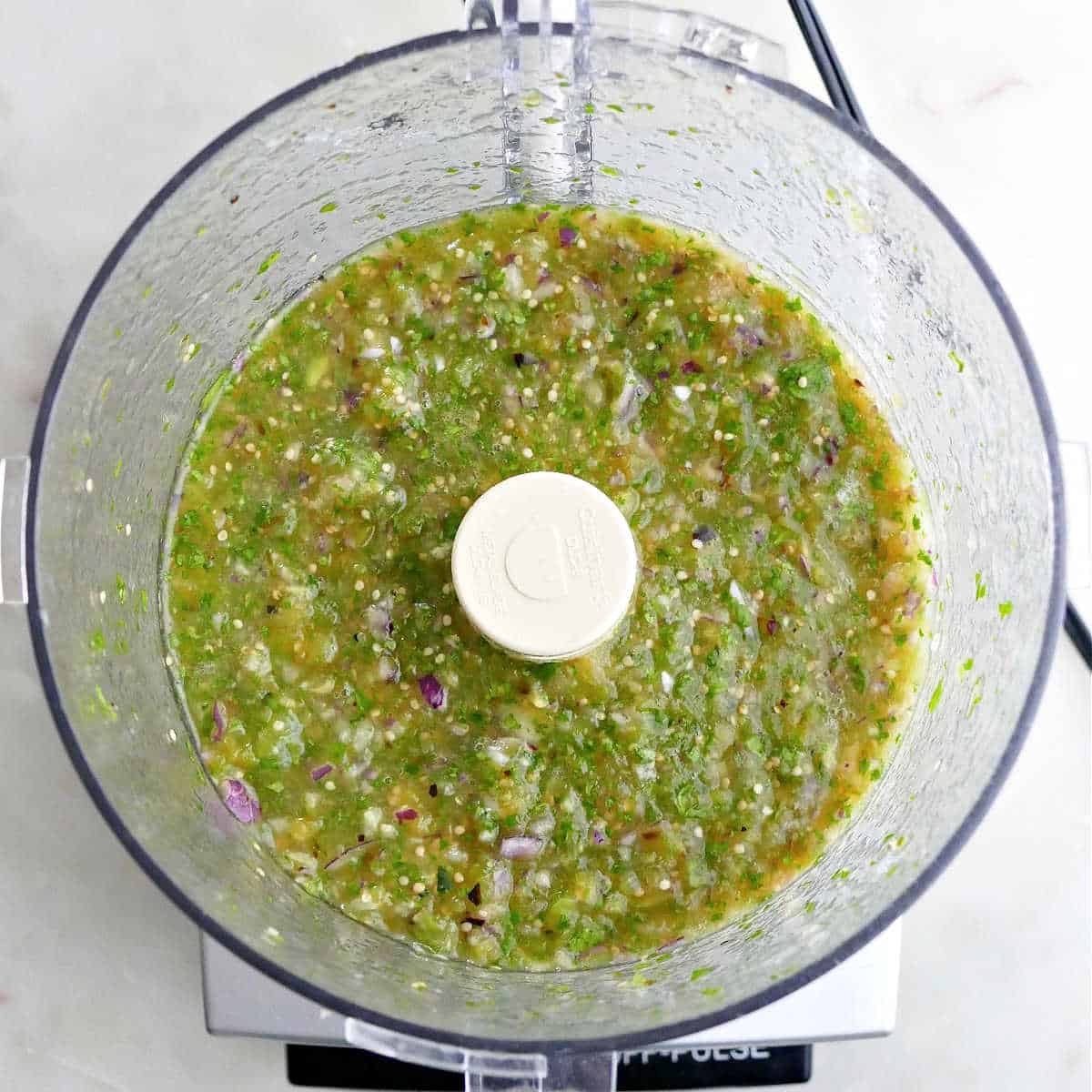
- Puree until smooth and emulsified, with no large chunks of ingredients remaining. It should have a pourable consistency that’s not too watery. Alternatively, you can keep the salsa slightly chunky and stop pulsing when it reaches your desired texture.
Adjusting the Flavor and Texture
Tomatillo acidity and chili pepper heat vary, so each batch of homemade salsa verde may need slightly different adjustments to yield your desired result. Here’s what to adjust in the following scenarios.
- Too thin: Let the salsa rest in the fridge to thicken. Tomatillos contain pectin, a starch that acts as a natural thickener.
- Too thick: Stir in a splash of water or broth, about 1 tablespoon at a time, to thin to your desired consistency.
- Not spicy enough: Keep the seeds in the jalapeños or sub serrano peppers. For a very strong kick, use habanero peppers.
- Too spicy: To make salsa verde less spicy, use green bell peppers or poblano peppers in place of the jalapeños.
- Not acidic enough: Add more lime juice.
- Too acidic: Add a pinch of baking soda (to neutralize the acid) or a little bit of honey, agave nectar, or sugar. You can also mash an avocado into the salsa to make it creamy and cut the acid.
Ways to Use It
- Sub homemade roasted tomatillo salsa for store-bought green salsa in any recipe, like my Vegetarian Enchiladas Verdes (or chicken enchiladas), Veggie-Loaded Slow Cooker Mexican Chicken, Salsa Sweet Potato Skillet, or Spaghetti Squash Burrito Bowls. It’s perfect for chilaquiles or chile verde.
- Use as a topping for tacos, nachos, or burrito bowls (like my Chicken Fajita Bowls).
- Eat it with chips, alongside pico de gallo and guacamole.
- Use as a marinade for meat or fish. The opportunities are endless!
Storage and Freezing
This salsa verde recipe lasts for up to 2 weeks in the fridge when stored in a tightly sealed container. You can also freeze it! Transfer to freezer-safe containers, leaving about an inch of headspace. Seal tightly and label the containers before popping them into the freezer. For best results, use within 2 months. You can thaw it in the fridge or on the counter.
More Homemade Salsa Recipes
- Fresh Garden Salsa Recipe
- Mango Corn Salsa with Black Beans
- Homemade Pineapple Jicama Salsa
- Fresh Corn Salsa
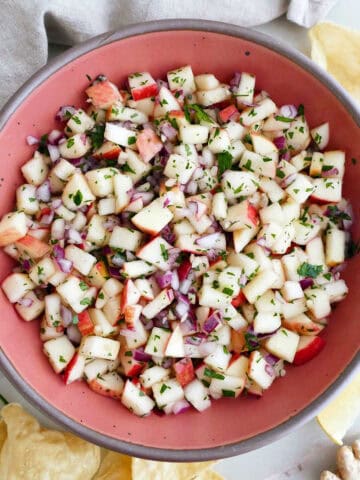
- Fresh Apple Salsa
📖 Recipe
Salsa Verde (Tomatillo Green Chili Salsa)
Equipment
- Food processor (or chop ingredients by hand)
Ingredients
- 1 pound tomatillos - about 12 to 15
- 2 jalapeños - stems removed, halved lengthwise and seeded
- ½ red onion - roughly cut into quarters
- 2 cloves garlic - smashed
- ¼ cup loosely packed cilantro leaves - more to taste
- 1 lime - juiced (about to 2 tablespoons), more to taste
- ½ teaspoon salt - more to taste
Instructions
- To prep the tomatillos, remove their papery husks and stems. Rinse them under cold water, rubbing each one with your fingers to remove any stickiness. Pat dry.
- Turn on the broil setting on the oven. Line a large baking sheet with foil. Place the whole tomatillos and jalapeños (cut side down) on the baking sheet.
- Transfer the baking sheet to the rack directly under the broiler. Roast for 7 to 10 minutes until blistered with dark brown spots and wrinkled. Remove from the oven.
- While the tomatillos and jalapeños cook, prep the other ingredients.
- Transfer the broiled tomatillos and jalapeños to a food processor fitted with the S-blade. Add the red onion, garlic, cilantro, lime juice, and salt.
- Pulse until the salsa is smooth. If you want it to be chunky, stop blending before it gets smooth. The salsa should be thin and pourable. If it seems too watery, let it sit in the fridge for a while to thicken (the pectin in the tomatillos will naturally thicken it). If it seems too thick, add small splashes of water until it reaches your desired consistency.
- Taste and adjust seasonings as desired. You can add more salt, garlic, lime juice, or cilantro. If it tastes too acidic, add some honey or sugar to neutralize the flavor.
- Leave a rating or review by tapping the stars on this recipe card (above) or in the comments section (at the end of the post)!
Notes
- Store in an airtight container in the fridge for up to 2 weeks.
- To freeze, transfer to freezer-safe containers, seal, label, and store for up to 2 months. Thaw on the counter or in the fridge.
- Use in your favorite recipe that calls for salsa verde!
- For more heat, sub spicier green chili peppers (like serranos) for jalapeños.

Robynne Davidson
Yum, yum. Soooo fresh tasting. Put on everything from scrambled eggs to any meats. Even great w/ cottage cheese. Great to use combo cheeses on bread, preferably sourdough(homemade a-labor of love). Melt shredded or sliced cheese on bread, top w/sLsa!!!😉😉😉
Lizzie Streit, MS, RDN
Yum! I’m so glad you enjoyed this recipe. All of the ways you used it sound absolutely delicious!
Christina
Great recipe. Used shallot for the garlic because of sensitivity. Thank you
Lizzie Streit, MS, RDN
Hi Christina, I’m so glad you enjoyed the recipe! Thanks for your 5-star review :).