
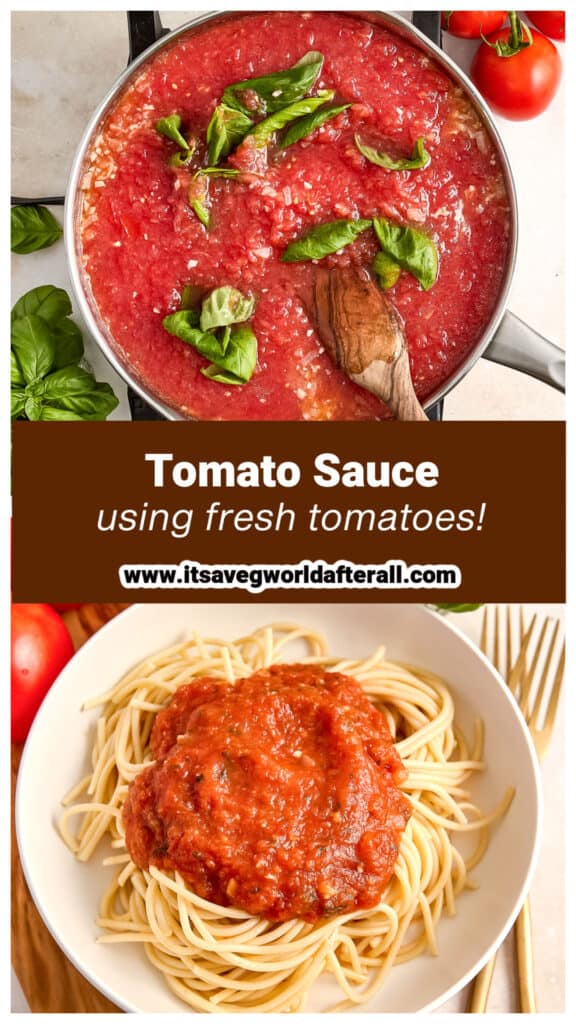
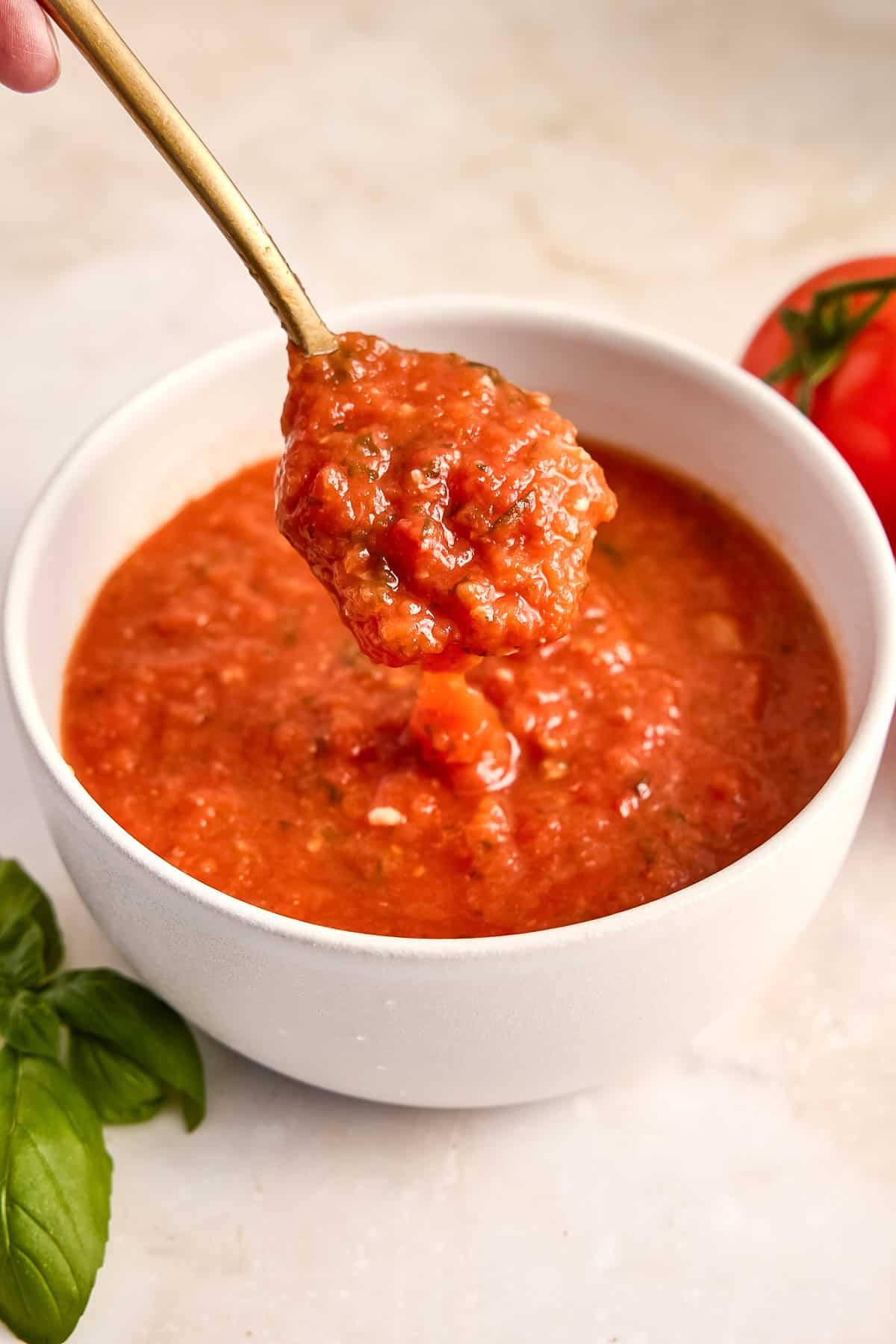
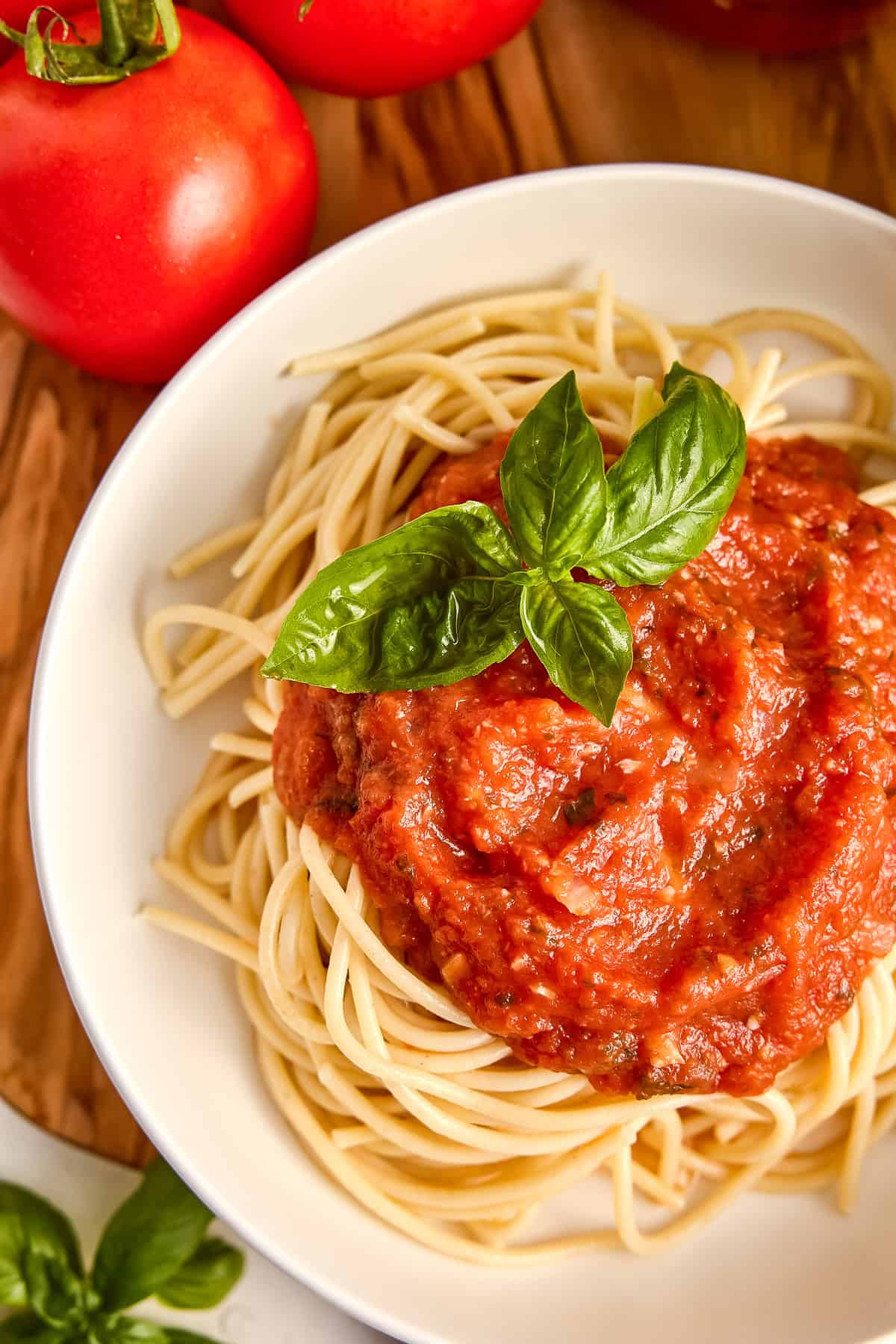
Learn how to make fresh tomato sauce with the delicious flavor of ripe summer tomatoes! The process involves grating tomatoes instead of blanching and peeling them. Then, they’re combined with other simple ingredients found in classic Italian recipes, such as onion, garlic, and basil. Enjoy this wonderful rendition of homemade spaghetti sauce over pasta or subbed for store-bought sauce in casseroles, pizzas, and lasagnas.
Jump to:
Dietitian Lizzie’s Notes
I am so excited to finally share a fresh tomato sauce recipe with all of you! Several readers have requested a version that uses tomatoes straight from their gardens or farmers markets instead of ones from a can (like in my Canned San Marzano Tomato Sauce). And while prepping the tomatoes requires more time and effort than opening a can, the fresh, homemade flavor is incredibly worth it!
In my experience testing this recipe several times, the key to making a flavorful sauce that’s not too watery or too thick is using two varieties of tomatoes. I specifically recommend Roma and on-the-vine tomatoes. On-the-vine tomatoes provided the best flavor (sweet and complex) out of all the varieties I tested, but they were also the juiciest. Adding Roma tomatoes, which have a lower water content, helped thicken the sauce. They also developed a rich flavor when cooked that’s totally different from the mild taste they have when raw.
This homemade spaghetti sauce needs to simmer for a while on the stove to develop the most concentrated flavor and requires a LOT of tomatoes, just like how my great grandmother who came to the US from Italy did it! It’s the perfect activity for the end of summer, when you’re swimming in tomatoes and want to savor the flavors of the season for a little longer. I recommend making as many batches as you can, so you can stock your freezer and enjoy a taste of summer when the cold hits!
Ingredients and Substitutions
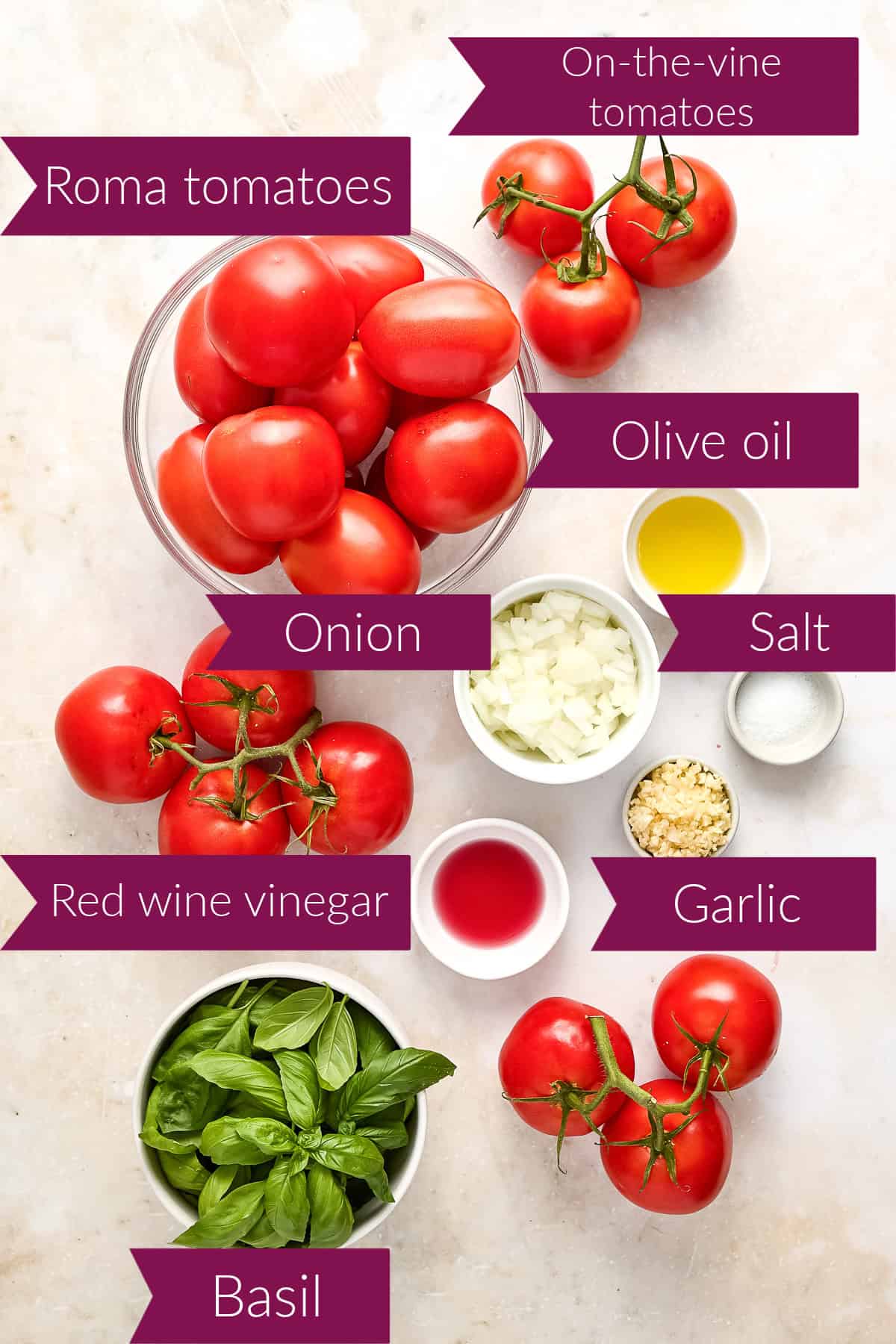
- Tomatoes: The best options are tomatoes on-the-vine and Roma tomatoes for the reasons explained in the above section. I have also successfully made this recipe with all beefsteak or slicer tomatoes, but it did not taste as good. San Marzano tomatoes or other plum tomatoes are excellent options and can be used in place of Roma tomatoes or as the only variety. In general, you want tomatoes that have a low water content and few seeds so that the sauce thickens and gets as flavorful as possible. However, I chose to mix in some juicy, higher water tomatoes (on-the-vine) to get the best flavor. If you’re using a tomato variety that’s a little bland, add 1 tablespoon of tomato paste for more flavor.
- Onion: I recommend yellow or sweet onion, but you can also use shallots.
- Garlic cloves: Fresh garlic is the best spice for fresh tomato sauce! In a pinch, you can use a teaspoon of dried minced garlic or ½ teaspoon garlic powder instead.
- Salt: Use kosher salt for best results, since it dissolves easily in sauces.
- Red wine vinegar: I often add vinegars to my pasta sauces as a way to balance the flavors and boost the acidity that gets muted by a long simmering time. You can substitute balsamic vinegar or even lemon juice if needed.
- Basil leaves: If you don’t have fresh basil, omit or add ¼ teaspoon dried basil. Dried basil can be overpowering, so I don’t recommend adding a lot at first. Add more at the end if you want a stronger basil flavor. You could also add Italian seasoning or a mix of dried basil and dried oregano.
- Pasta for serving: This recipe works very well as a homemade spaghetti sauce! For an option other than spaghetti, try fettuccine, penne, or fusilli.
How to Make Fresh Tomato Sauce at Home
The full recipe card with ingredient amounts and instructions is at the bottom of the post. Here’s a preview of the steps with photos to guide you in the kitchen.
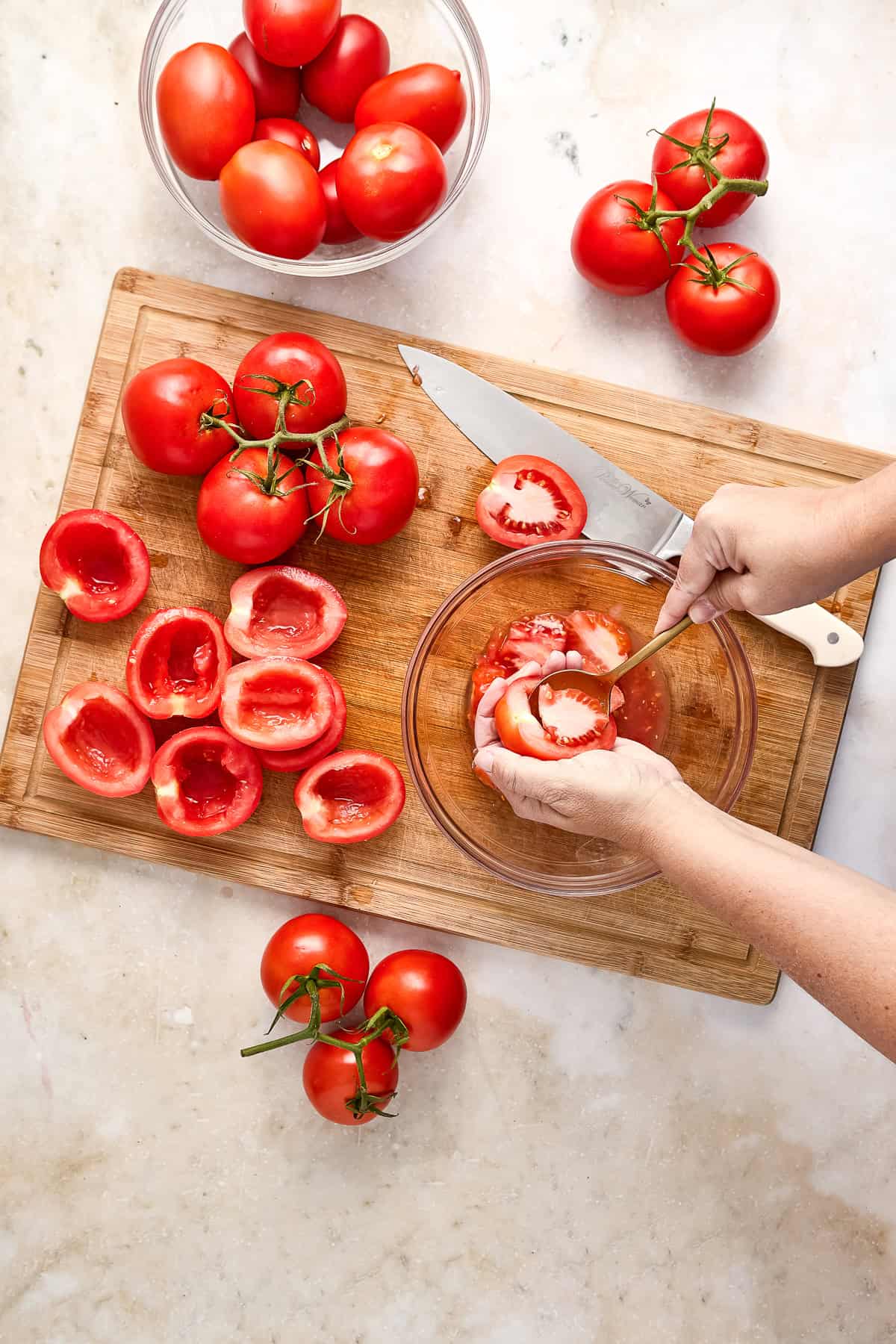
Slice the tomatoes in half lengthwise. Use a spoon to scoop out the seeds and goop and discard.
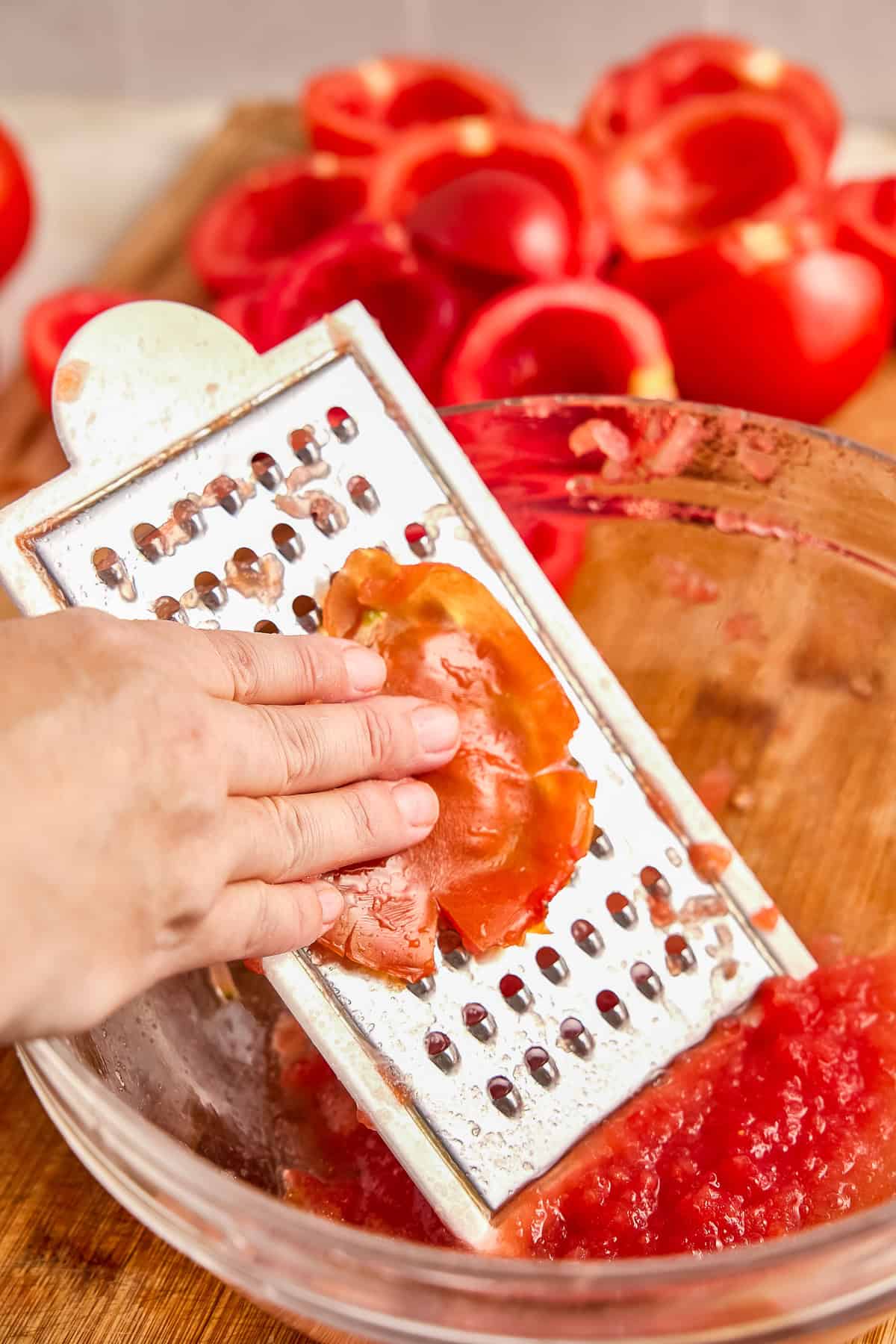
Run the cut side of each tomato half over a grater with large holes.
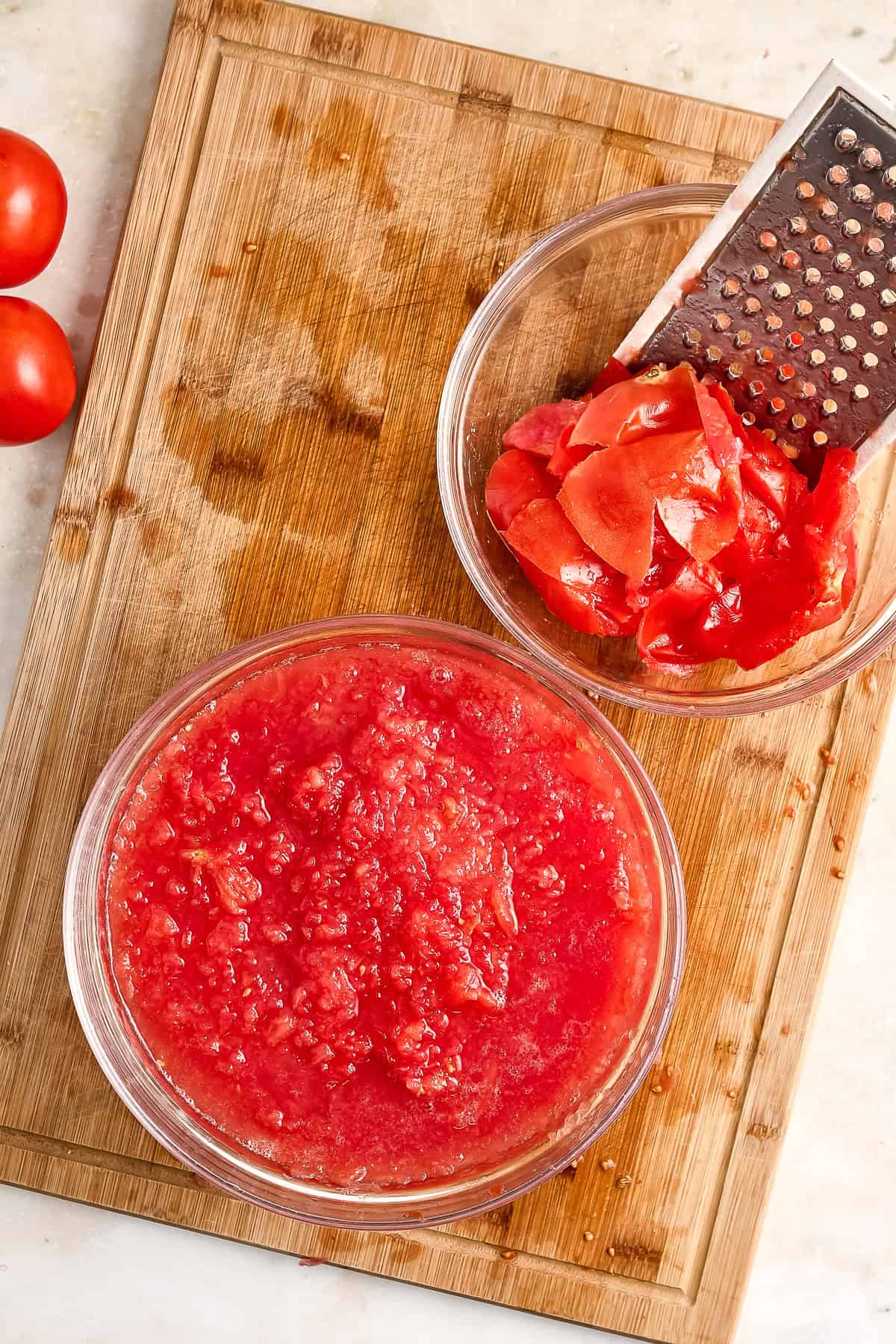
Grate until all of the flesh has been removed and only the skin remains. Discard the skins.
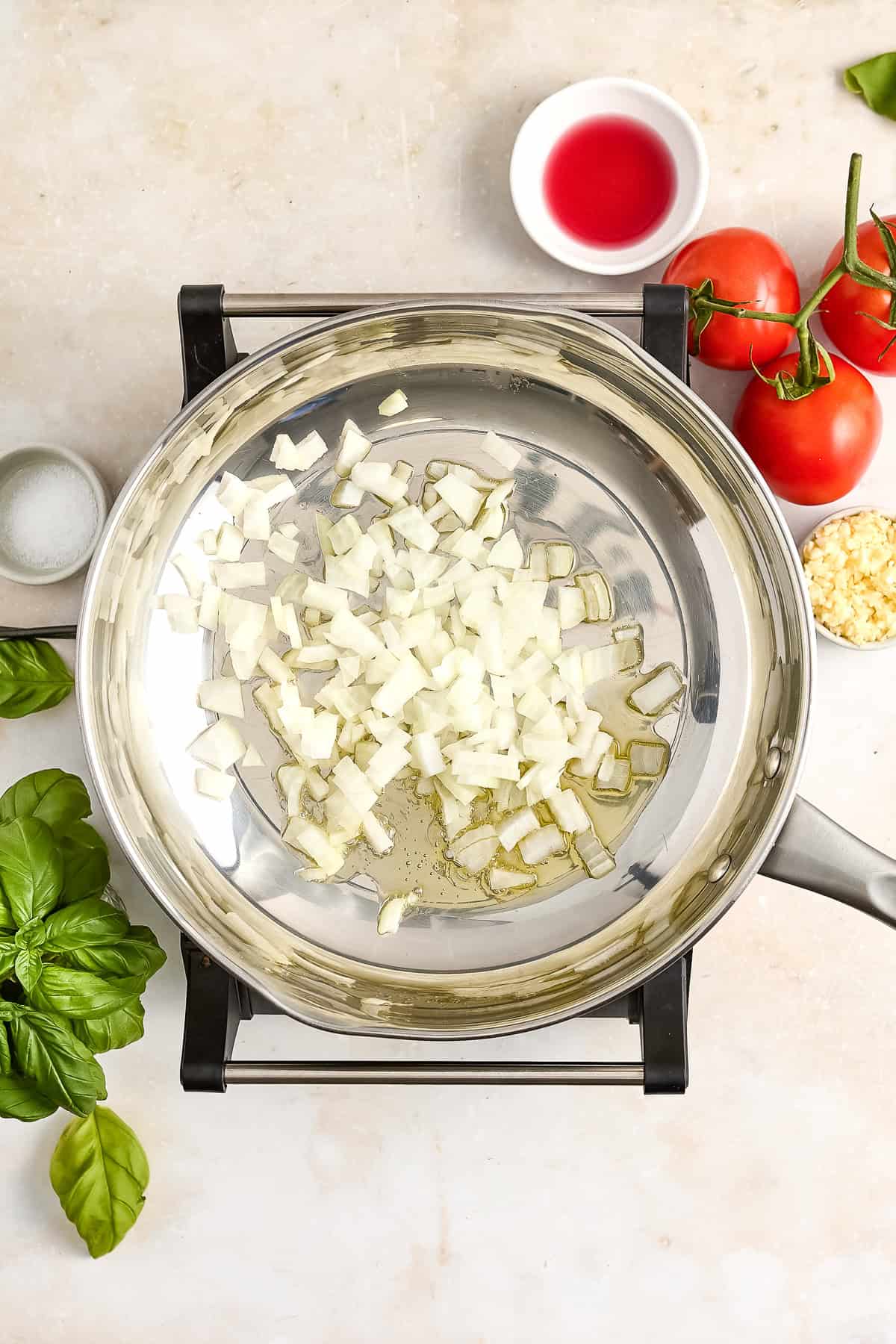
Warm olive oil in a stainless steel saucepan. Add onion and cook until softened.
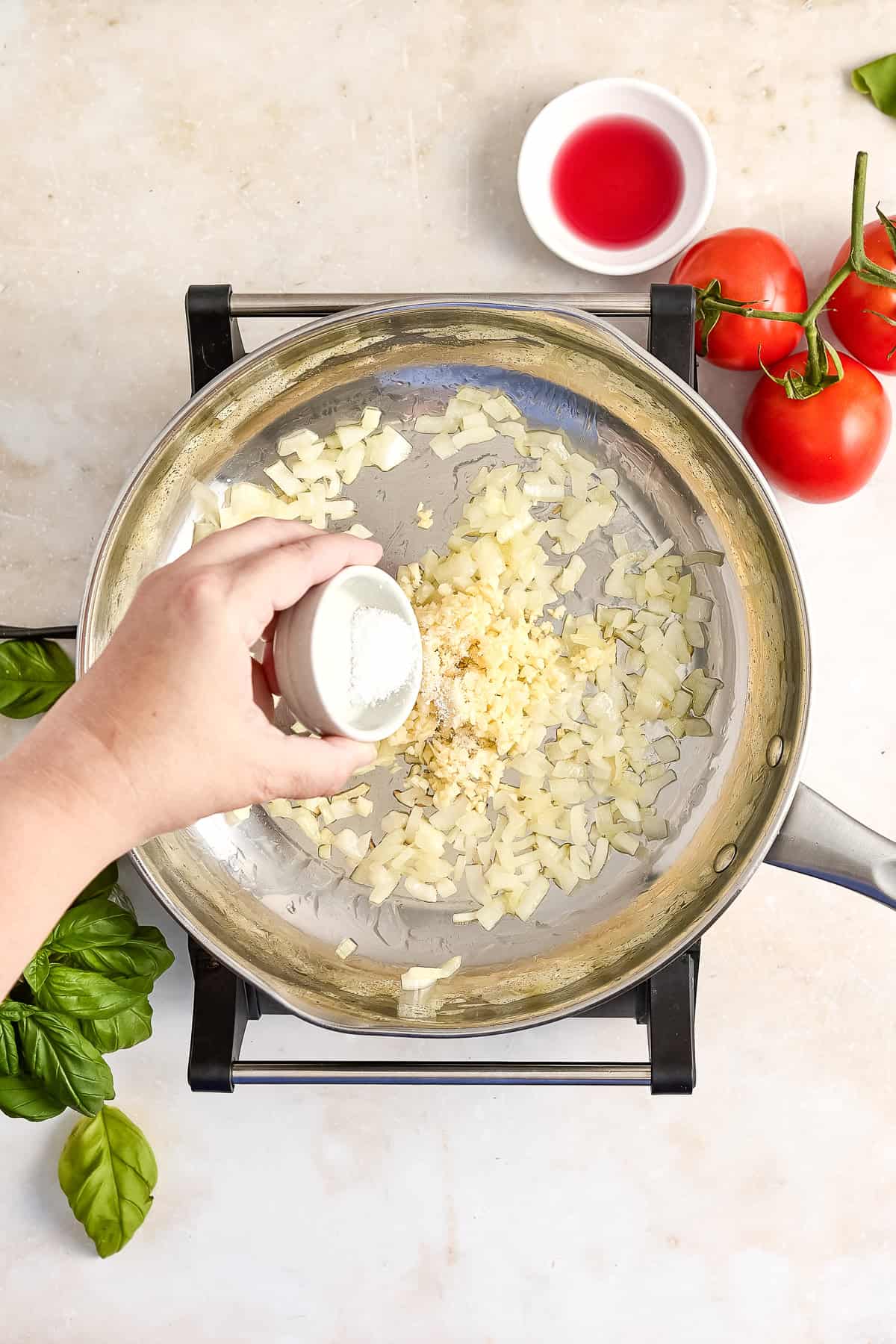
Add the minced garlic and salt. Cook for a few more minutes until fragrant.
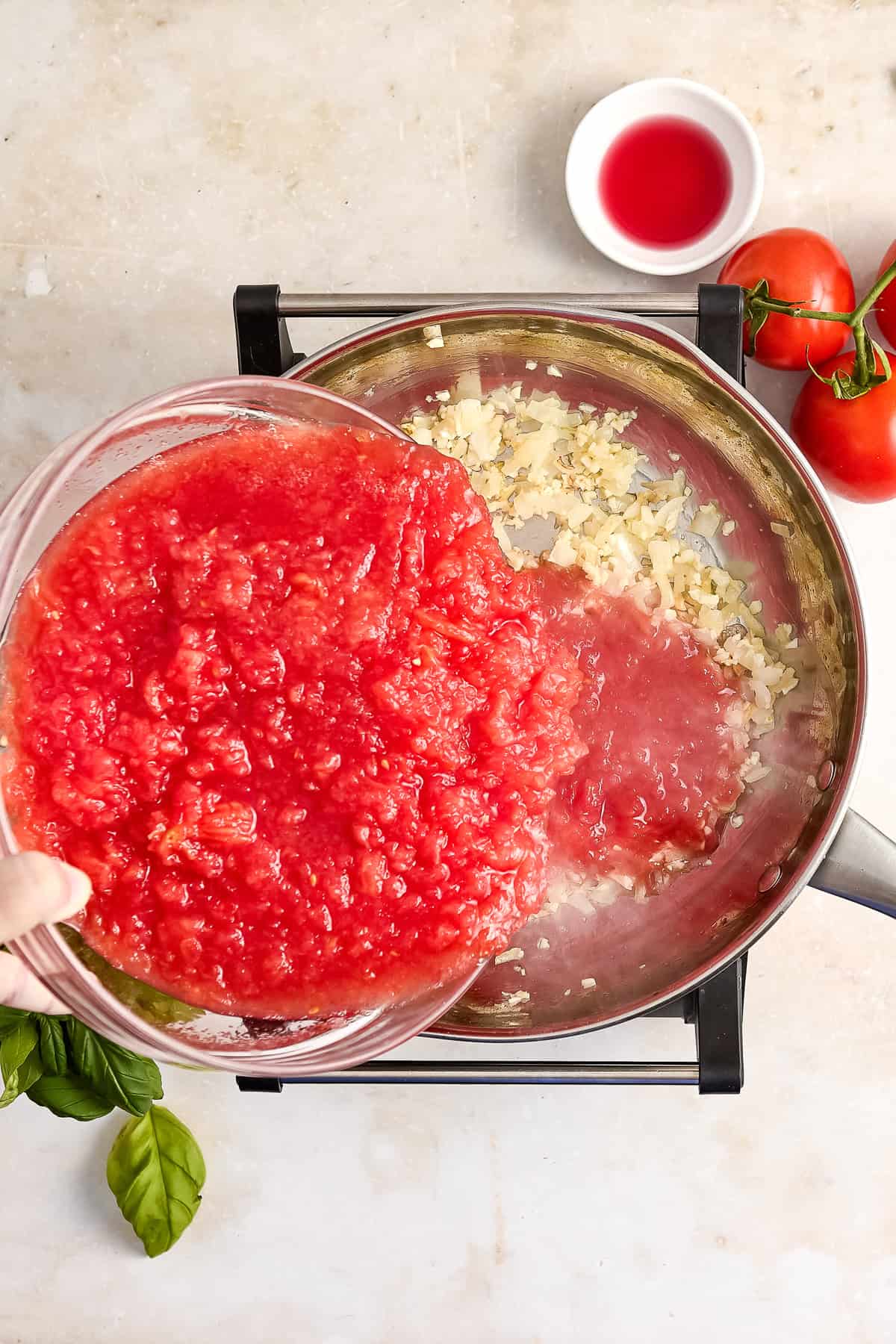
Pour the grated tomato flesh into the pan.
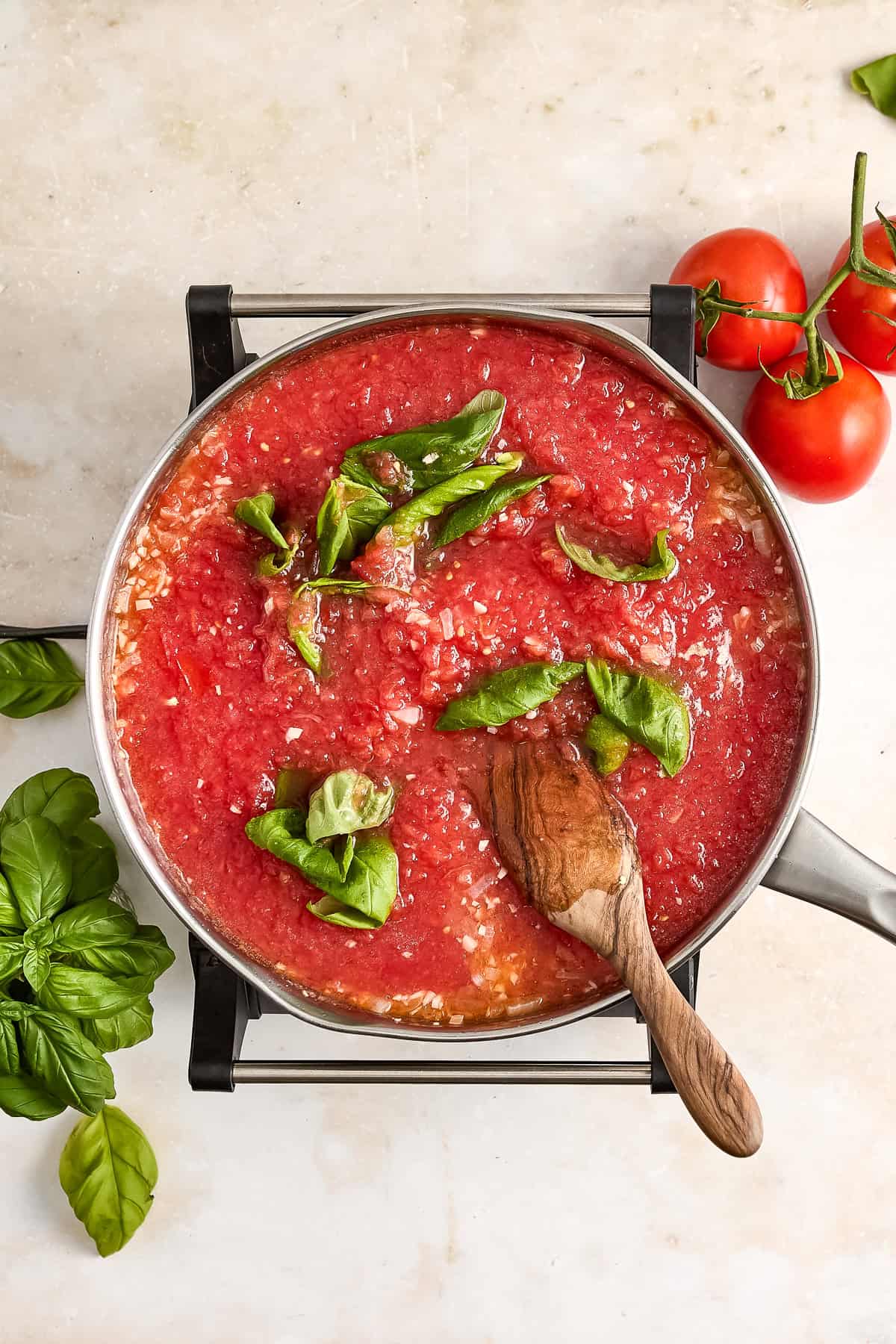
Add the fresh basil leaves.
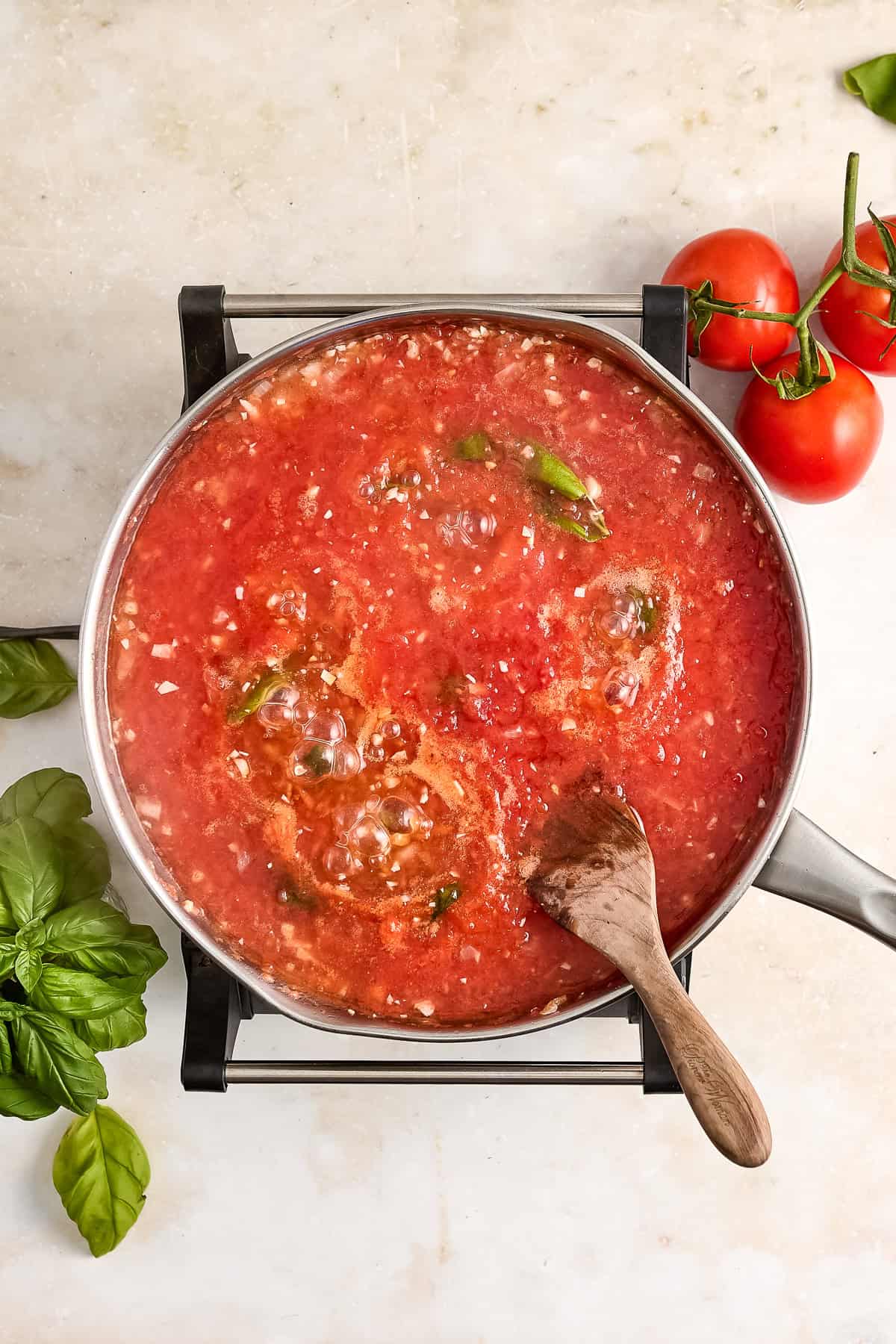
Cook over medium-low or low heat to maintain a simmer with gentle bubbles on the surface.
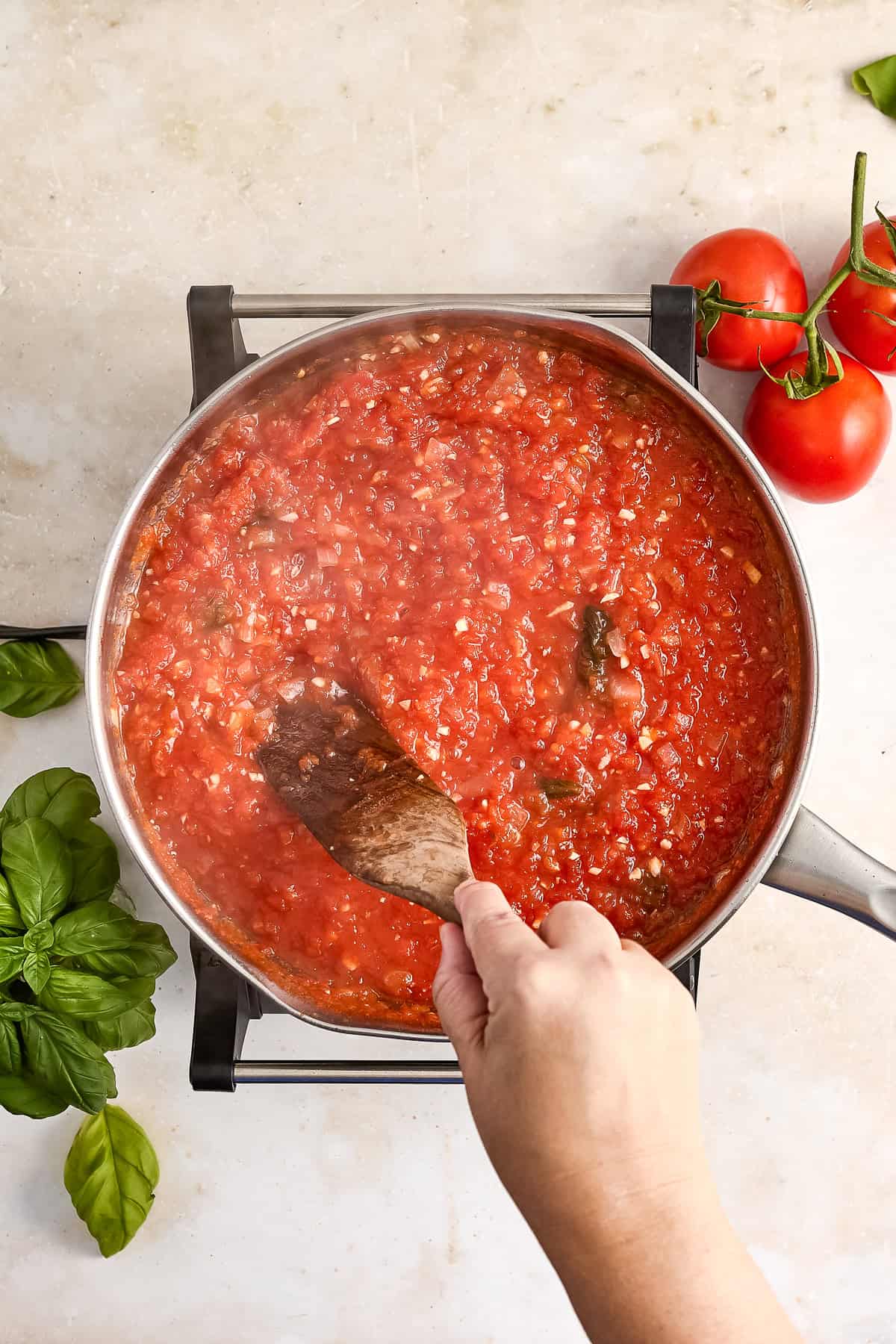
Cook for 30 to 60 minutes, stirring occasionally, until the sauce has thickened. It should resemble store-bought tomato sauce and not appear watery.
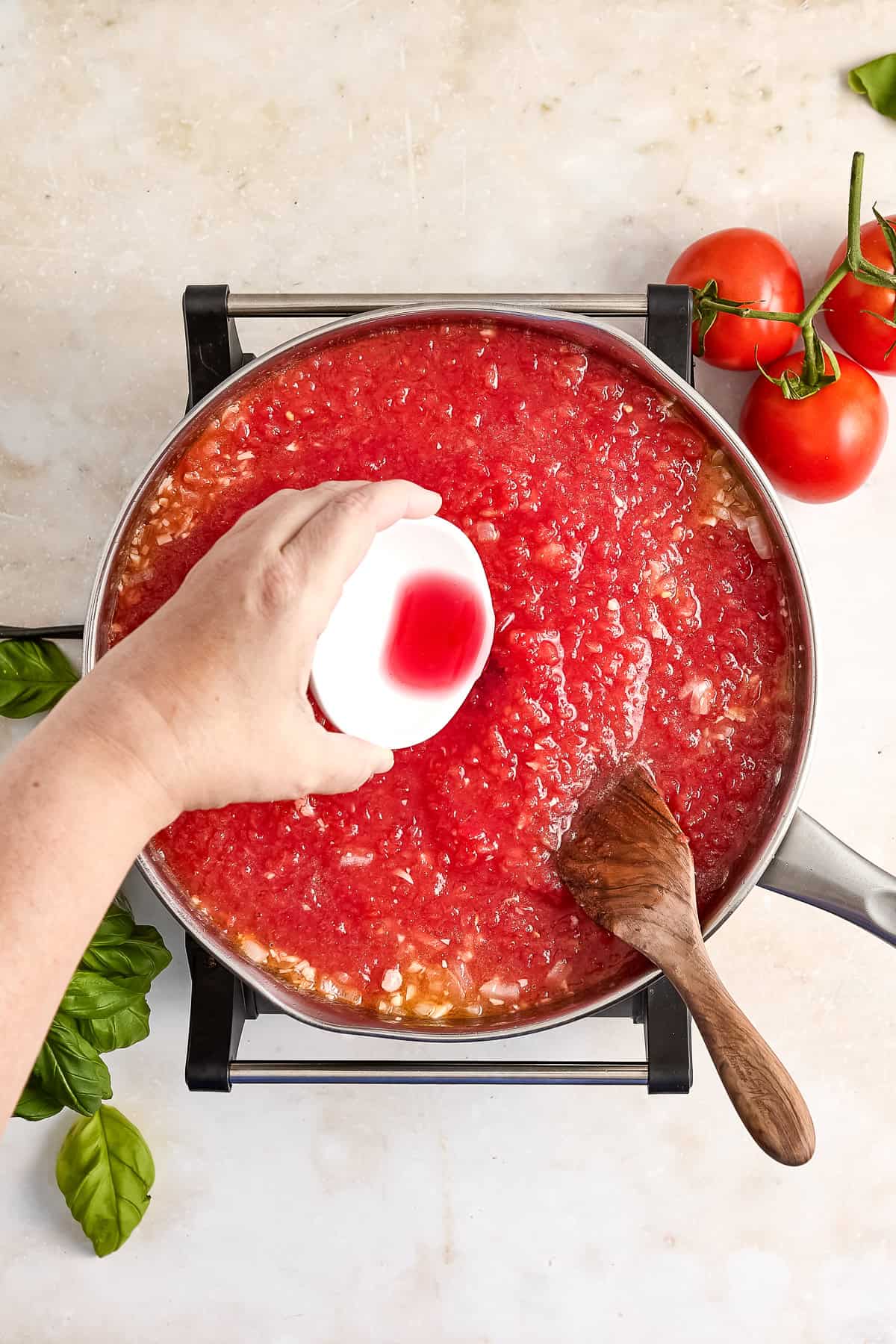
Stir in the red wine vinegar.
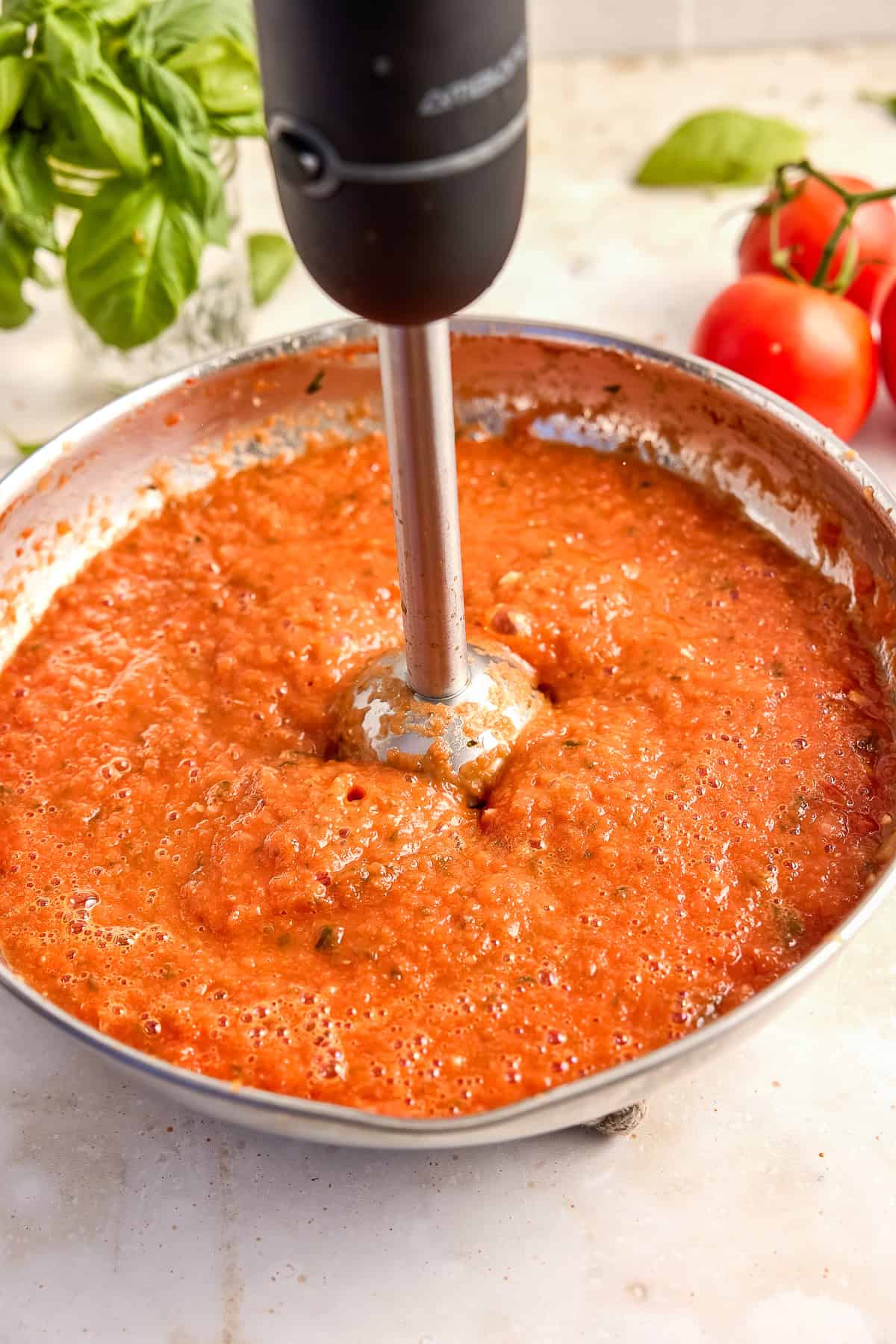
Remove the sauce from heat. Use a hand/immersion blender to puree some or all of it, depending on your desired texture or how chunky you want the final sauce.
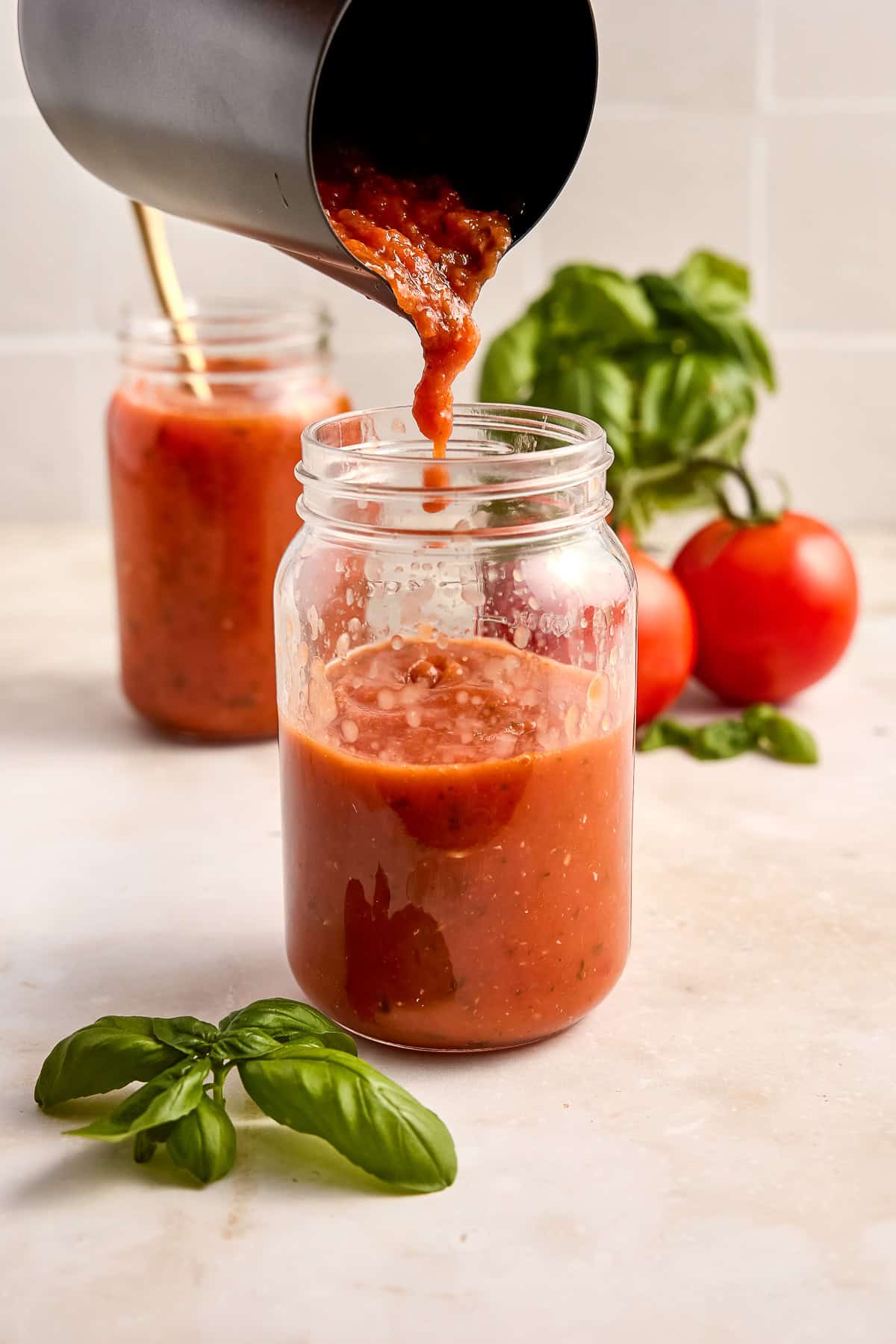
Serve immediately over pasta of choice, or transfer to jars for storage.
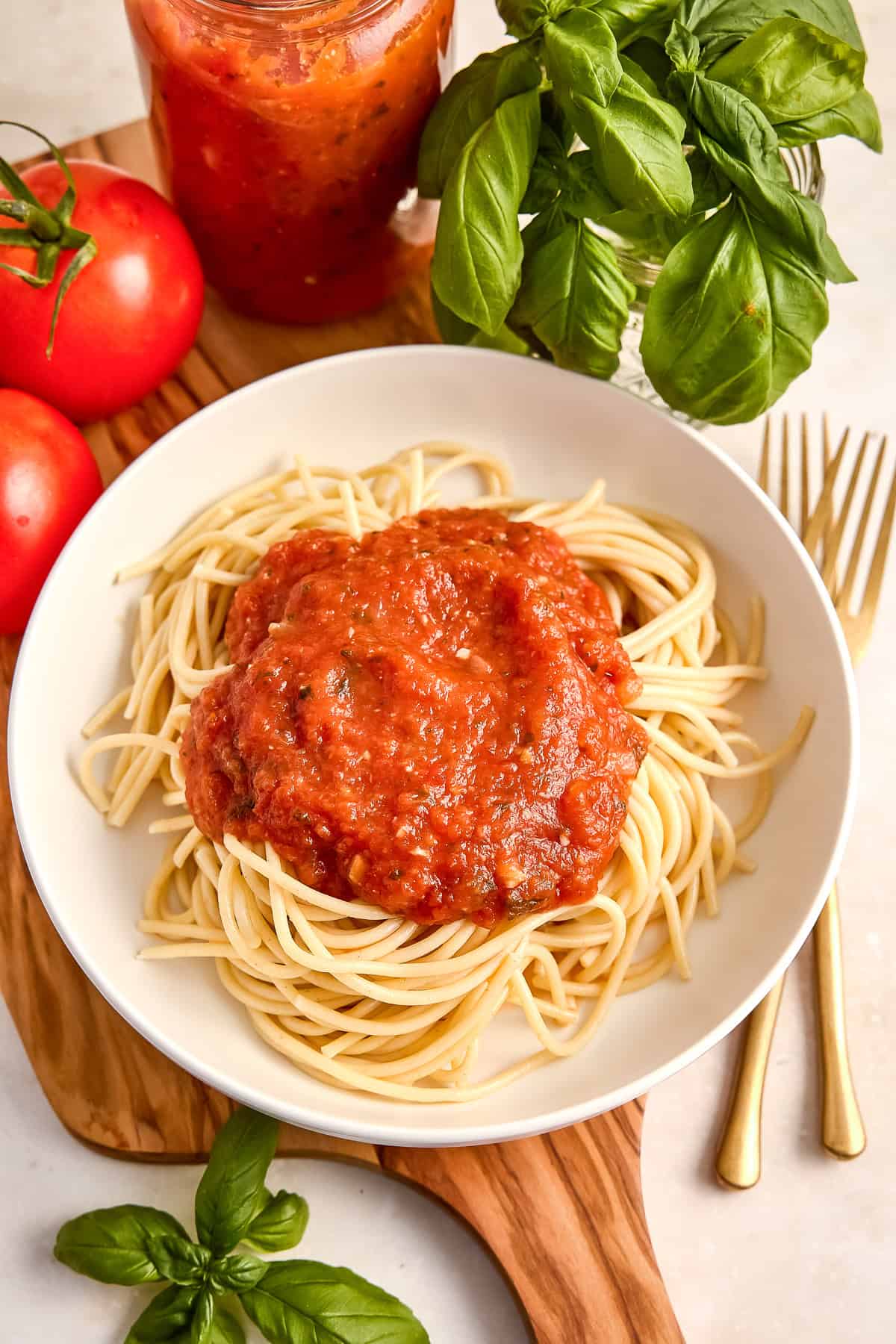
Ways to Use This Sauce
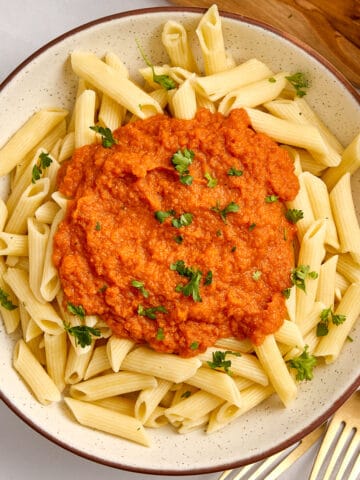
Of course, the best way to enjoy fresh tomato sauce is over spaghetti or another pasta of choice! It’s delicious with grated parmesan cheese, fresh parsley, and a side of garlic bread. You can also spread it on pizza, layer it into lasagna, spoon it over polenta, or use it in place of store-bought marinara sauce in many other recipes. I love using it as a dipping sauce for the Baked Italian Zucchini Balls Recipe or in place of the canned tomatoes in my Carrot Pasta Sauce and One Pot Pumpkin Tomato Pasta.
Storage and Freezing
Keep fresh tomato sauce in a tightly sealed glass jar or airtight container in the refrigerator for 3 to 5 days. To freeze, let it cool completely before transferring to freezer-safe containers. Leave about an inch of headspace to allow for expansion and seal tightly. Label and freeze for up to 6 months. Thaw in the fridge overnight or reheat directly from frozen in a saucepan over medium-low heat, stirring frequently to prevent scorching.
More Tomato Recipes
- Roasted Cherry Tomato Sauce with Fresh Herbs
- Tortellini Tomato Soup with Fresh Tomatoes
- Cold Bruschetta Dip with Crème Fraîche
- Fresh Garden Salsa Recipe
- Heirloom Tomato Salad with Cucumber and Herbs
FAQs
- Do I need to peel fresh tomatoes for tomato sauce? You don’t need to blanch and peel the tomatoes in this recipe, but I recommend discarding the tomato skins after grating them. Pieces of tomato skin are tough to chew and should not be included if you want a smooth sauce. If you do not mind some skin, feel free to include it. If you blend the sauce before serving, it won’t be very noticeable anyway.
- Can I can this homemade tomato sauce? This recipe is recommended to be eaten right away or stored in the fridge or freezer. If you are interested in canning it, take the appropriate precautions and follow the instructions from the National Center for Home Food Preservation.
- Should I add butter to tomato sauce? If your sauce seems a little sour or overly acidic, adding 1 to 2 tablespoons of butter can help balance the flavors. Stir it into the sauce when it’s finished cooking until it melts. Butter also makes fresh tomato sauce a little richer and creamier.
📖 Recipe
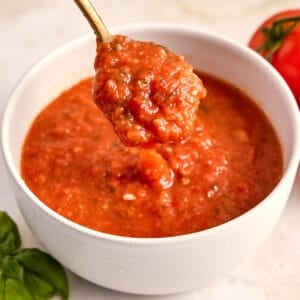
Fresh Tomato Sauce
Ingredients
- 6 pounds fresh tomatoes - I recommend 3.5 pounds on-the-vine tomatoes and 2.5 pounds Roma tomatoes
- 1 tablespoon extra virgin olive oil
- ½ cup diced yellow onion
- 4 cloves garlic - minced or pressed
- ½ teaspoon kosher salt
- 10 to 15 leaves fresh basil - more to taste
- 2 teaspoons red wine vinegar
Instructions
- Prepare the tomatoes. Wash under cold running water, pat dry, and remove the stems. Cut in half lengthwise, then scoop out seeds and goop with a spoon to discard.
- Take each tomato half and carefully run the cut side over a grater with large holes placed over a large bowl. I like to use a box grater. Grate the tomato so that all of the flesh falls into the bowl and you are left with just the skin. Discard the skin. Repeat with the remaining tomato halves.
- In a stainless steel saucepan, warm the olive oil over medium heat. Add the onion and cook for about 5 minutes until slightly softened, stirring occasionally.
- Stir in the garlic and salt. Cook for another minute until fragrant.
- Add the bowl of tomato pulp and juices to the pot, followed by the basil leaves.
- Cook, over medium-low or low heat to maintain a simmer with gentle bubbles, for 30 to 60 minutes or until the juices have thickened into a sauce-like consistency. Stir occasionally and adjust the heat as needed to maintain a simmer.
- Once the sauce has thickened, remove from heat. Stir in the red wine vinegar.
- Use a hand blender to puree all or some of it, depending on your desired texture. Alternatively, you can transfer the sauce to an upright blender or food processor to puree. Leave the lid slightly cracked or remove the plastic circle in the center of the lid to allow steam to escape (and do not overfill).
- Serve over pasta of choice. I recommend spaghetti! Enjoy!
- Leave a rating or review by tapping the stars on this recipe card (above) or in the comments section (at the end of the post)!
Notes
- This recipe yields 12 to 16 ounces of sauce. Double or triple the ingredients and use a large stainless steel stock pot or Dutch oven to make extra sauce to freeze for later!
- Store the sauce in tightly sealed jars or airtight containers in the fridge for 3 to 5 days.
- To freeze, let it cool completely before transferring to freezer-safe containers. Seal tightly, label, and keep in the freezer for 3 to 6 months.
- You can adjust the flavors based on your preferences. If the sauce is too sour or acidic, stir in 1 to 2 tablespoons of butter at the end until melted or add ½ to 1 teaspoon of granulated sugar. This also helps if the sauce tastes bitter. For some heat, add ½ teaspoon crushed red pepper flakes and a few cracks of freshly ground black pepper. If it tastes dull, add a splash more vinegar. A squeeze of tomato paste can make the sauce more flavorful if you’re using a bland tomato variety.
Comments
No Comments