

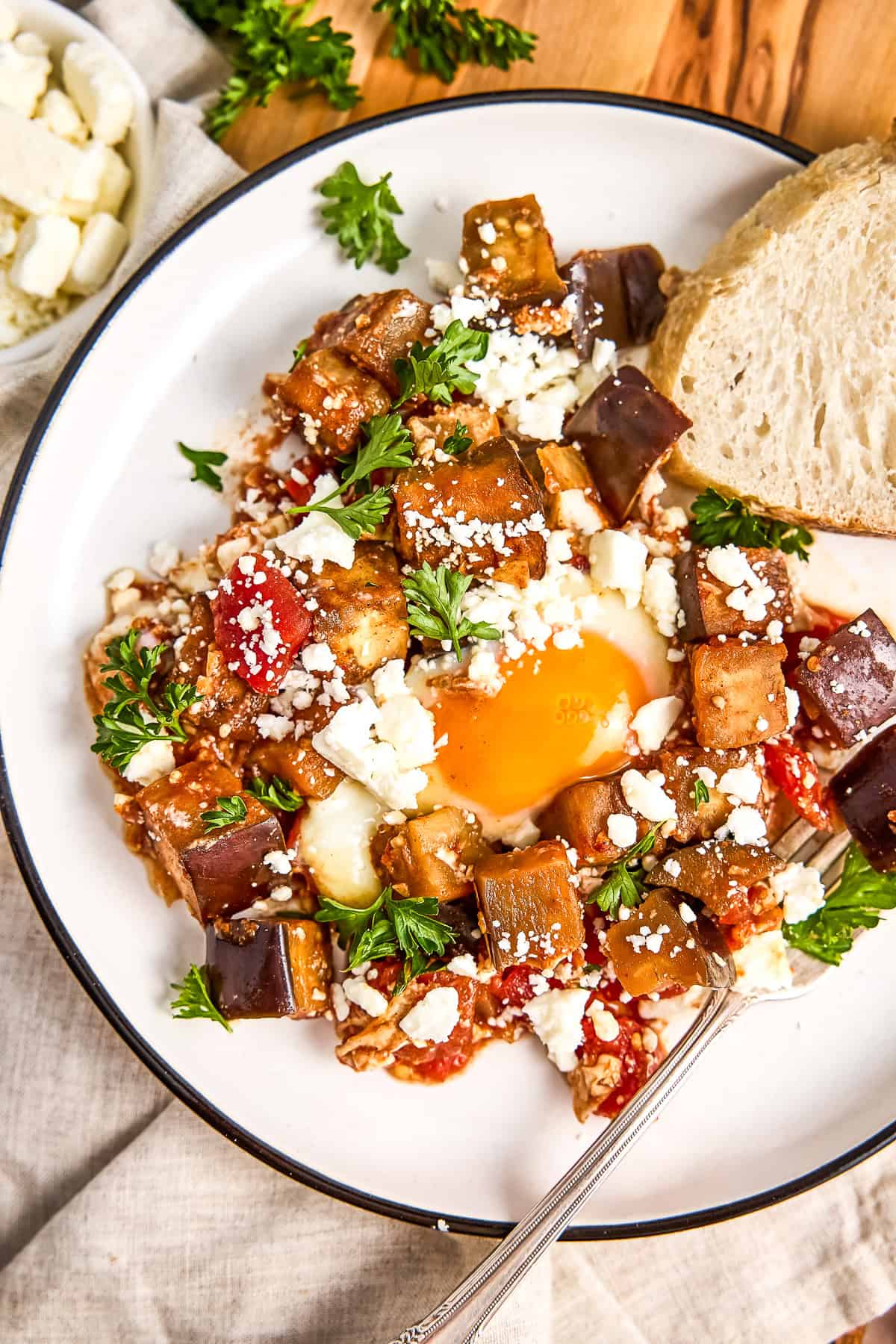
A delicious twist on the classic, this eggplant shakshuka recipe has a deep smoky flavor that pairs well with poached eggs, crumbled feta cheese, and a generous sprinkle of fresh parsley. The fiber-rich ingredients provide a balance of acidic and earthy flavors and make this dish a hearty, satisfying meal.
Jump to:
Dietitian Lizzie’s Notes
Since eggplant season extends into that month-long period when it’s still hot in the afternoon but a little chilly in the mornings and evenings, this cozy dish is the perfect way to embrace the late summer harvest! You can use up the eggplant from your garden or farmers market all while enjoying a warm, nourishing meal that’ll get you in the mood for fall. It’s inspired by traditional shakshuka, a dish that originated in North Africa, but has a twist.
Eggplant shakshuka has some unique qualities, thanks to the main veggie’s spongy interior. Eggplant acts as a magnet for spices and develops a velvety smooth texture as it breaks down, which is why it’s such a great addition and replacement for bell peppers. If you’re a fan of ratatouille or other stew-like veggie dishes, you’ll love this recipe.
This meal is also packed with fiber from the veggie-loaded base and stands alone as a complete vegetarian meal, thanks to the addition of protein-rich eggs. What could be better than checking all those boxes and only using one pan in the process?!
Ingredients and Substitutions
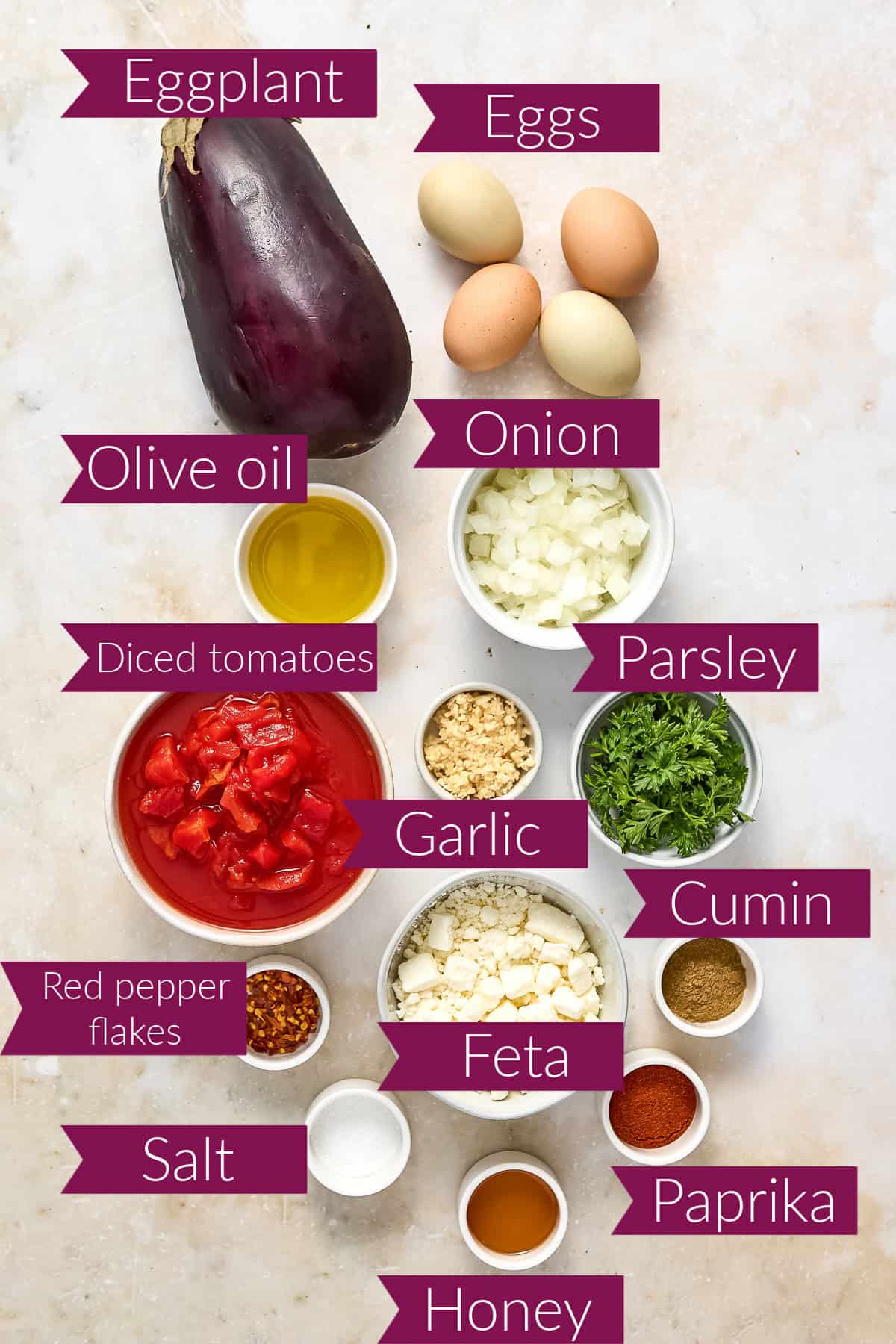
- Onion: I like yellow onion, but you can substitute red onion or shallots if needed.
- Eggplant: I typically use regular globe eggplants, but you can use other varieties you may be growing in your garden or see at the market. Some options, such as Japanese, graffiti, and Rosa Bianca eggplants, are less bitter and work really well if you want a sweeter flavor profile.
- Garlic cloves: I prefer fresh garlic, but a teaspoon of garlic powder or dried minced garlic will also work.
- Paprika, cumin, and red pepper flakes: These seasonings provide a balance of sweet, smoky, and hot notes. You do not need harissa paste for shakshuka, but you can use it as a substitute for or in addition to these dried seasonings if desired. Use ground coriander in place of cumin if desired.
- Diced tomatoes: I prefer using canned tomatoes in eggplant shakshuka because they offer a consistent flavor and don’t take as long to break down as fresh tomatoes. Plus, they don’t have any skin like fresh tomatoes. Sub canned whole tomatoes if desired. If you want to use fresh and don’t mind skin in the final recipe, feel free to use them! Just keep in mind they will take longer to cook down. You’ll need about 1.5 to 1.75 cups of diced fresh tomatoes, and you may want to add a tablespoon of tomato paste.
- Honey: I like to add a small amount of sweetener to balance the bittersweet eggplant and acidic tomatoes. You can add more or less depending on your taste preferences. Granulated sugar also works.
- Eggs: I recommend four eggs for the amount of veggies in this recipe so that there is enough room to create wells for them to cook. You can add more, but the pan may be a little too crowded depending on the size you use.
- Feta cheese: Omit if you want the recipe to be dairy-free, or sub crumbled goat cheese for a different flavor.
- Parsley: Substitute basil, cilantro, or other fresh herbs if that’s what you have.
How to Make Eggplant Shakshuka
The full recipe card is at the bottom of the post. Here’s a preview of the steps with photos to guide you in the kitchen as you make it from scratch.
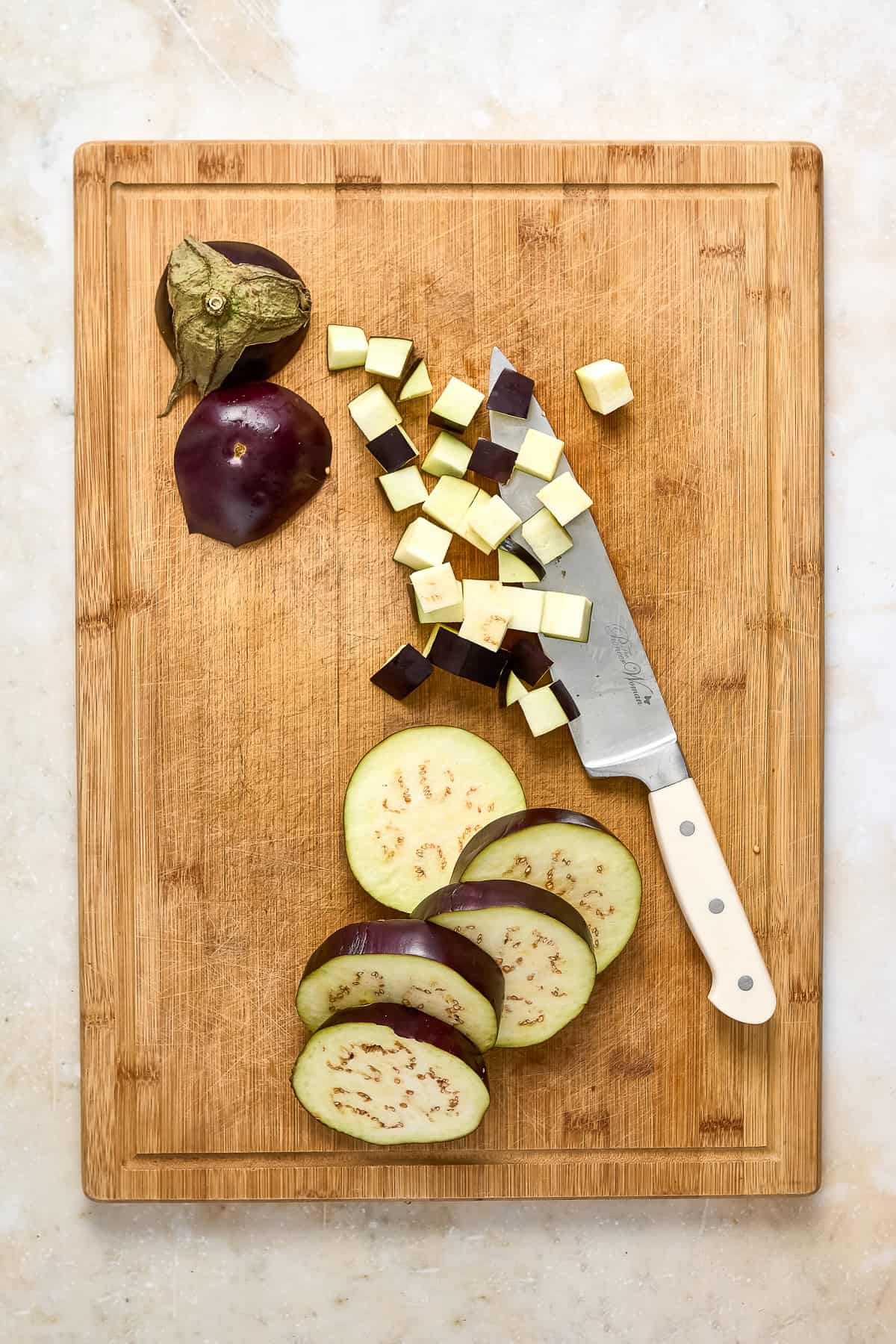
Cut the eggplant into ½-inch cubes, and dice the onion and garlic. You do not need to peel or sweat the eggplant for this recipe. For more tips, see my tutorial on How to Cut Eggplant (with video).
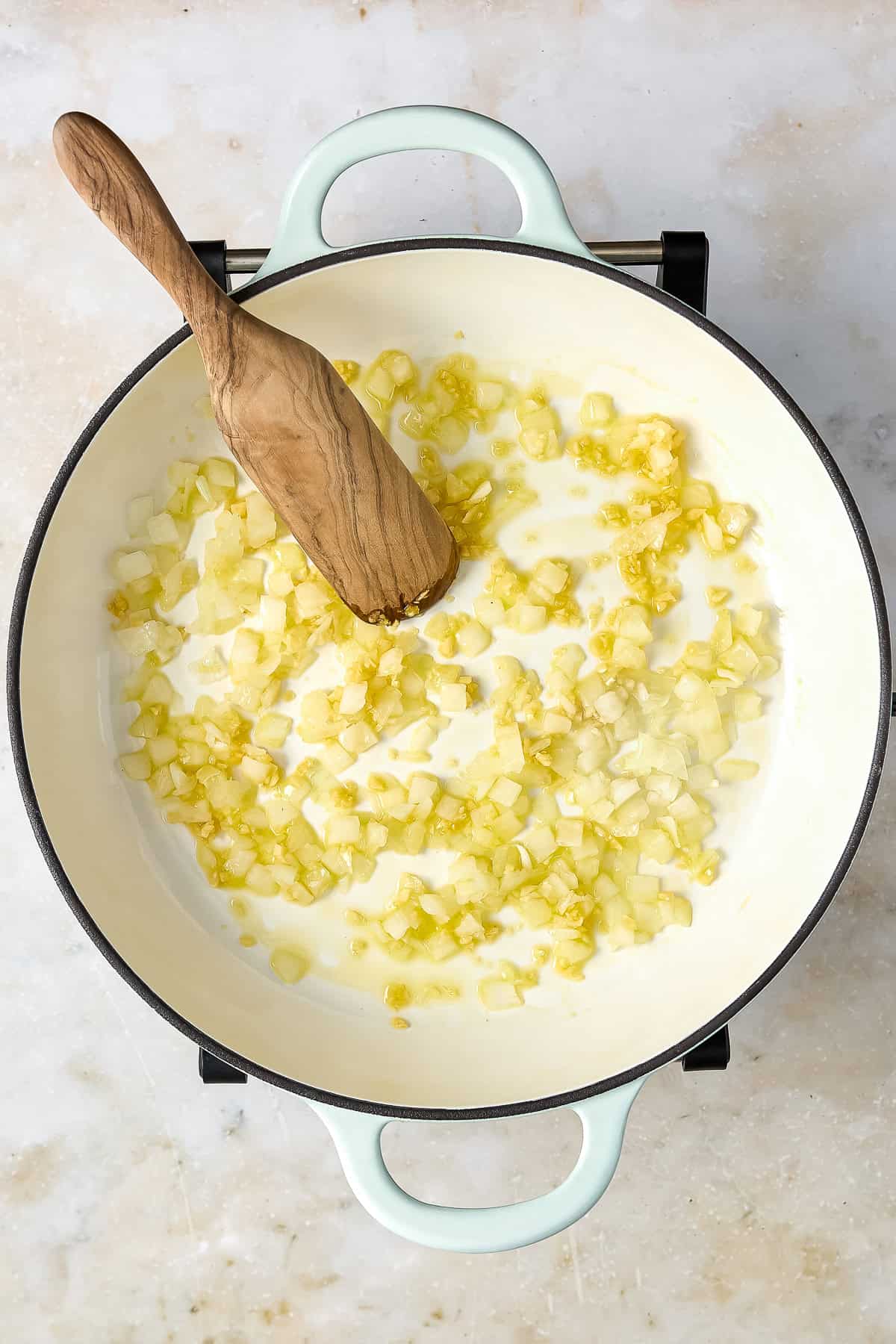
Warm olive oil in a large skillet over medium heat. Add the onion and garlic and cook for a few minutes until softened and fragrant. Stir often to prevent burning.
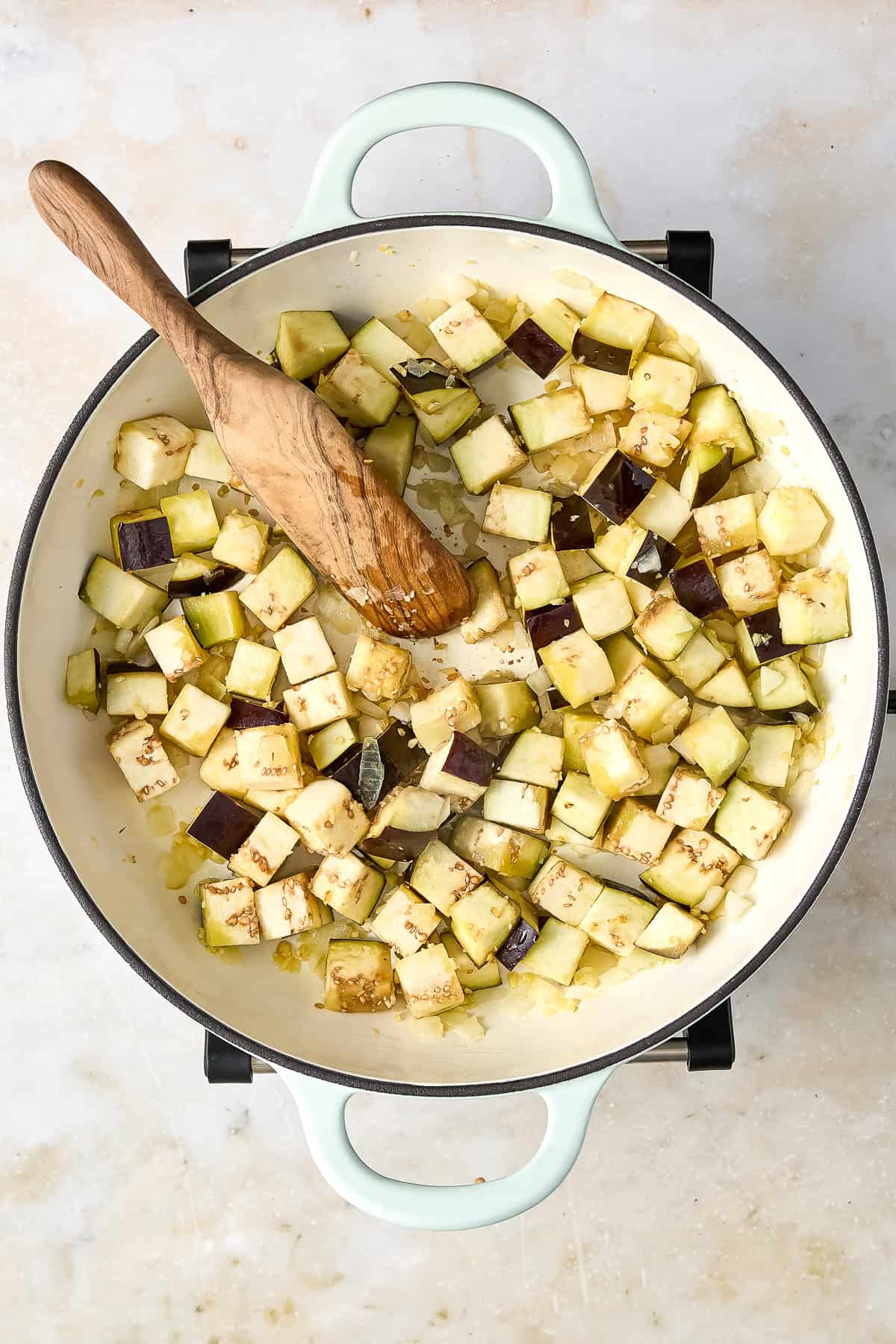
Add the eggplant to the skillet, along with another drizzle of olive oil, and cook until slightly softened and lightly browned. Gently stir occasionally to prevent sticking.
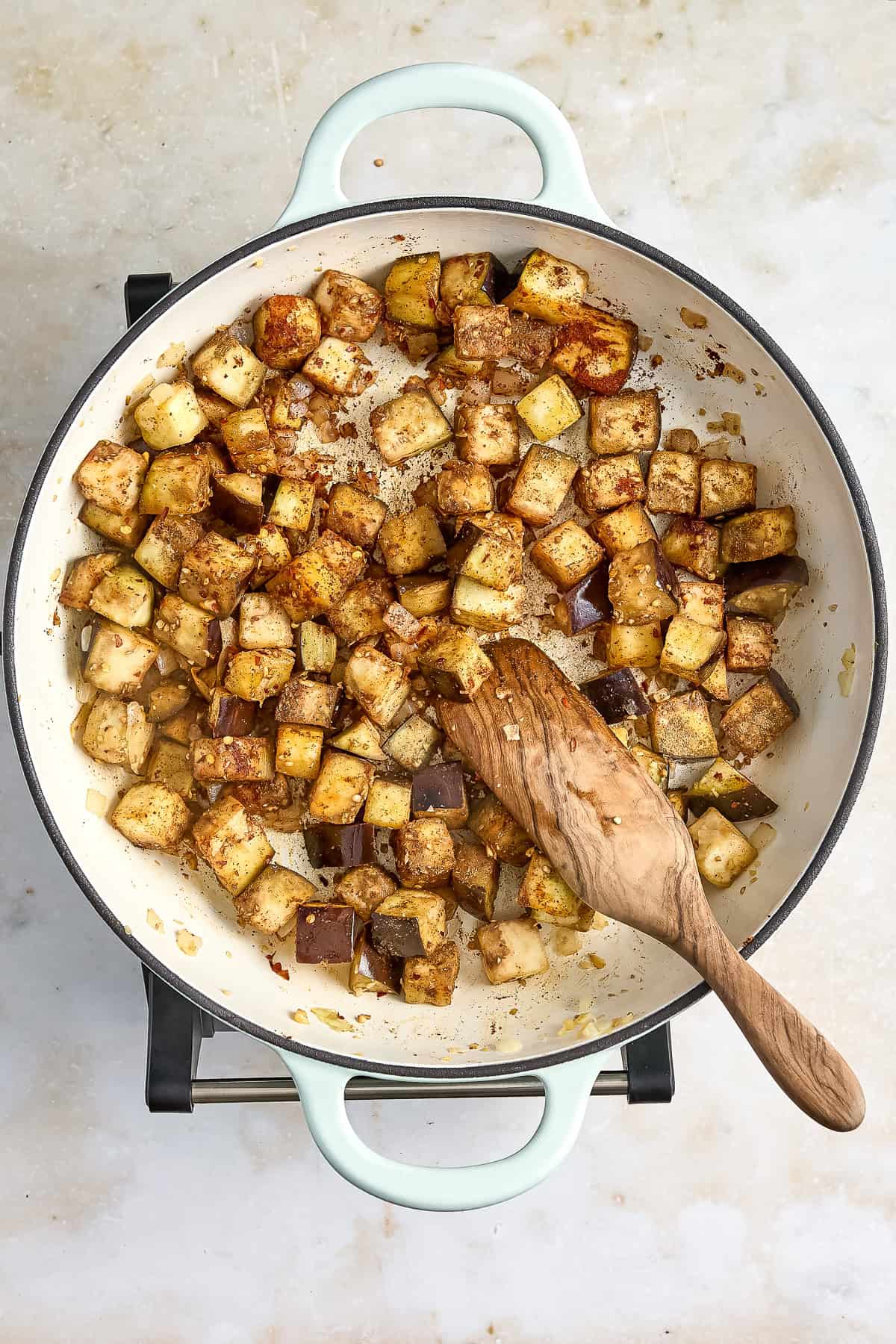
Add the seasonings, stir to coat, and cook for another minute until fragrant.
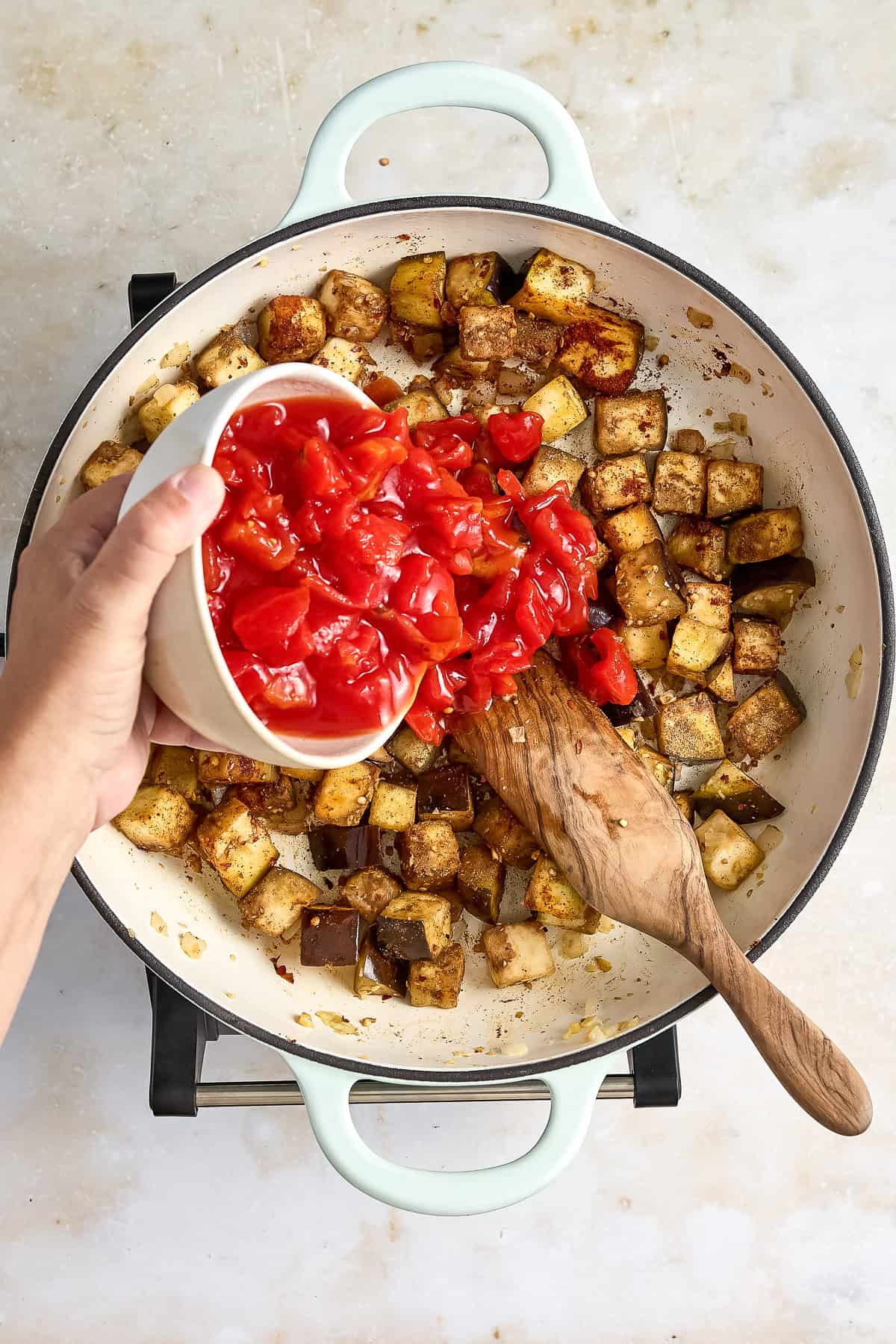
Quickly add the diced tomatoes with their juices to the skillet to prevent the spices from burning.
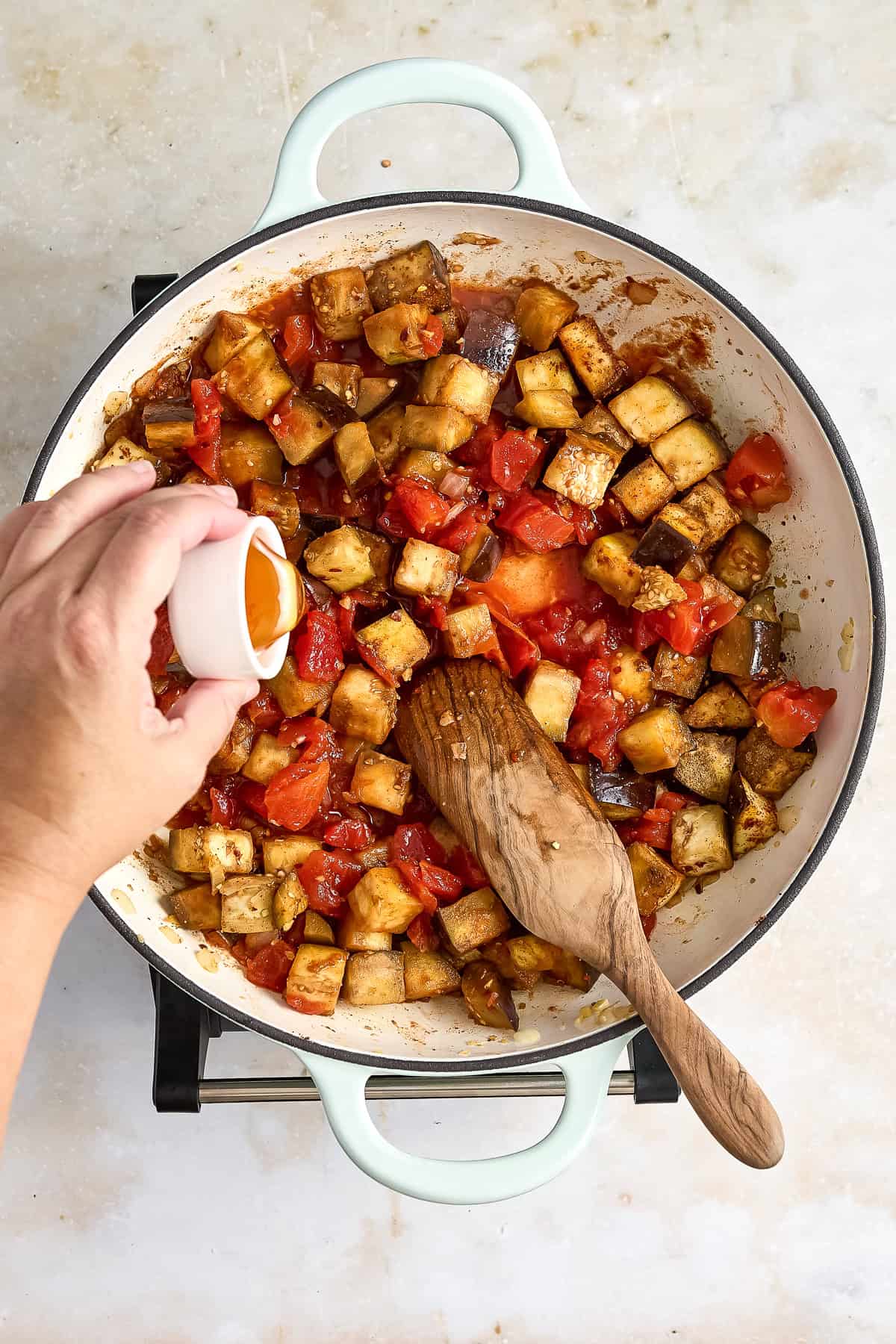
Drizzle the honey into the skillet. Cook until the eggplant is fully softened and the mixture has thickened to the consistency of a stew.
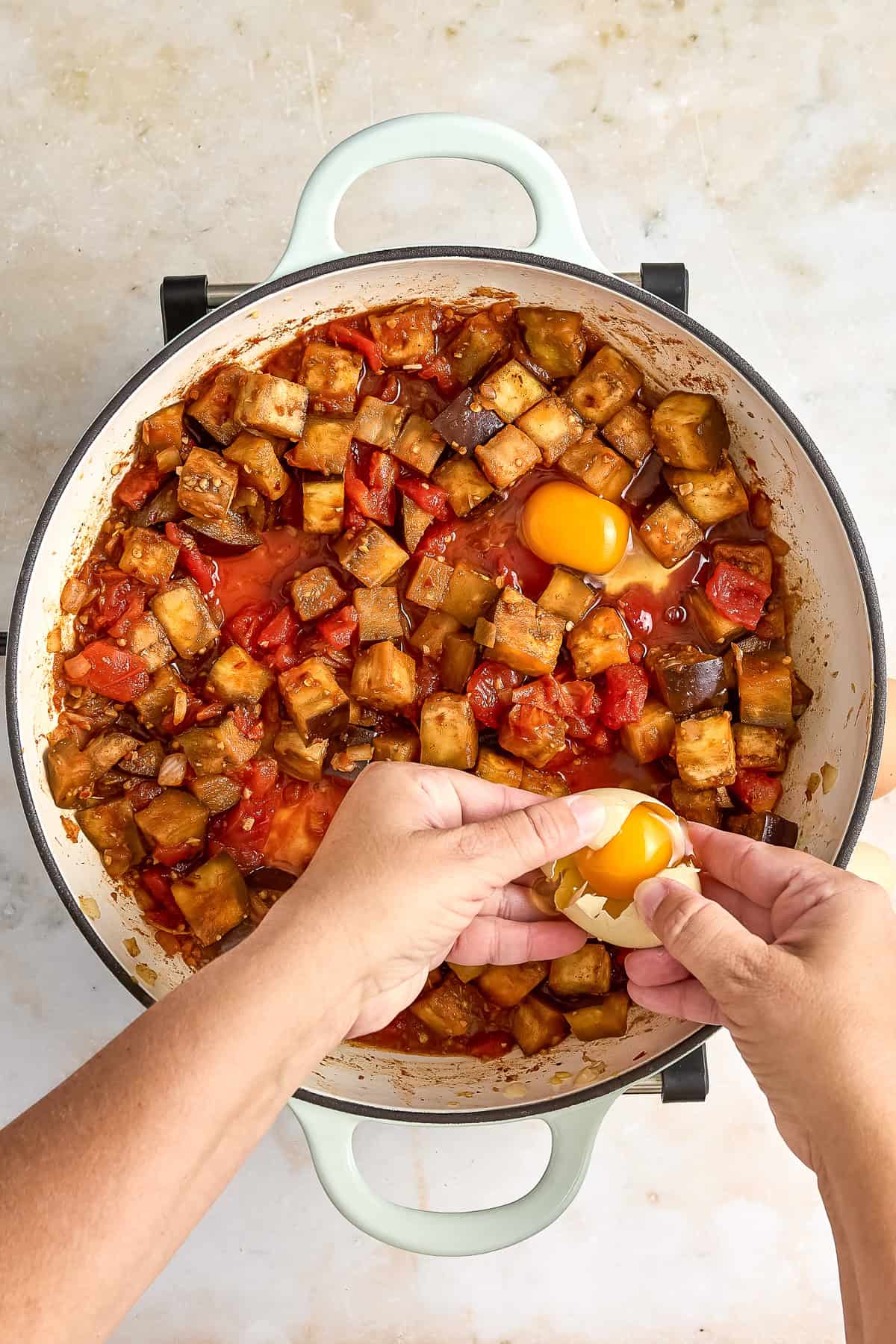
Use a spoon to make four wells in the veggie mixture. Make sure they are big enough to fit most of the egg so it’s not too squished. It’s OK if the bottom of the wells have a little liquid, but you don’t want pieces of veggies in the wells that prevent the egg from absorbing enough heat from the skillet.
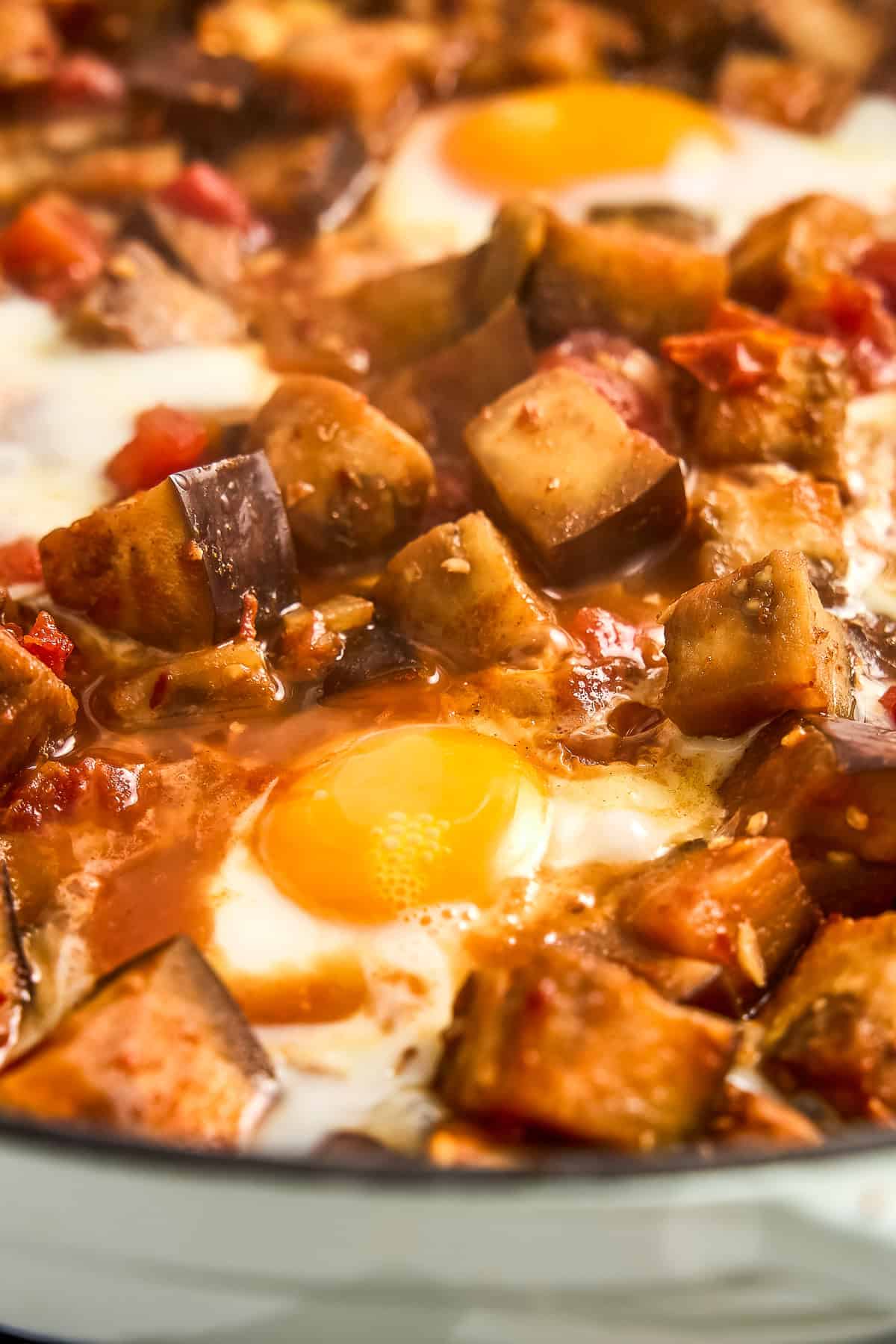
Reduce heat to low, cover the skillet, and cook until the eggs are cooked to your liking. You should only cook the eggs in shakshuka for 5 to 8 minutes to get jammy eggs.
Easy Ways to Change It Up
- Add extra protein: Stir in a can of chickpeas, white beans, or cooked lentils at the same time as the tomatoes.
- Add leafy greens: Stir in chopped baby spinach or kale at the same time as the tomatoes.
- Increase the spice level of the eggplant tomato sauce: Add 1 to 2 tablespoons of hot harissa paste at the same time as the dried seasonings. You may want to cut back on the paprika and cumin you add if your paste has those spices. Alternatively, you can increase the amount of crushed red pepper flakes, add a pinch of cayenne pepper, or stir in a diced jalapeño.
- Scramble the eggs: If you want to skip the step of poaching eggs for eggplant shakshuka, you can scramble them instead to mimic Turkish menemen. Add beaten eggs to the veggie stew and cook, stirring occasionally, for a few minutes over low heat before serving.
- Make roasted eggplant shakshuka: Sub roasted eggplant for raw and skip the step of cooking the eggplant until softened.

What to Serve With It
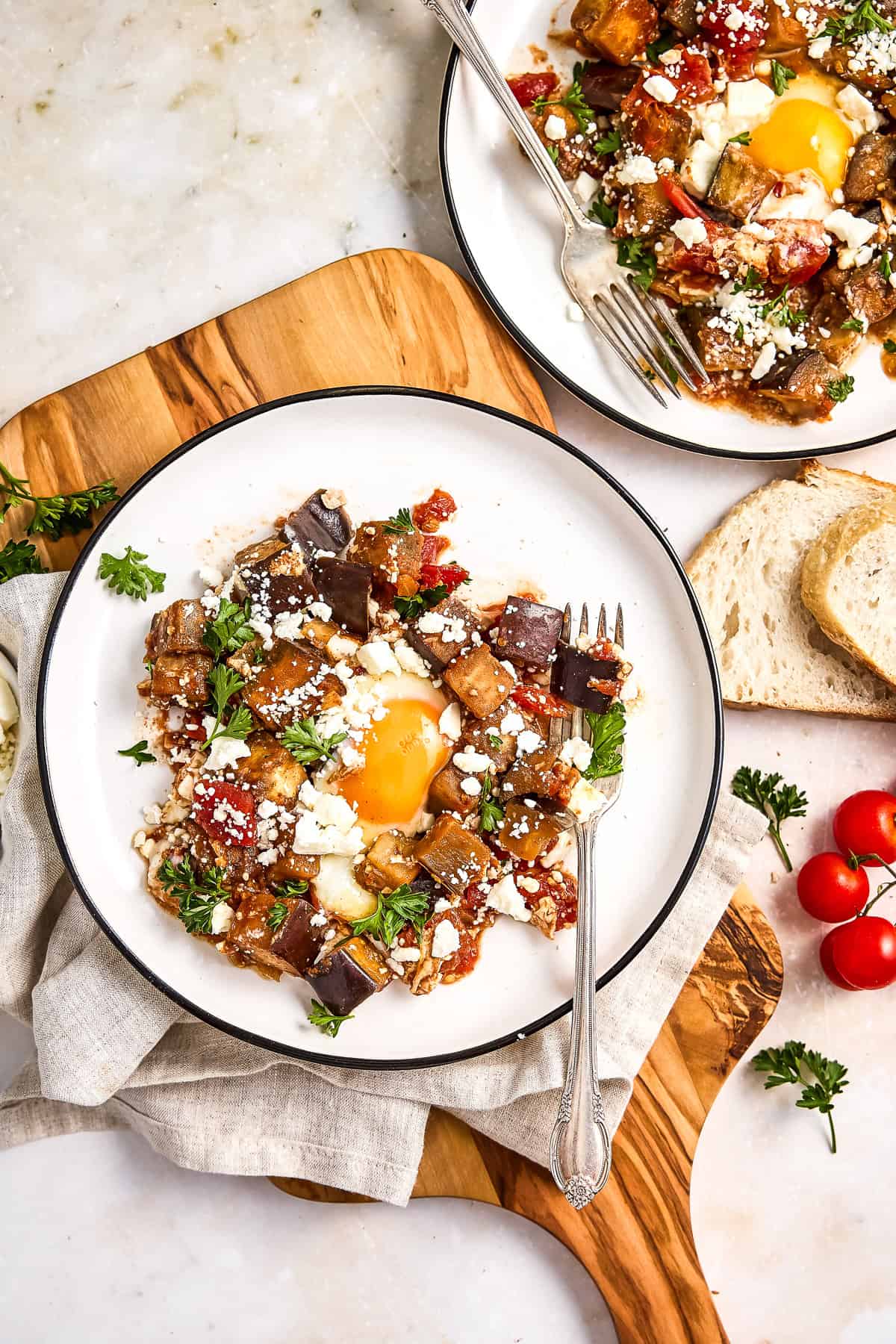
Crusty bread to mop up the veggie stew is a must when serving eggplant shakshuka! Warm pita also works well. If you want a side, try some leafy greens in a simple lemon olive oil dressing. For another fun option, forego the feta cheese and serve with fried halloumi cheese instead. You can eat this recipe for breakfast as well as a vegetarian brunch, lunch, or dinner.
Storing and Reheating
Shakshuka is best enjoyed right away. I don’t recommend storing the eggs as leftovers, since they don’t reheat well and the yolks will harden. However, you can store any leftover shakshuka sauce in an airtight container in the refrigerator for 2 to 3 days. Reheat in a skillet over medium-low heat, and poach some new eggs in it if desired. I don’t recommend freezing this recipe.
More Eggplant Recipes
- Eggplant Pesto Pasta
- Vegan Eggplant “Teriyaki”
- Roasted Baby Eggplant with Cucumber Yogurt Sauce
- Mini Eggplant Pizza Bites
- Crispy Baked Eggplant Slices
- Eggplant Gyro Sandwich on Pita
FAQs
- What are common mistakes when making shakshuka? The biggest potential issue is overcooking the eggs. Covering the skillet so they simmer from the bottom and steam from the top is key to get the right poached egg consistency. You also should cook the eggs over low heat and remove them when the tops are just set but the yolks are still runny, unless you specifically want hard yolks.
- What is the secret to perfect shakshuka? Use enough spices and add a little bit of honey to balance the flavors for the best results.
- Is shakshuka healthy? Yes! This recipe is an excellent way to eat more vegetables, boost fiber intake, and cook a balanced meal with protein all in one pan.
📖 Recipe

Eggplant Shakshuka
Equipment
- large skillet
Ingredients
- 2 tablespoons extra virgin olive oil
- ½ cup diced yellow onion
- 2 cloves garlic - minced or pressed
- 2 cups cubed eggplant - from about 0.5 pound (1 medium globe eggplant)
- 1.5 teaspoons smoked paprika
- 1 teaspoon ground cumin
- ½ teaspoon red pepper flakes
- ¼ teaspoon salt - more to taste
- 14.5 ounces canned diced tomatoes - with their juices
- 2 teaspoons honey
- 4 eggs
- ½ cup crumbled feta cheese
- ¼ cup chopped fresh parsley - for garnish
- Crusty bread or pita - for serving
Instructions
- Warm olive oil in a large skillet (with a lid) over medium heat.
- Add the onion and garlic to the skillet. Cook, stirring occasionally to prevent the garlic from burning, for 2 to 3 minutes or until the onion begins to soften.
- Add the cubed eggplant to the skillet with an extra drizzle of olive oil if the skillet seems dry. Cook, stirring occasionally, for 7 to 8 minutes until slightly softened and lightly browned.
- Stir in the paprika, cumin, red pepper flakes, and salt. Cook for another minute until fragrant.
- Add the diced tomatoes and honey to the skillet. Cook for 6 to 8 minutes until the mixture starts to thicken into a stew-like texture and the eggplant is completely tender.
- Use the back of a spoon to create four wells in the tomato mixture that are big enough to fit a cracked egg without it being too squished. It's OK if there is a little liquid pooled in the wells but you don't want pieces of veggies in them that prevent the egg from absorbing heat from the skillet. Crack an egg into each well. I like to add a dash of salt and black pepper on top of the eggs as they cook.
- Cover the skillet and reduce the heat to low. Cook for 5 to 8 minutes until the egg whites are just set and the yolks are jammy. If you want runny eggs, cook the eggs for 3 to 5 minutes. For harder yolks, increase the cooking time to 7 to 10 minutes. Resist the urge to increase the heat, since this will cause the eggs to overcook quickly.
- Transfer the shakshuka to serving plates. Sprinkle with feta cheese and fresh parsley.
- Serve immediately with crusty bread or pita.
- Leave a rating or review by tapping the stars on this recipe card (above) or in the comments section (at the end of the post)!
Notes
- Keep leftover shakshuka sauce in airtight containers in the refrigerator for 2 to 3 days. I don’t recommend storing the eggs as leftovers, since the yolks will get hard and the texture will change. Instead, you can reheat the leftover veggie mixture in a skillet over medium heat and poach fresh eggs in it as desired.
- Nutrition facts do not include bread.


Comments
No Comments