
If you have too much fresh broccoli from your garden, CSA share, or farmers market, I’ve got the solution for you! Learn the best techniques for freezing this cruciferous vegetable so that it’s not a mushy mess when you go to use it. I’ve compiled everything you need to know about how to freeze broccoli, including how to blanch it, how to freeze it without blanching, and the best ways to cook it.
Jump to:
Dietitian Lizzie’s Notes
When it comes to the best way to freeze fresh broccoli, blanching is almost always my preferred method! It helps preserve texture, flavor, color, and nutrients. However, some people may be concerned that blanching a veggie as delicate as broccoli will make it way too mushy. Fortunately, you can prevent this outcome by keeping the cooking time short (just 3 minutes!) and cutting the florets into a similar size. Keep reading for all of the details, informed by my firsthand experience in the kitchen!
How to Blanch Broccoli for Freezing
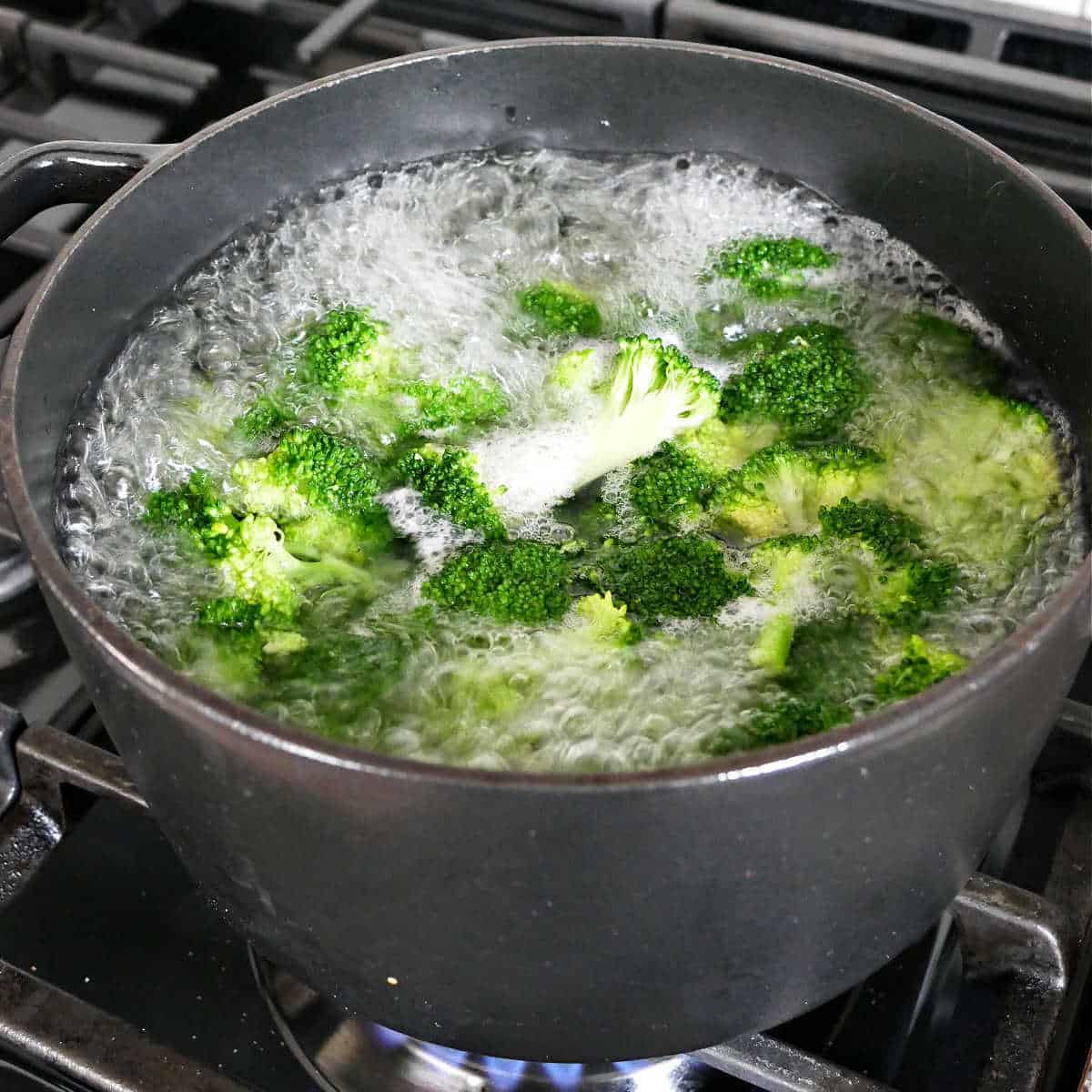
Bring a large pot of water to a boil. While it’s coming to a boil, cut or separate the crowns of broccoli into florets of similar size (for even blanching). If you need tips, see my tutorial on How to Cut Broccoli.
Drop the florets into the boiling water and blanch the fresh broccoli for 3 minutes. You can also use a steamer basket placed over a couple inches of boiling water. Cover and steam for 5 minutes.
Do not overcook the broccoli. You want it to have turned bright green but still be mostly firm and just gently cooked.
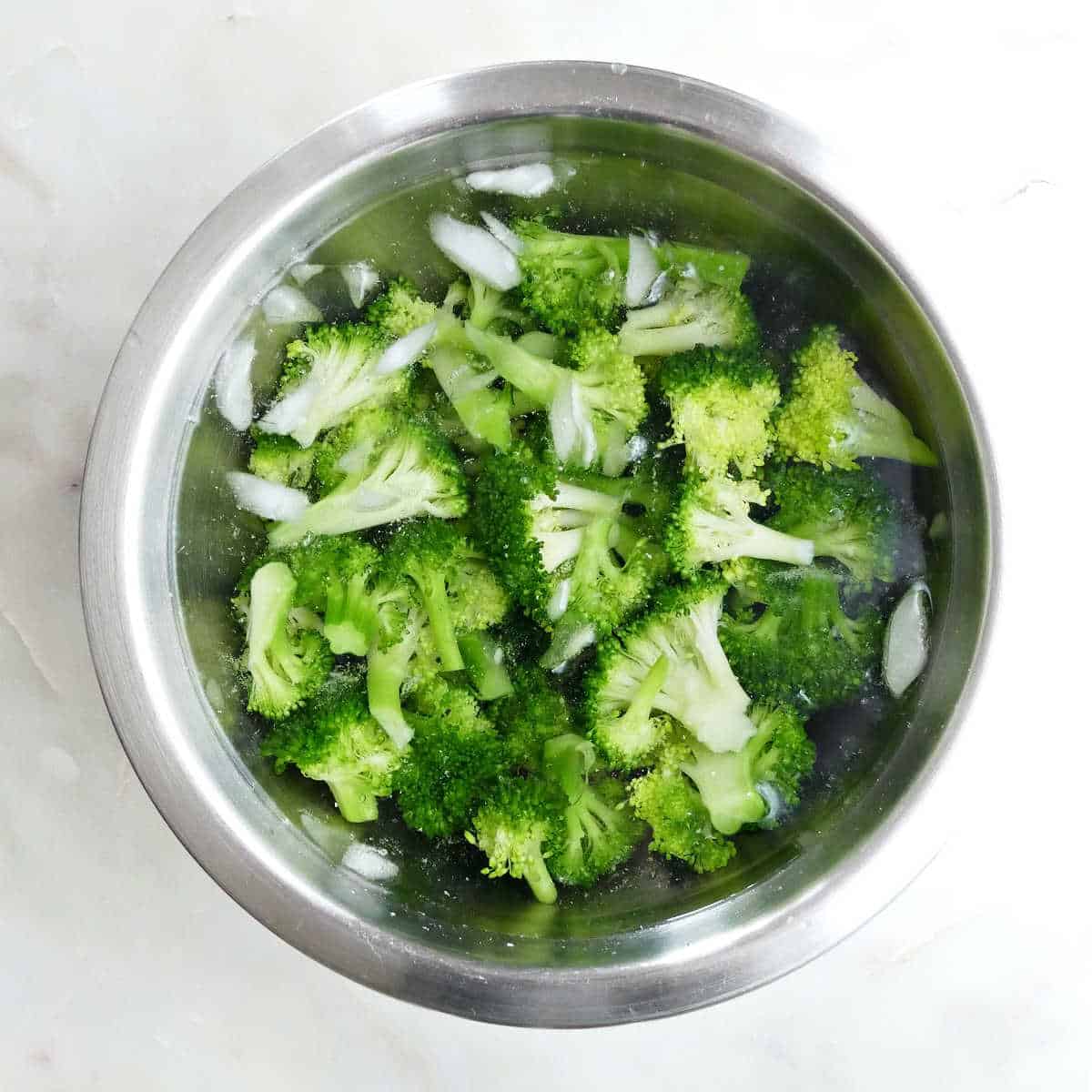
Immediately transfer the broccoli to a mixing bowl filled with ice water for an ice bath to stop the cooking process. I like to use a slotted spoon or spider strainer to do this quickly, but you can drain the broccoli in a colander and then transfer it to the bowl if preferred.
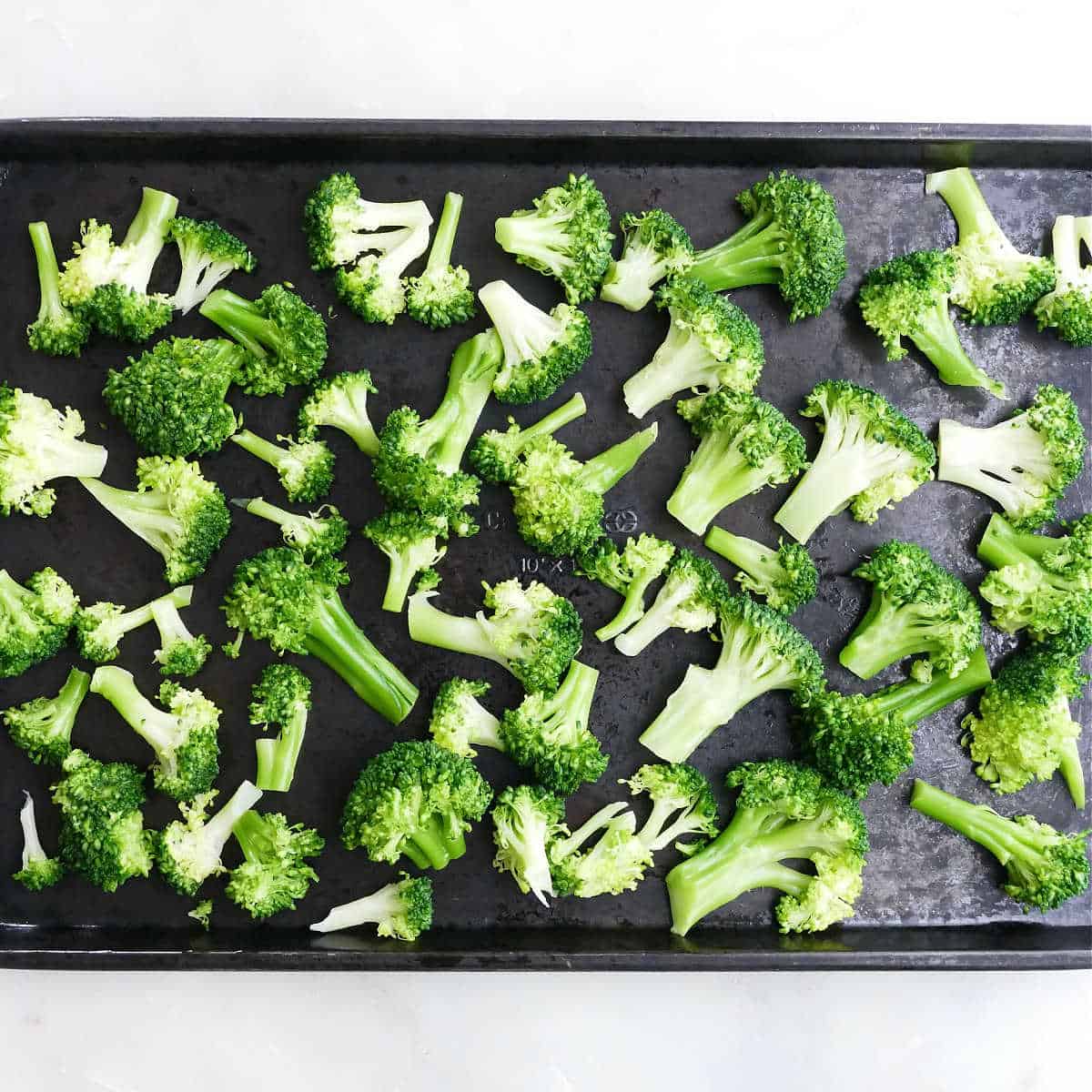
Remove the broccoli from the cold water and place on clean paper towels or dish towels. Pat dry and try to remove as much water as possible. You can even gently squeeze each floret with your hand to wring out some extra water. Spread out the blanched broccoli on a baking sheet.
Transfer to the freezer to flash freeze for 1 to 2 hours until frozen solid. Flash freezing the pieces separately keeps them from sticking together into big clumps.
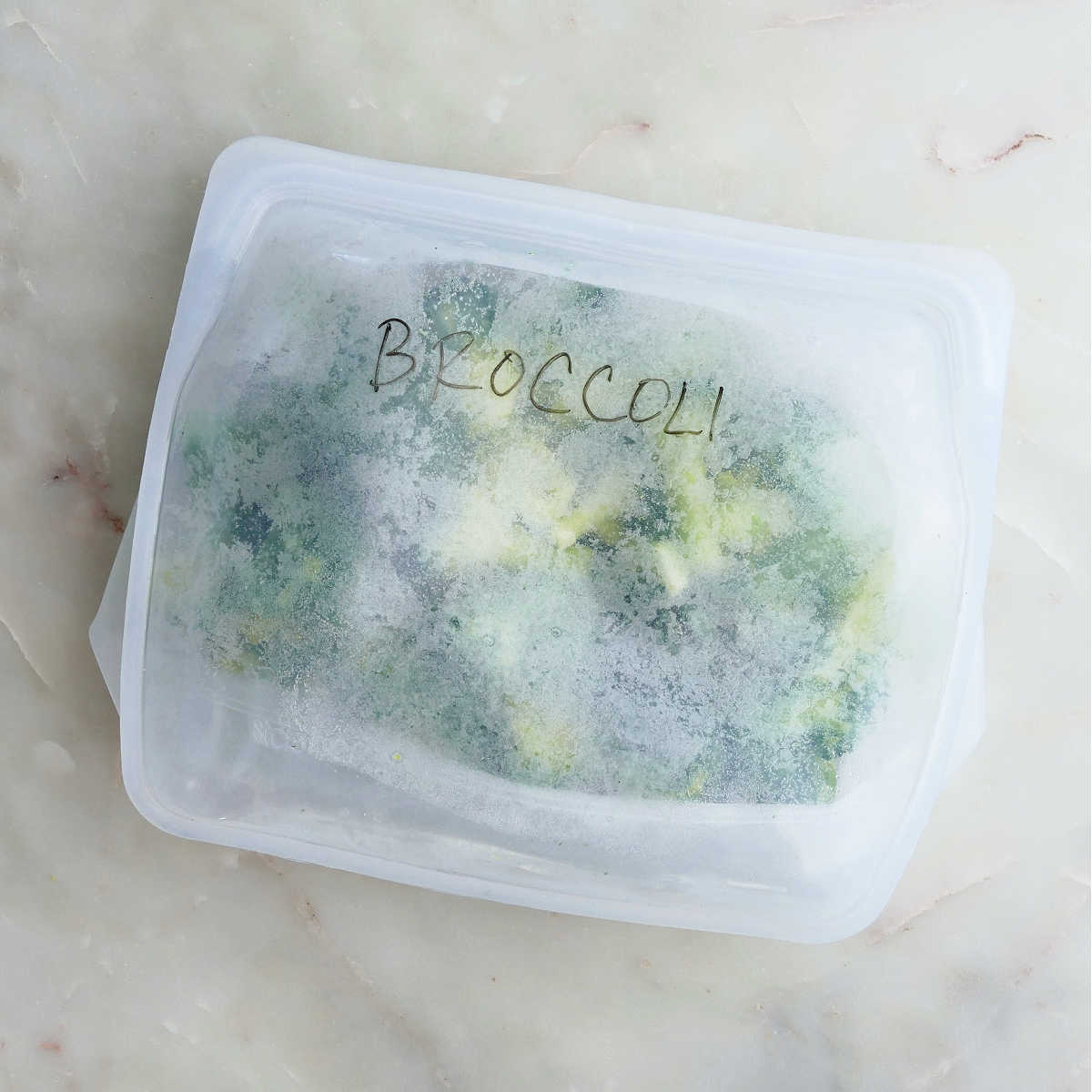
Transfer the frozen broccoli to a freezer-safe bag, such as a Stasher bag (pictured here). Store in the freezer for up to 6 months. Use within 3 months for best results.
The No-Blanch Method
Blanching leads to better results when freezing broccoli, but you can technically freeze it without blanching first. Follow this method if you need a quicker alternative.
- Cut the broccoli into florets of similar size.
- Transfer to a freezer-safe bag.
- Seal tightly and label.
- Store in the freezer for up to 3 months, but use within 1 month for best results.
You may find that frozen broccoli that hasn’t been blanched doesn’t have as good of a taste or texture in recipes. However, it’s usually fine in soups and stews, especially blended soups where it’s not as crucial to have florets with a specific texture.
Storage and Freezer Tips
Here are some additional expert tips for how to freeze broccoli, based on personal experience.
- When transferring the baking sheet of blanched broccoli to the freezer, put it somewhere it can lay flat and won’t get bumped. You don’t want to open the freezer an hour later and find that the broccoli spilled everywhere or the florets got nudged and stuck together.
- Remove as much air as possible when sealing the freezer bags of broccoli. This helps prevent freezer burn and ice crystals that that lead to loss of flavor, texture, and nutrients. It also prolongs shelf life. You can also use a vacuum sealer if you have one, as long as you blanched the broccoli first.
- Blanched frozen broccoli lasts longer in the freezer (up to 6 months) than unblanched broccoli (up to 3 months).
- Use a slotted spoon or spider strainer to remove the broccoli florets from the boiling water and ice water. These tools help preserve the broccoli’s shape and texture. Draining the broccoli in a colander may cause it to get smushed or break into smaller pieces.
- You can also freeze cooked broccoli. If you have leftover steamed or roasted broccoli, let it cool completely then transfer to a freezer-safe bag. Seal tightly, while removing as much air as possible, and store in the freezer for up to 2 months. It will get mushy when thawed, so it’s best to use it straight from frozen in blended soups, stir fry, or casseroles.
How to Cook and Use It
When considering the best cooking method for frozen broccoli, you should keep a few things in mind. First, it usually doesn’t need to cook as long as fresh broccoli since it’s already been gently cooked through the blanching process. When subbing frozen broccoli for fresh, cut the cooking time down by at least a few minutes.
Second, frozen broccoli will turn mushy when thawed. So, it’s best not to thaw frozen broccoli and instead use it straight from frozen in cooked recipes. It’s easy to steam, roast, and use in soups and stir fry.
If you want to cook it for a simple side dish, I recommend steaming over boiling so it doesn’t get overly soft and mushy. You can also roast frozen broccoli. Remember to leave enough room between the florets while they roast so they don’t get too soft, and check out my Roasted Frozen Broccoli for more tips.
Here are some other recipes in which you can substitute frozen broccoli for fresh:
More Vegetable Prep Guides
- How to Freeze Cabbage
- How to Freeze Sweet Corn
- How to Freeze Potatoes (for Roasting, Soups, and More)
- How to Freeze Green Onion
FAQs
- Does broccoli get soggy after freezing? Yes, frozen broccoli will get soggy if you thaw it. Use it straight from frozen instead, ideally in hot recipes.
- How do you cook frozen broccoli without making it mushy? Cut the cooking time by a few minutes if you’re steaming or stir frying frozen broccoli instead of fresh.
- Can you freeze cauliflower the same way as broccoli? Yes, follow the same tips in this post for cauliflower. See my Roasted Frozen Cauliflower for tips on using it.
📖 Recipe
How to Freeze Broccoli
Equipment
- large pot
- Mixing bowl
- Colander (or slotted or spider spoon)
- Freezer bag
Ingredients
- 1 head broccoli
Instructions
- Bring a large pot of water to a boil. Alternatively, you can use a vegetable steamer basket over a couple inches of boiling water.
- Cut the broccoli into florets of similar size. Wash under cold running water, and pat dry. Fill a large mixing bowl with ice water.
- Once the water is boiling, drop the broccoli into the pot and cook for 3 minutes. If using a steamer basket, cook for 5 minutes. Do not overcook the broccoli. It should turn bright green but still be fairly firm and just gently cooked.
- Immediately transfer the broccoli to the bowl of ice water. You can use a slotted spoon to do this quickly or drain the broccoli first then transfer it.
- Let the broccoli sit in the water for a few minutes before transferring the florets to clean paper towels or dish towels. Use a slotted or strainer spoon if you have one.
- Pat the broccoli as dry as possible. I often will squeeze the florets gently in my fists to ring out any excess water.
- Spread the blanched and dried florets out on a baking sheet in a single layer. Place the baking sheet in the freezer, somewhere it won't get bumped, and freeze for 1 to 2 hours until frozen solid.
- Transfer the frozen broccoli florets to a freezer bag. Seal tightly, removing as much air as possible.
- Label and store in the freezer for up to 6 months. Use within 3 months for best results.
- Add directly to cooked dishes without thawing first. Do not use it in raw broccoli salads or else it will be mushy. I also recommend steaming instead of boiling if you are using it for a simple side dish.
- To freeze broccoli without blanching, just cut it up and store in a freezer bag. Remove as much air as possible. Freeze and use within 1 month for best results.

Comments
No Comments