
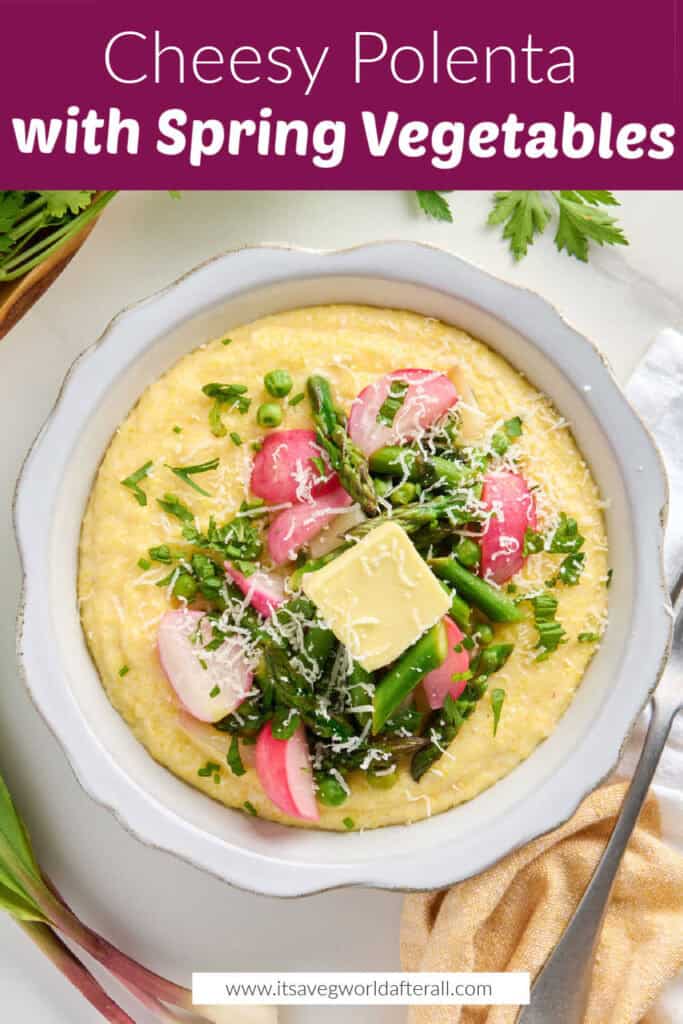
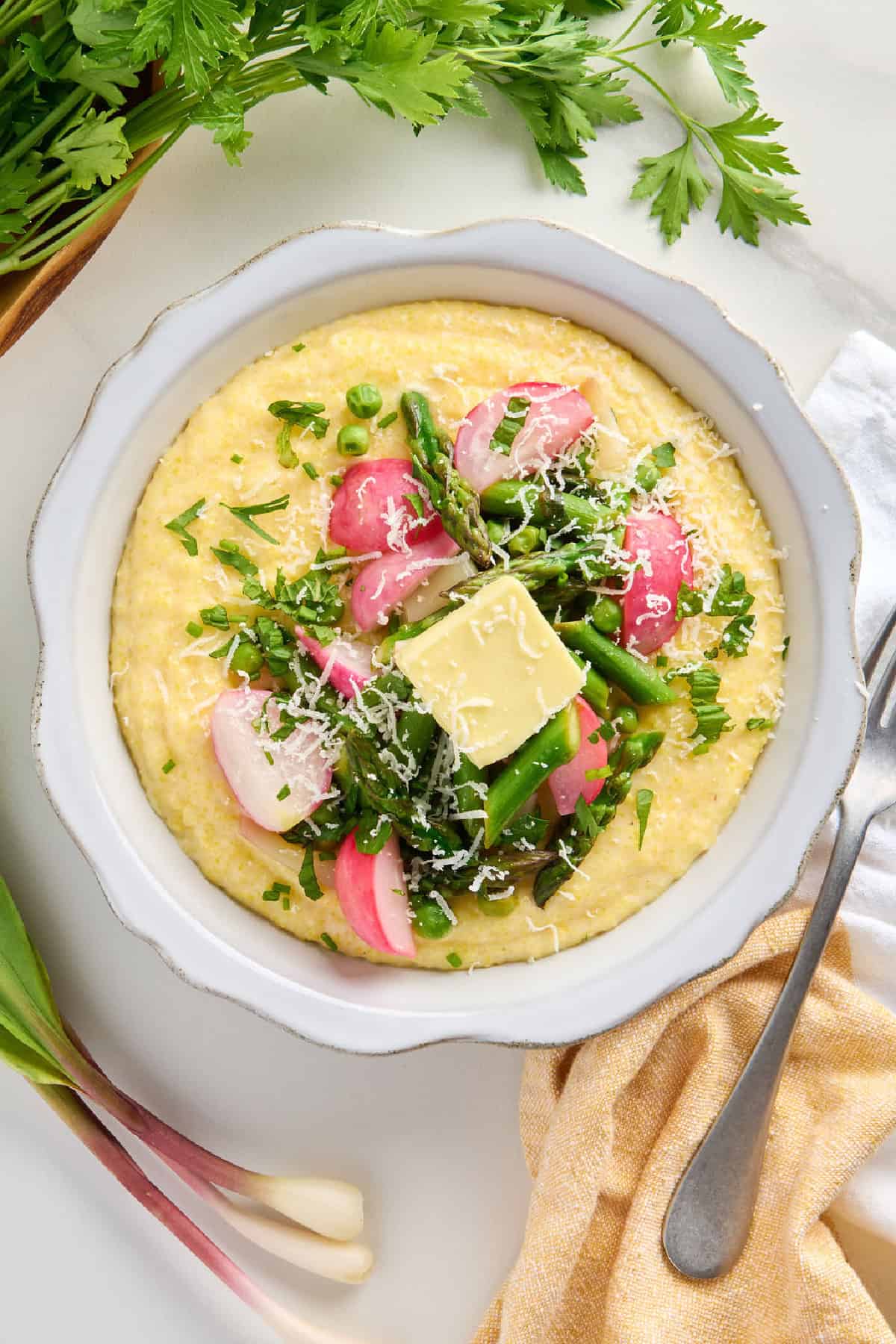
A medley of colorful spring produce, including radishes, asparagus, ramps, and peas, decorate a creamy landscape of parmesan polenta in this simple and healthy recipe! With a generous sprinkle of fresh herbs and squeeze of lemon juice, this savory spring polenta with vegetables is a stunning dinner to serve for guests. But it’s easy enough to eat for a vegetarian weeknight meal, too!
Jump to:
Lizzie’s Notes
One of the best things about veggies is that they don’t need much to appear fancy! This cheesy spring polenta with vegetables is a great example. It’s a delicious way to eat more produce that looks and feels elevated but isn’t above the skill level of your average home chef.
If you’re new to making polenta from scratch, don’t be intimidated! It’s incredibly easy, and I included some detailed notes to make sure you have a smooth experience. Besides that, you just need to cook vegetables in a skillet (I know Veg World readers are pros at that!), add herbs, lemon, and cheese, and boom. You’re ready to eat!
I love making this beautiful dish when spring produce is at its peak and you can find ramps before they quickly disappear. But you can still enjoy this recipe outside of ramp season just by subbing green onions. No matter when you prepare it, it will be a fab celebration of warm weather, sunshine, and all the beauty nature offers at the turn of the seasons.
Ingredients and Substitutions
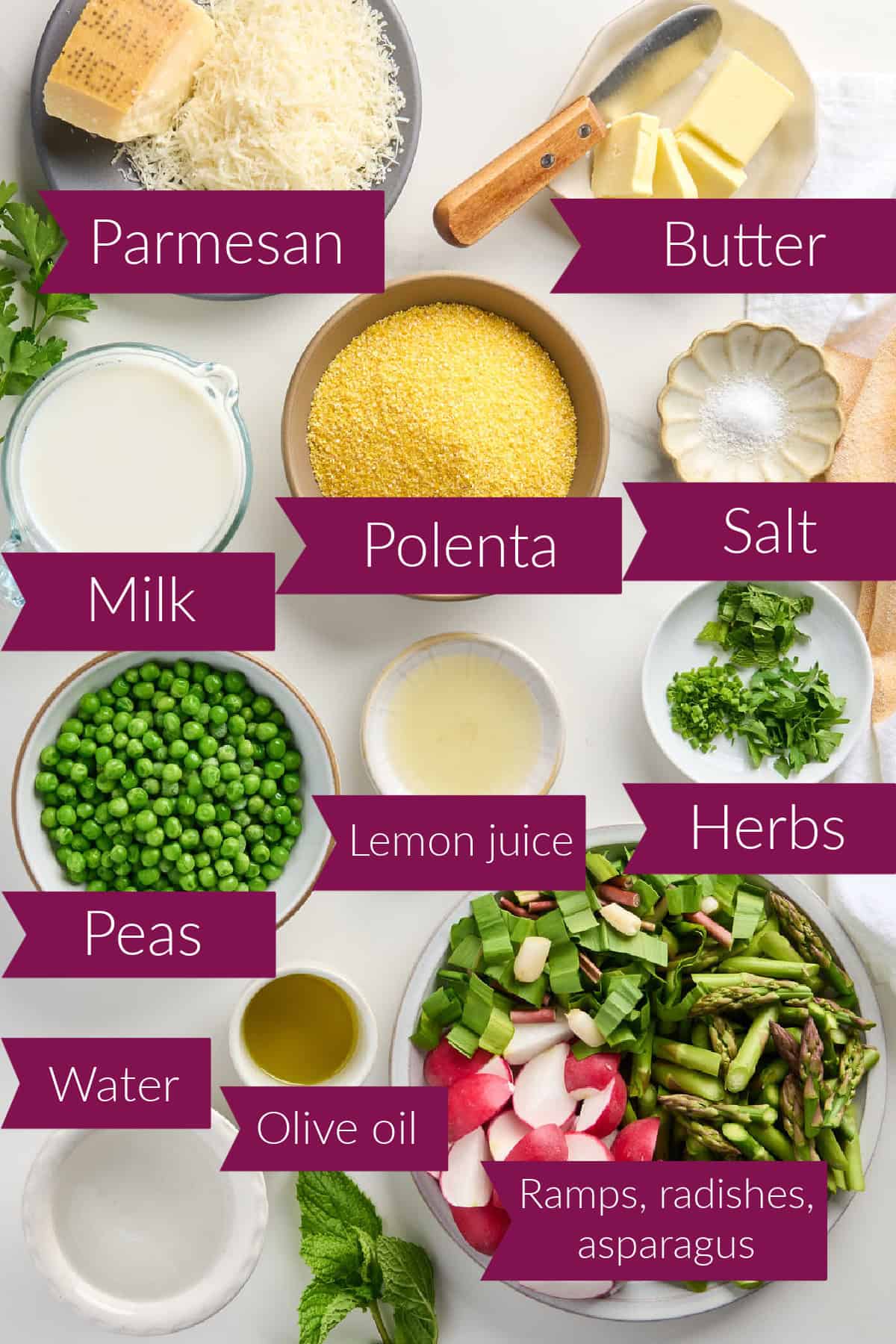
- Polenta: Polenta is a type of ground cornmeal used in Italian cuisine. I recommend using Bob’s Red Mill or Food to Live polenta. Sub corn grits if you can’t find true polenta. Most brands sold at the grocery store are instant or quick-cooking, so be sure to follow the package instructions to inform your cooking time.
- Milk: I used whole milk to make my spring polenta with vegetables super creamy, but you can substitute another type of milk or even a plant-based milk. However, some plant-based options will contain stabilizers or thickeners that may affect the texture of the polenta.
- Salt: I like to use iodized table salt.
- Extra virgin olive oil: Substitute avocado oil or even half butter/half olive oil for a richer flavor.
- Ramps: If you can’t find them, substitute green onions (aka scallions) or even a shallot.
- Radishes: I used round red radishes, but this dish would also look beautiful with Easter egg radishes, French breakfast radishes, or watermelon radishes. Just be sure to slice them into small enough pieces so that they cook within the same time as the asparagus.
- Asparagus: Substitute green beans if needed.
- Peas: If you have access to fresh green peas, they would be wonderful in this recipe! If not, use frozen green or garden peas (like I did) or petite peas.
- Lemon juice: This adds a bright pop of flavor.
- Flat-leaf parsley, mint, and chives: Sub other fresh herbs, such as basil and tarragon, if desired.
- Parmesan cheese: Substitute sharp cheddar if you want a different flavor or don’t have parmesan. For a stronger flavor, grate a block of parmigiano reggiano instead of using packaged shredded parmesan. If you need a strictly vegetarian polenta recipe, look for parmesan cheese labeled as such.
- Butter: Add this for serving to make it even creamier.
Instructions
The full recipe card for spring polenta with vegetables is at the bottom of the post. Here’s a preview of the steps with photos to guide you in the kitchen.
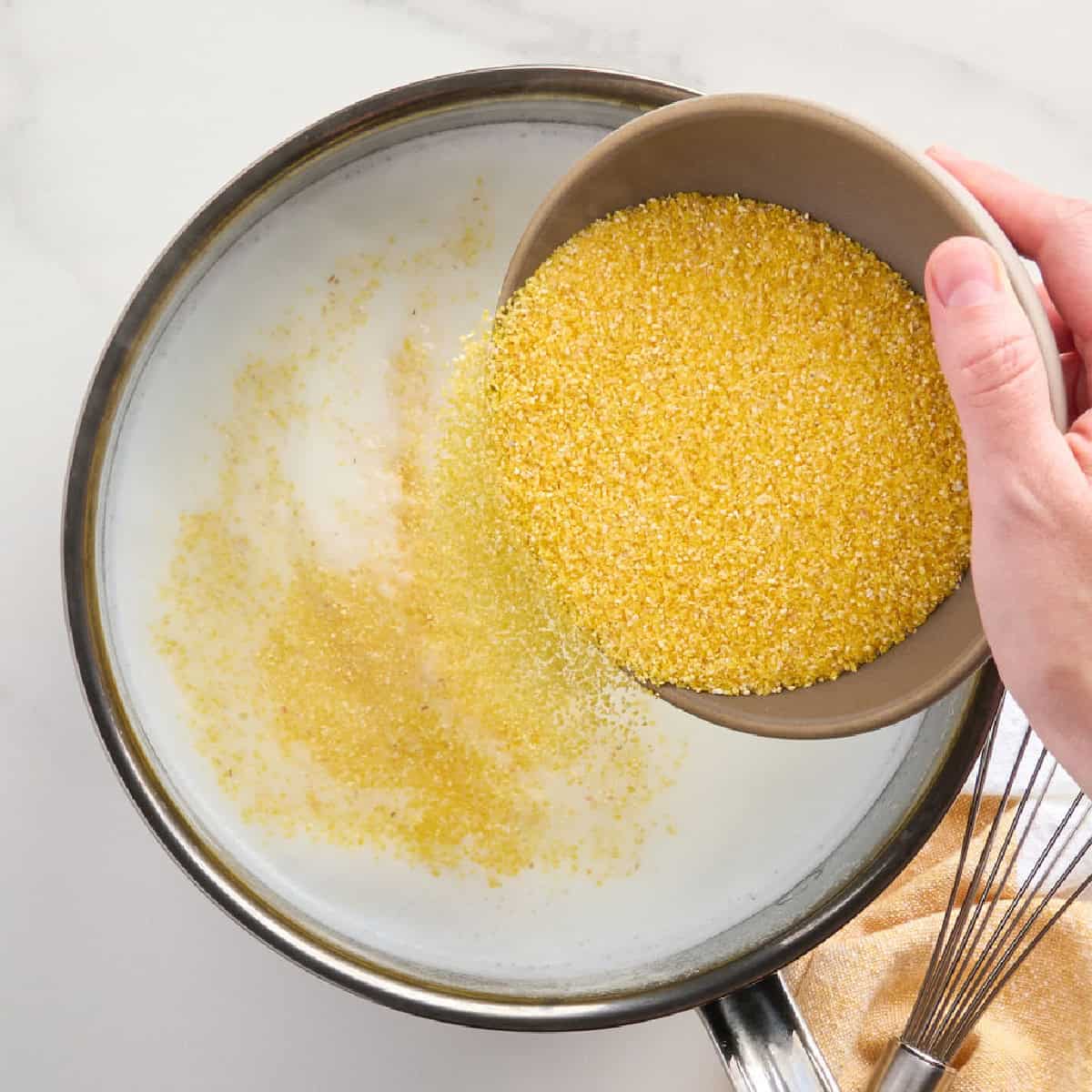
Bring water and milk to a boil in a saucepan over high heat. Quickly whisk polenta and salt into the liquid, reduce heat to low, cover, and cook.
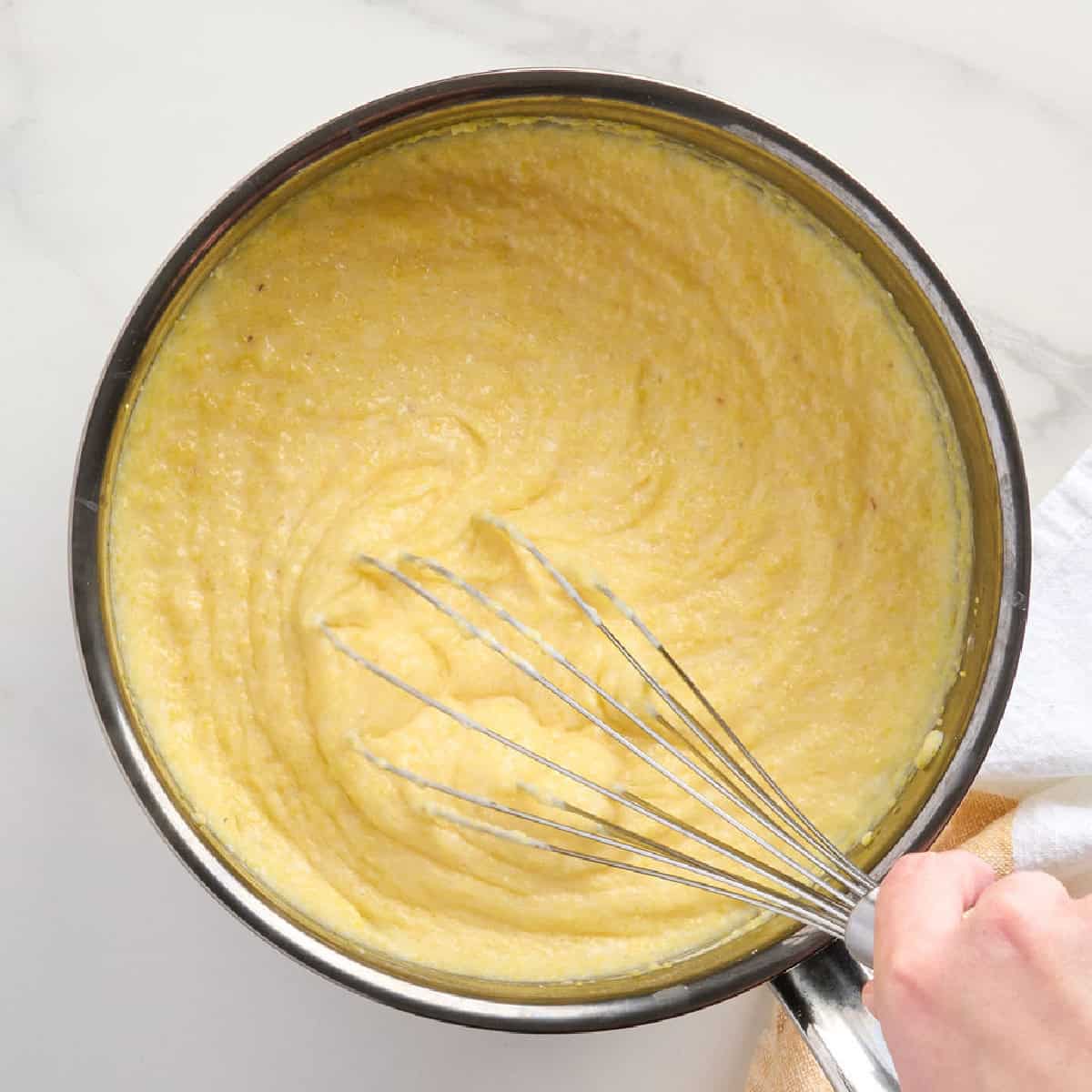
Whisk frequently until all of the liquid is absorbed and the polenta is creamy.
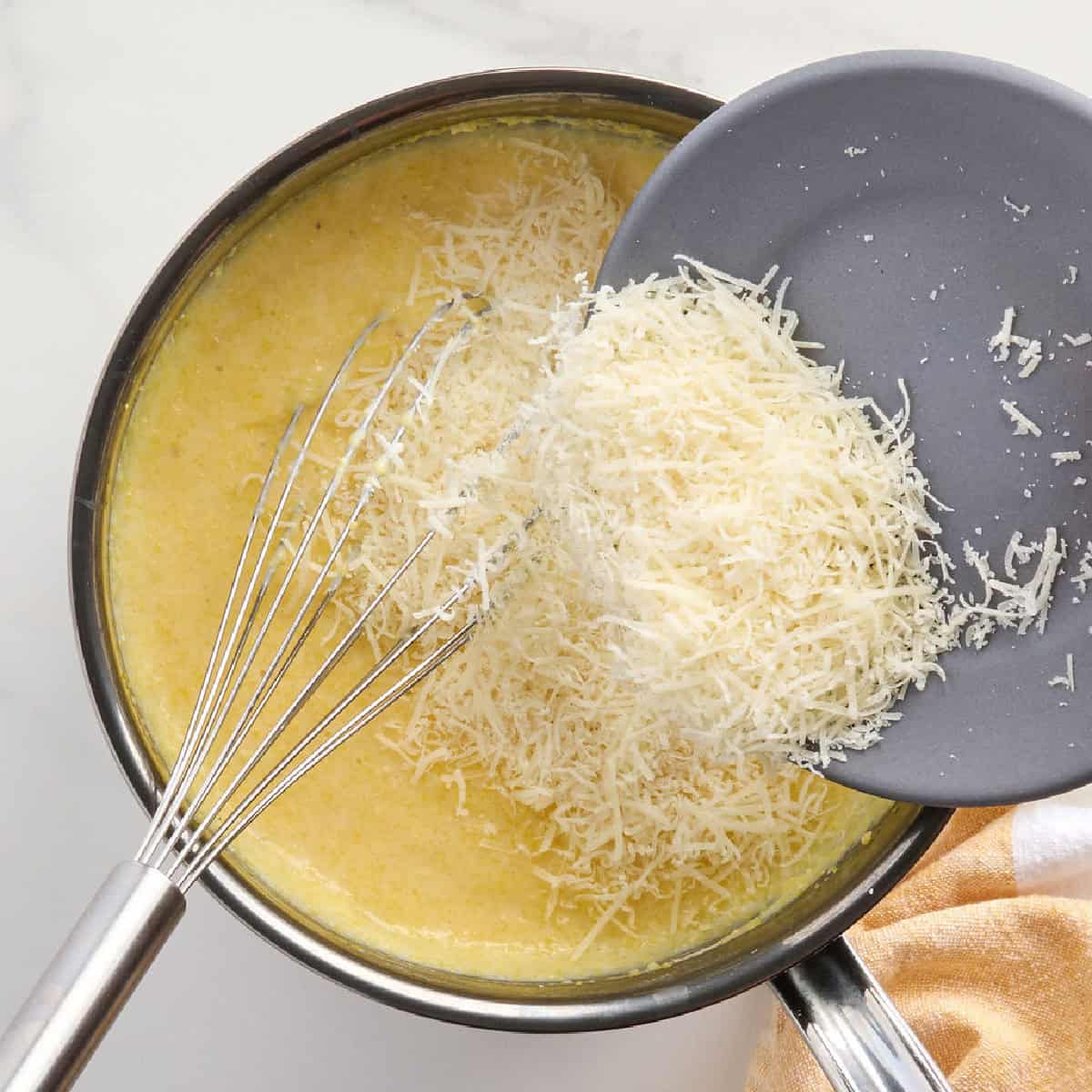
Stir the parmesan cheese into the polenta. Remove from heat and keep warm while the veggies finish cooking.
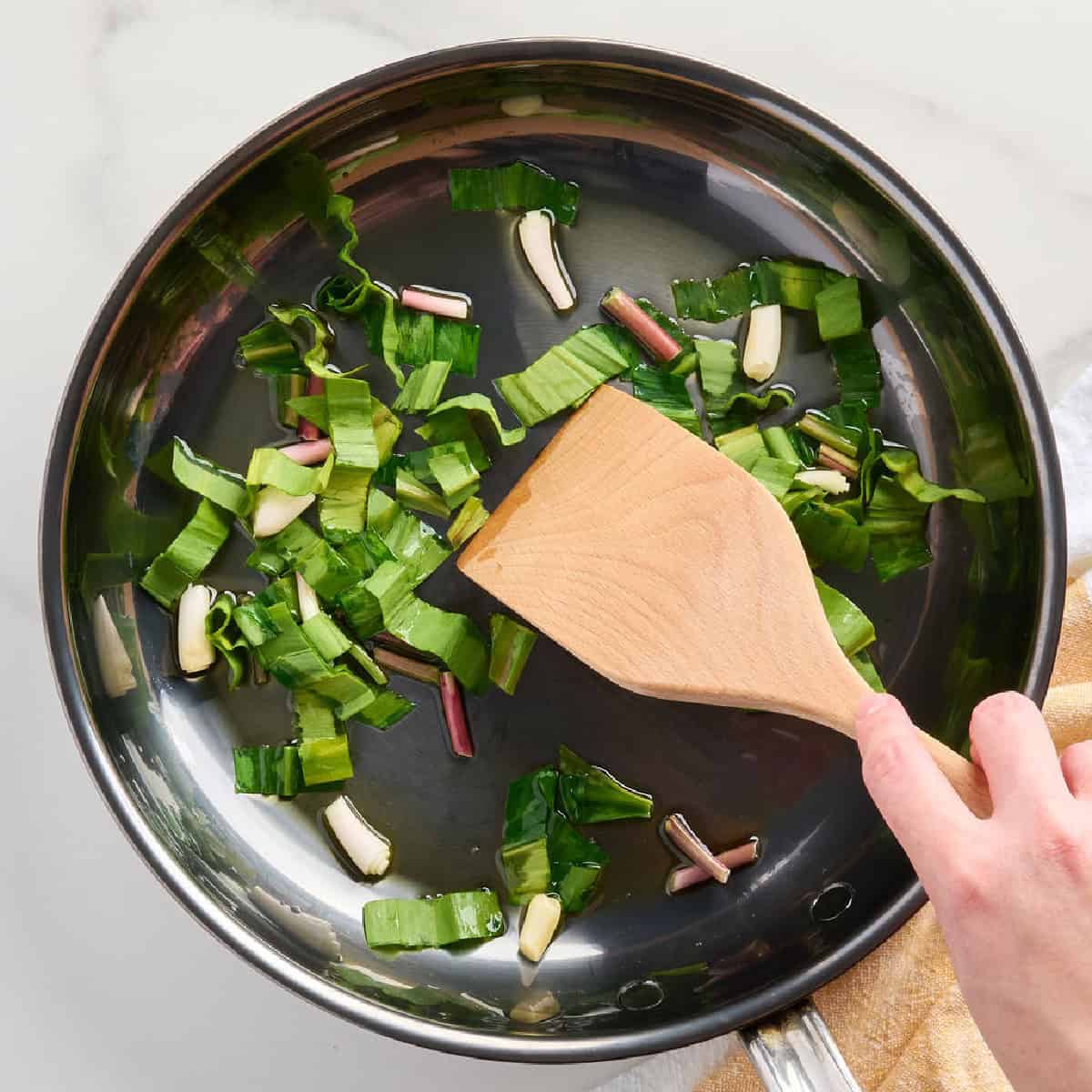
Cook ramps in olive oil in a large skillet.
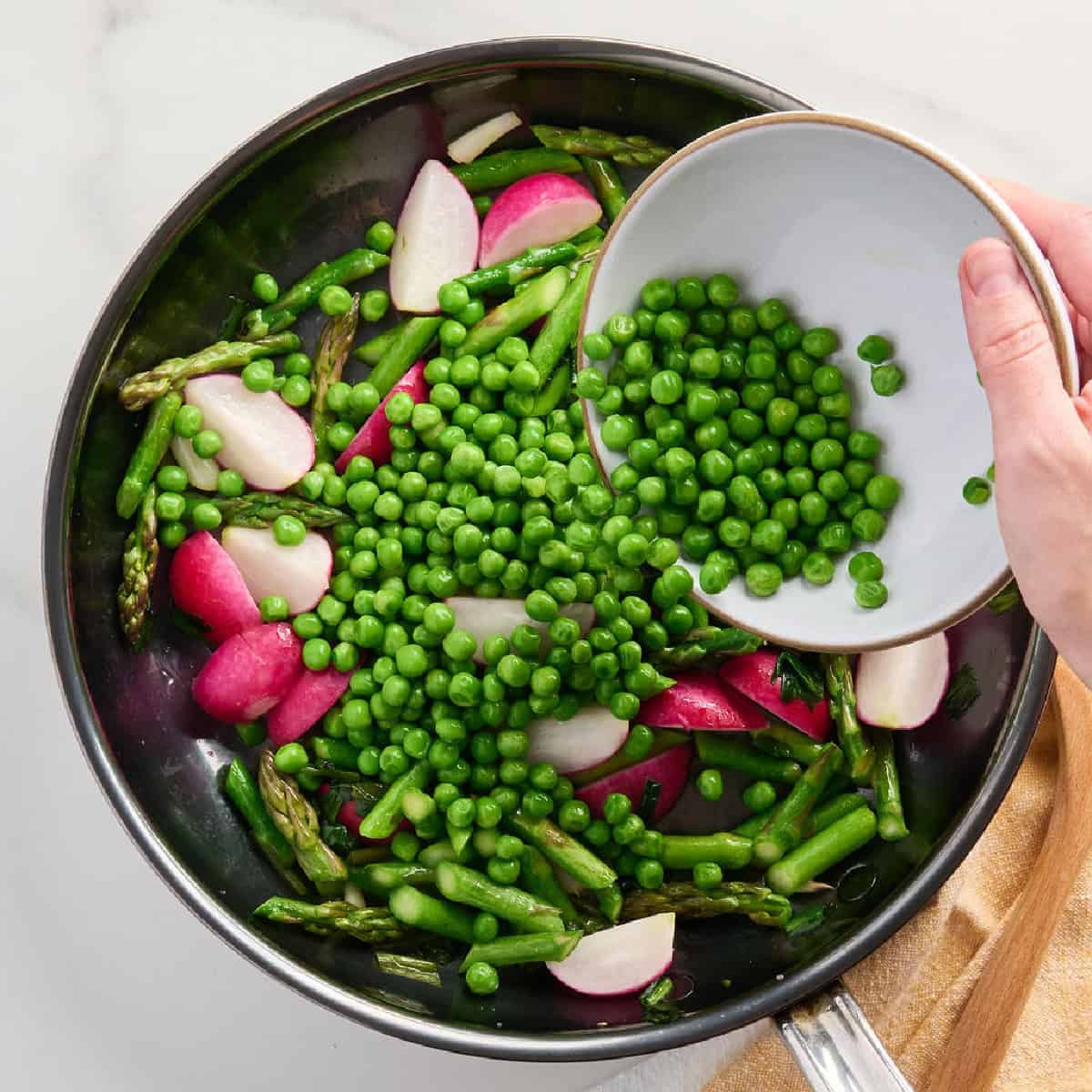
Add the radishes and asparagus. Cook for a few minutes before adding the peas.
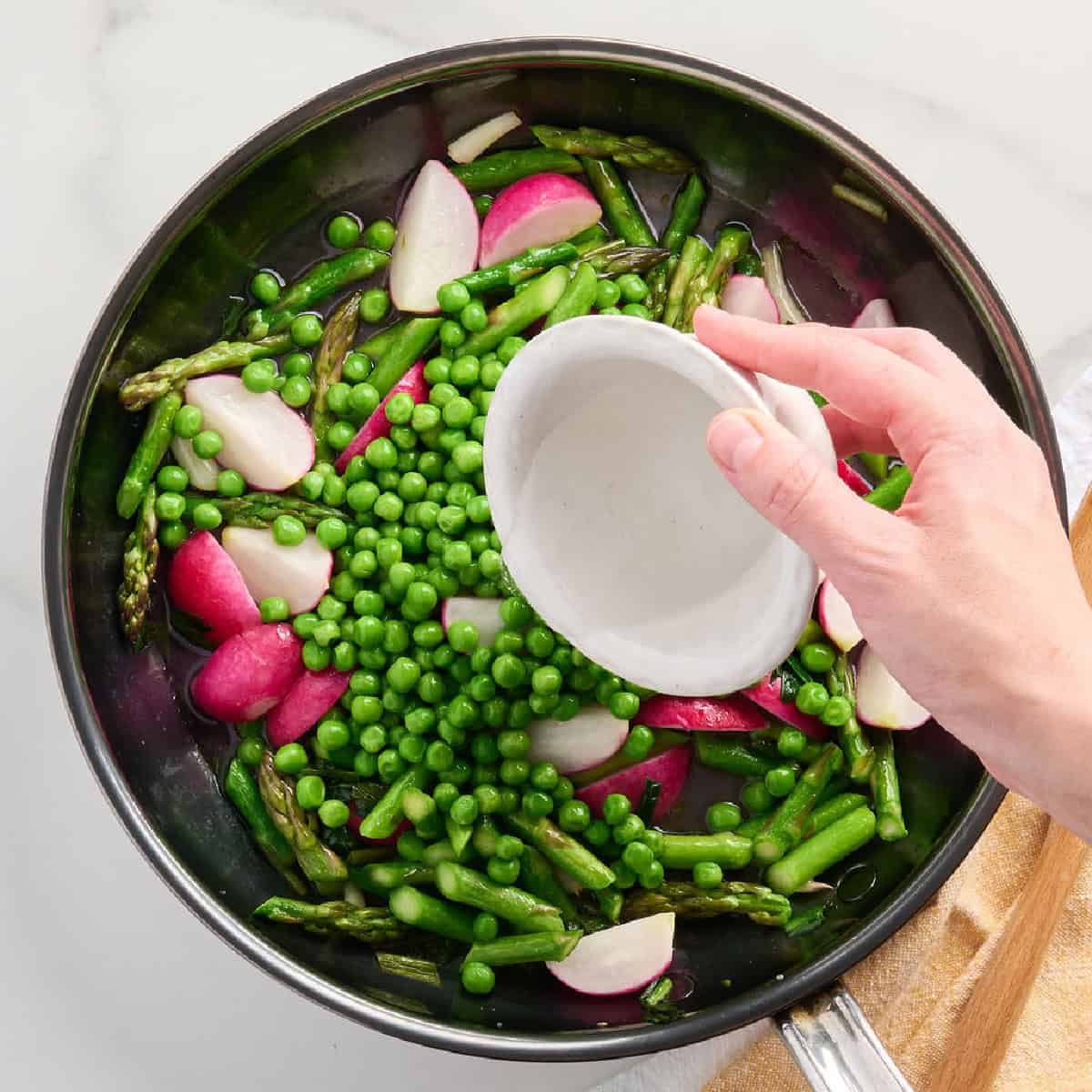
Pour water into the skillet. Cook over medium heat until the water is absorbed and the veggies are tender.
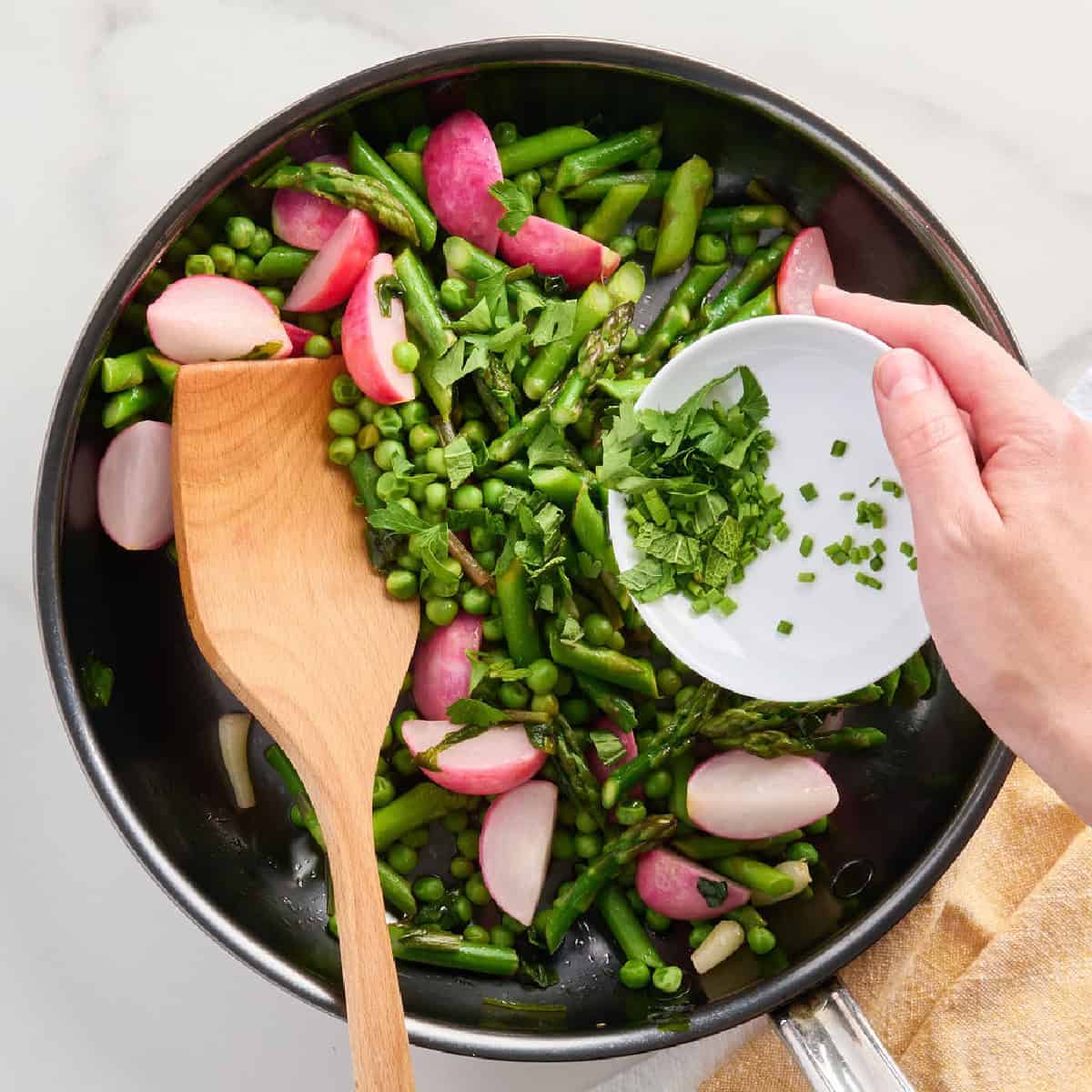
Stir fresh herbs into the veggie mixture.
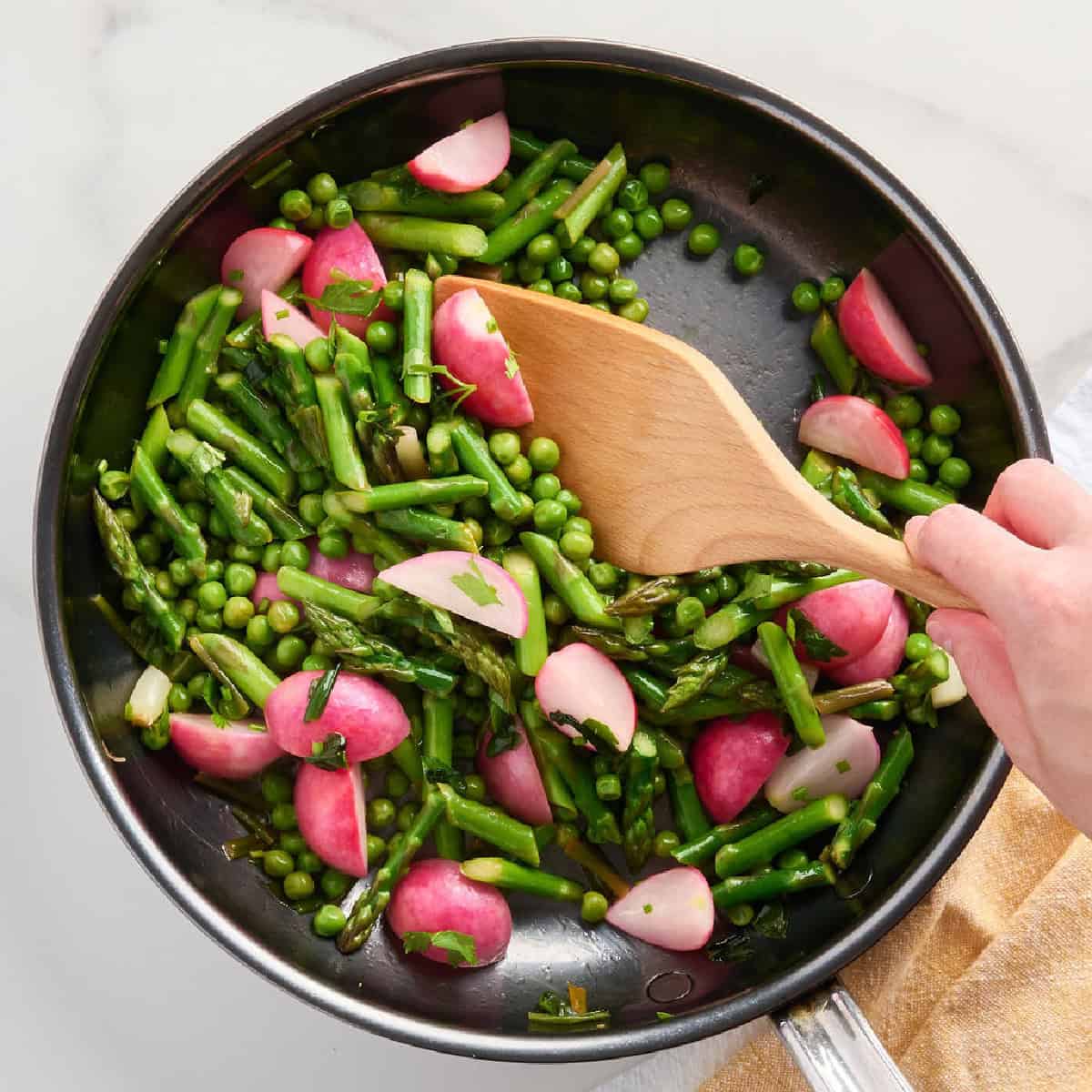
Remove from heat and spoon veggies over polenta.
Storage and Reheating
Spring polenta with vegetables is best enjoyed right away. Polenta absorbs liquid as it sits and firms up as a result. You can keep leftovers in an airtight container, separate from any leftover veggies, for 3 to 4 days. To reheat and get some of the creamy texture back, place it in a saucepan over medium-low heat and add a splash of milk or water. Whisk until smoother and warm. Reheat the vegetables in the microwave or in a skillet.
More Healthy Spring Vegetable Recipes
- Couscous with Chicken and Spring Vegetables
- Asparagus and Pea Risotto
- Artichoke Salad with Red Wine Vinaigrette
- Sheet Pan Gnocchi with Feta, Broccoli, and Herb Sauce
- Roasted Asparagus Salad with Barley
- Sheet Pan Dill Radishes and Salmon
- Deconstructed Spring Roll in a Bowl
📖 Recipe
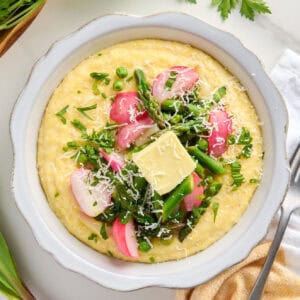
Cheesy Polenta with Spring Vegetables
Ingredients
Sautéed veggies
- 2 tablespoons extra virgin olive oil
- 1 bunch ramps - about 6 thin ramps; trimmed, and leaves, pink, and white parts sliced into ½-inch pieces
- 6 small round red radishes - trimmed and quartered into ½-inch thick pieces or cut into sixths if they are bigger than usual
- 8 ounces asparagus - ½ bunch, trimmed and cut on a diagonal into 1-inch pieces
- Salt - to taste
- 1 cup peas - fresh or frozen, can also sub petite peas
- ¼ to ½ cup water
- 1 teaspoon chopped flat-leaf parsley
- 1 teaspoon sliced chives
- 1 teaspoon chopped mint
- 1 to 2 tablespoons lemon juice - depending on taste preferences
Parmesan polenta
- 3 cups water
- 1 cup milk - I used whole but any kind works
- 1 cup dry polenta - I used Bob’s Red Mill; see notes
- 1 teaspoon salt
- 1 cup shredded or freshly grated parmesan cheese - more for serving
- Butter - for serving
Instructions
- Warm olive oil in a large skillet over medium heat. Add the ramps and cook for 2 to 3 minutes until fragrant.
- Add the radishes and asparagus. Cook for 5 more minutes until slightly softened. Season with salt.
- At this point, you can start the polenta or you can wait until the veggies are finished (just cover them to keep warm) if you want to focus solely on the polenta to ensure you can whisk it frequently enough throughout the cooking time. Bring the water and milk to a boil in a large saucepan. Carefully whisk in the polenta and salt. Reduce the heat to very low, cover, and cook for 5 to 10 minutes until all of the liquid is absorbed. Stir frequently to promote even cooking and prevent sticking. It may take longer to cook depending on the brand you use (see notes). Remove from heat and keep covered.
- Pour the water into the veggie skillet, along with the peas. Cook for 8 to 10 minutes, stirring occasionally, until the radishes are fork-tender and the water has all been absorbed.
- Remove from heat and stir in the fresh herbs and splash of lemon juice. Season with additional salt as desired.
- Add the parmesan cheese to the polenta and stir vigorously.
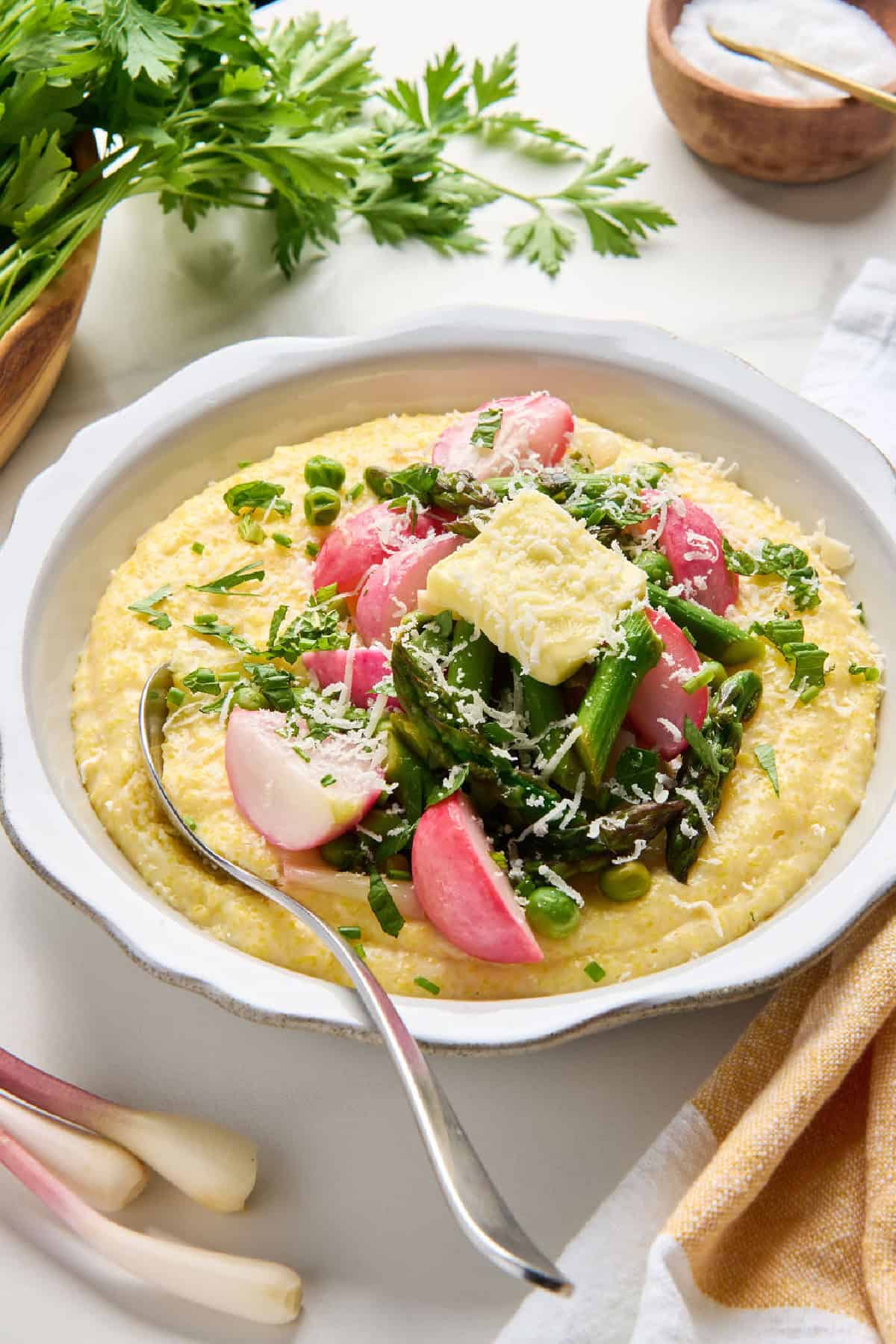
- Spoon the polenta onto plates or bowls. Top with the veggies. Serve with a pat of butter and garnish with more herbs (and/or cheese) if desired.
- Leave a rating or review by tapping the stars on this recipe card (above) or in the comments section (at the end of the post)!
Notes
- Polenta notes: Polenta cooking time varies by brand. I used the Bob’s Red Mill brand and have found that a cheesy variety takes a lot less time to cook than the package suggests (it cooks in 5 to 10 minutes, which is the same as polenta with just water, so I follow the instructions for the water-based version even when using milk and cheese). If you are using a polenta that cooks quickly, start with the veggies first. If your polenta has a longer cooking time, you can start that first.
- Storage and reheating: Keep leftover polenta and vegetables in separate airtight containers in the refrigerator for 3 to 4 days. Polenta gets firmer and absorbs liquid as it sits, so it won’t have the same texture as when you first made it. To get back some of the creaminess, put it in a saucepan over medium-low heat. Add a splash of milk, water, or broth, and whisk continuously until creamier and warmed through. Reheat vegetables in a skillet with a little oil over medium heat or in the microwave in 30-second intervals on high until warm.


Comments
No Comments